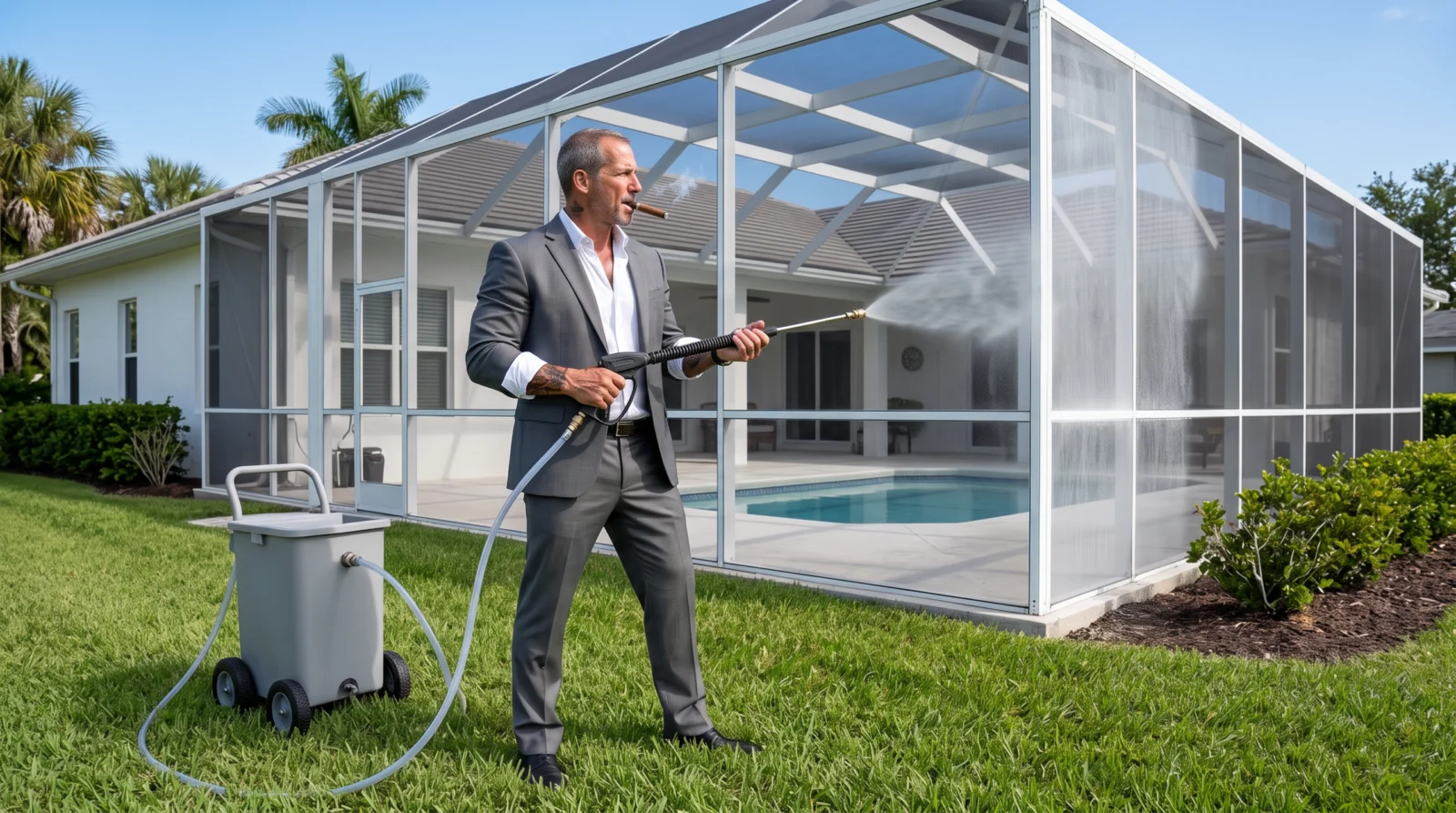
Pool Cage Cleaning
Grey Oaks Naples
Grey Oaks pool cages sit under heavy oak canopy that deposits organic debris on frames and screens year-round. Combined with the outdoor living standards expected in a community of this caliber, regular professional cage cleaning is essential maintenance.
Price
Cycle
Growth Driver
In Grey Oaks, the outdoor living area is not an afterthought — it is a primary living space. Pool cages in the community are typically large, well-appointed enclosures that reflect the architectural standard of the homes they protect. On a Grey Oaks estate or villa, a grey, debris-streaked cage is a visible mismatch that neighbors, guests and potential buyers notice quickly.
The mature live oak and palm canopy that runs throughout the community deposits organic material on pool cage frames and screens at a much higher rate than communities with less tree coverage. Leaf tannins stain screen mesh brown, pollen accumulates in frame tracks, and algae establishes on aluminum frame members that stay shaded and damp. Grey Oaks pool cages under heavy canopy coverage typically need cleaning every 10–12 months rather than the 14–18 month cycle that works in more open communities.
Aluminum oxidation — the chalky white or yellow discoloration on cage frames — builds up as a frame finish ages in Florida sun and weather. Left untreated for years, a badly chalked frame may need refinishing rather than cleaning, and regular cleaning lets us spot it while a treatment can still even it out.
Grey Oaks owners pay Master Association fees, and many neighborhoods also have their own sub-association, so appearance standards can come from more than one set of documents. We provide written service documentation on every job for HOA compliance records.
Naples, FL 34105
Collier County
Solution Application
Soft wash solution applied to the entire enclosure at low pressure — frame members, horizontal and vertical tracks, corner joints, ridge, and door frames. Surfactant helps the solution cling during dwell time.
Frame Rinse — Top to Bottom
Frame rinsed top to bottom before screens are touched. Any residue from frame members drips onto screens that have not yet been rinsed — cleaning in the wrong order produces streaks that require a second pass.
Screen Rinse — Inside Out
Screens rinsed from inside the enclosure outward at 100–300 PSI with a wide fan tip, 18–24 inches from the screen surface. Inside-out direction pushes debris through the mesh naturally, reducing tearing risk.
Oxidation Treatment
Aluminum frame oxidation (chalky white-yellow discoloration) treated where present, after a test section on a shaded part of the frame. This step evens out the frame color where the finish allows it.
Standard pressure washer settings (1,500–3,500 PSI) can tear pool cage screen mesh. We clean screens at 100–300 PSI maximum with a wide fan tip at correct distance. Low pressure at a safe distance is the technique we use on every Grey Oaks enclosure, and any panel already loose is photographed rather than forced.
On a cage under live oaks, the flat or gently pitched roof screens catch nearly everything the tree drops. UF/IFAS Extension’s fact sheet on the live oak lists its fruit and leaves as a litter problem and notes a crown spread of 60 to 120 feet, so a single tree near the lanai can reach across the whole enclosure. Leaves sit on the roof mesh through rain after rain, and the brown tea that drains out of them is what leaves the tannin blotches you see from the pool.
The yellow-green catkins the tree sheds are the worst of it. They are fine enough to lodge in the mesh itself and, once wet, they hold moisture against the screen for days. That is why the roof panels on a Grey Oaks cage are usually cleaned first and given the most time. We clear them from ladders at the edges and with extension brushes, and never by walking on the screen roof or its purlins.
Before cleaning the frame, we look at what finish it has, because the industry guide for architecturally finished aluminum, AAMA 609 & 610, treats the two differently. For anodized aluminum it warns against cleaners containing trisodium phosphate, phosphoric acid, hydrochloric acid or hydrofluoric acid, and says mortar, cement and other alkaline materials will quickly corrode anodic coatings if left on the metal. For painted aluminum it notes that strong solvents or abrasive cleaners can cause damage, and that stronger solvents may have a softening effect on paints.
Many cage frames are painted, but older or custom enclosures can differ, and it matters for anything stronger than a rinse and mild detergent. The guide’s instruction to test-clean a small area first is followed on every frame, and any oxidation treatment is tried on a short, shaded section before it goes further. If a frame looks like it needs refinishing rather than cleaning, we say so.
Oak pollen and fine debris settle in the horizontal frame tracks, the door thresholds and the corners where the kick plate meets the deck. Those get a brush and a low-pressure flush so water carries the debris out rather than packing it tighter. Screen doors are opened and their tracks and closers cleaned while we’re there.
The same AAMA guide cautions that solvents may damage organic sealants, gaskets and painted finishes, which is one more reason we stay with water and mild detergents on the frame. The rubber spline that holds each screen panel in its channel is easy to loosen with a pressure wand held too close, so screens are rinsed at low pressure from a distance, and any panel already pulling out of its spline is photographed and noted rather than forced back.
Grey Oaks housing runs from condo-style coach homes with private garages to detached villas and custom estates on oversized lots, with listed homes built between 1999 and 2014 in neighborhoods such as Estuary, Isle Royale, Palm Island, Traditions, Miramonte and Torino. On a detached villa or estate, the cage is almost always the owner’s to maintain and book. Coach home lanais may fall under the sub-association’s maintenance, so check your documents before scheduling.
Estate cages here can be large, multi-section enclosures that wrap a pool, spa and outdoor kitchen. A standard cage starts from $299, a large cage of 1,500 to 2,500 square feet from $399, and a birdcage or outdoor-kitchen enclosure from $499. Heavy oxidation treatment adds $75 to $150, and we tell you after the test section whether it’s needed.
AAMA’s guide says not to clean hot, sun-heated surfaces and recommends mild weather, ideally on a shaded side. On a cage that means starting on the panels the oak shades in the morning and leaving the sunniest west side for when it cools or clouds over. If you can, book after the oak’s catkins have finished falling, so the roof panels stay clean longer.
The pool stays usable the same day. Cleaning solution is kept on the frame and screens and rinsed off the deck as each section is finished, furniture goes back where it came from, and we leave the skimmer baskets empty of the debris that fell in during the job.
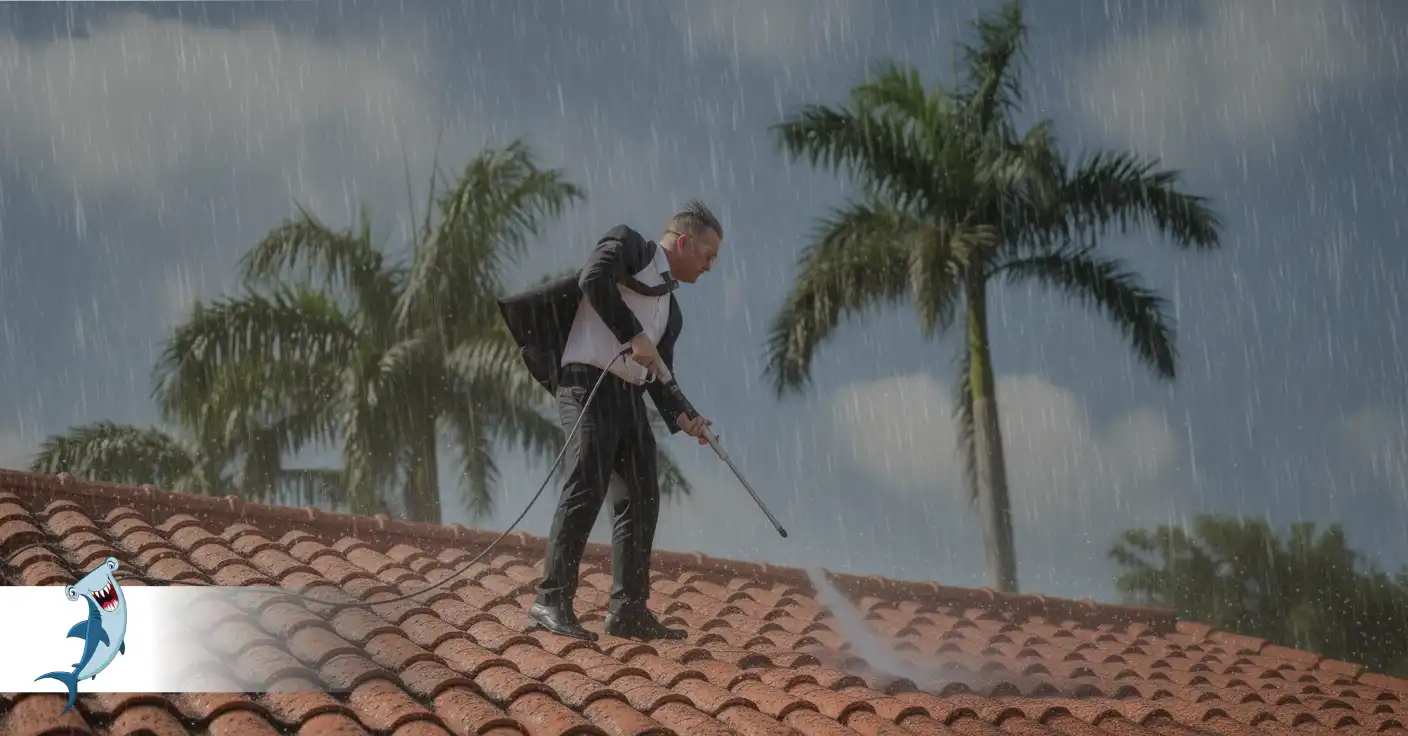
Black streaks GONE in 1 visit — and they stay gone for 2-3 years.
Soft wash chemistry kills Gloeocapsa Magma at the root, not just on the surface. No high pressure, no tile damage, no voided warranty.
Get Your Free Quote
Tell me what needs cleaning and where — I'll send a firm, no-obligation price by text or email, usually the same day.
Get My Quote →Lock in the best day for your schedule
Reserve the best time and date for your schedule and I'll follow up with your numbers. No payment to hold a spot and no obligation to keep the booking — reserve now, decide once you have the price.
We provide complete exterior cleaning for Grey Oaks homes — see all Grey Oaks services.
About the Author
Owner Blane Perun started this company with a simple premise: Naples homeowners deserve a professional exterior cleaning option that doesn’t come with the inflated pricing of franchise operations and large corporate companies.