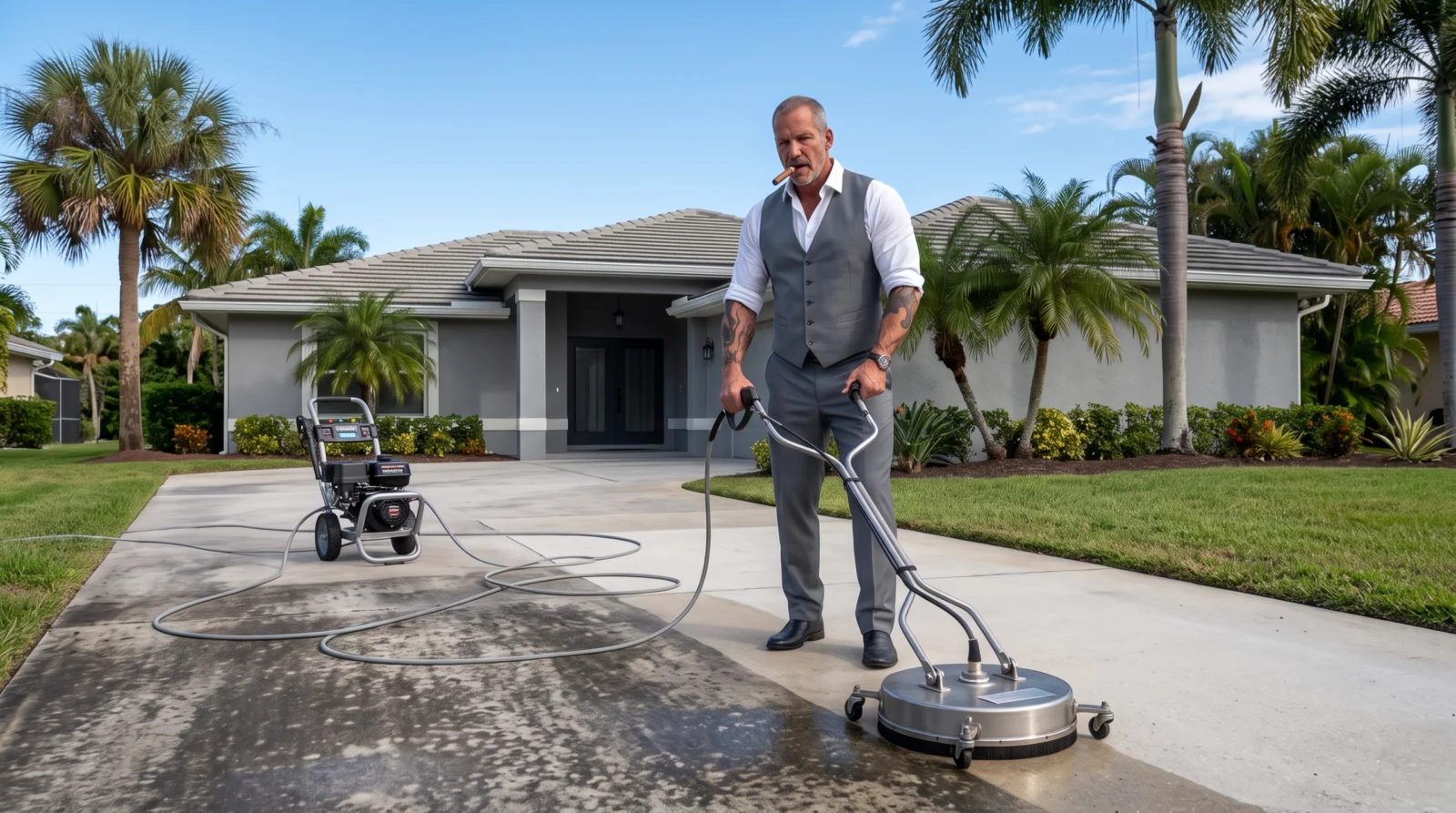
Driveway Pressure Washing
Cost Calculator
Get an instant Naples driveway cleaning cost estimate based on driveway size, surface type, stain severity, and whether you want sealing added. See the NPW price versus the typical Naples market rate.
📞 Call for a Free Quote — 239-544-1165Quote
Competition
Equipment
Quote
Adjust the inputs to match your driveway. Add paver sealing to see the combined price. All final quotes require a free online quote.
Final price set by free online quote
Driveway cleaning on the same visit as house washing or roof cleaning reduces total cost. One mobilization, one crew, one day — everything done together costs less than separate visits.
A driveway looks like a simple job, but two drives of the same size on the same street can take very different amounts of time. The calculator above tries to capture that with five questions: what the drive is made of, roughly how big it is, whether there is oil on it, how much algae or organic staining it carries and whether you want anything added. The notes below explain what each answer means on the day, how to measure without guessing and which stains a wash can and cannot be expected to remove.
Plain concrete, pavers or stone
Broom-finished concrete is the quickest surface to clean: it is one continuous slab, and a rotary surface cleaner can travel across it in overlapping passes that leave an even finish instead of the stripes a hand wand produces. Brick and concrete pavers take longer because every joint is a small trench of sand, and the goal is to lift the growth from the paver faces without emptying those joints. Travertine and other natural stone are softer and more porous again, so they are cleaned at lower pressure with more dwell time and more rinsing, which is why that option sits at the top of the range.
How to measure a driveway in five minutes
Pace or tape the length from the garage door to where the drive meets the street, then the width at two or three points and use the average. Multiply the two, and add the apron at the curb and any parking pad beside the garage as separate rectangles. Flared entries and circular drives are easiest to split into simple shapes and add up. You do not need to be exact: the slider moves in steps, and we confirm the real figure before the quote is final. Leave the front walk and lanai out of this number, because the patio and walkway add-on covers those.
Oil spots need a different chemistry
Water and pressure do very little to petroleum. Engine oil and transmission fluid soak into concrete and into the face of a paver, and blasting a fresh spot at high pressure tends to drive it deeper and spread a grey halo around it. Oil is treated first with a degreaser that is allowed to work before the surface is washed, and older spots may need a second application. That extra chemistry and time is why the calculator raises the range when you select minor or heavy staining. Spots that have been baking in the sun for years usually fade a great deal but can leave a shadow, and we will tell you which ones before we start.
Algae, mildew and the shaded strip
The green or black film on a Naples drive is mostly algae and mildew living in the surface pores, and it grows fastest where the concrete stays damp: under a tree canopy, on the north side of the house, along a hedge and wherever sprinklers reach. Light growth lifts with a surface cleaner alone. Moderate and heavy growth is pre-treated with a cleaning solution so the wash removes the roots of the stain rather than just the top layer, then rinsed thoroughly, with plants and lawn edges wetted before and after. If only one strip of your drive is green, choose the level that matches that strip, because it sets the time the job takes.
Orange marks from sprinkler water
Rust-colored fans along the edge of a drive are not dirt. The UF/IFAS Florida-Friendly Landscaping program notes that most Florida well water is high in iron and that it leaves rust deposits on anything it touches. Pressure alone will not move those deposits; they need a rust remover made for masonry, applied separately from the main wash. The same UF/IFAS guidance suggests testing the water through your county extension office and then choosing a treatment such as a softener, an oxidizing filter or a chlorination and filtration system. Unless the source is fixed or the heads are turned away from the concrete, the marks come back with the next few months of watering.
The two add-ons
Paver sealing only appears in the estimate for paver and stone drives, because we do not seal plain concrete driveways. On pavers it makes sense to seal on the same visit as the cleaning: the joints have just been opened up, they can be refilled with polymeric sand and the sealer goes down on a surface that is as clean as it will ever be. The patio and walkway add-on covers the front walk, entry and small patios cleaned at the same time, so the approach to the door matches the drive instead of looking dull beside it.
Wash water, cars and timing
On the day, cars come out of the garage and off the drive, and we need an outside water spigot that works. Rinse water is directed away from the street and storm drains wherever the slope allows, and solution is never left to run into a pond or canal. A clean concrete drive is dry enough to park on within a couple of hours in normal weather. If paver sealing is added, cars stay off much longer, because sealer makers set their own cure times before vehicles are allowed back, and we give you that window in writing before the work begins.
Keeping it clean between visits
Trimming overhanging branches lets the slab dry faster after rain, which slows regrowth more than anything sprayed on afterward. Blowing off leaves and palm litter before they sit through a wet week prevents tannin prints. Adjusting sprinkler heads so they water the lawn rather than the concrete stops both algae and iron marks, and a drip pan under a car that leaks keeps fresh oil from becoming next year’s stain. With those habits most drives need a wash far less often.