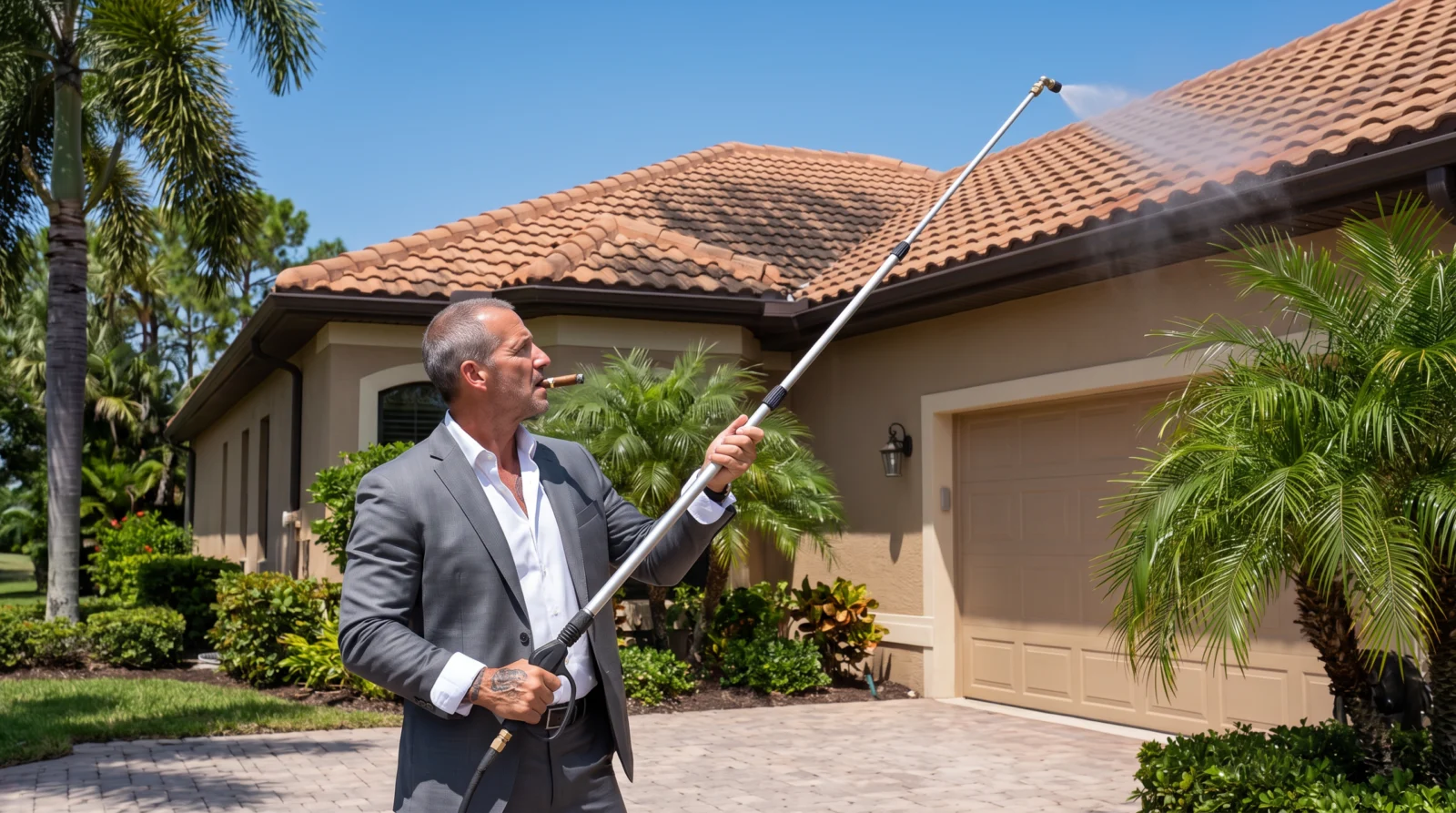
Barrel Tile Roof Cleaning
Naples FL
Barrel tile is the defining roof type of Naples gated community architecture. It is also the roof most vulnerable to Gloeocapsa magma algae — and most easily damaged by incorrect cleaning methods. Every result on this page was achieved with low-pressure soft wash and trained foot placement on tile.
📞 Get Results Like These — 239-544-11651-Story Homes
Barrel tile is the most common roof material in Naples gated communities — and the most frequently damaged by contractors using incorrect cleaning methods. High-pressure washing cracks barrel tile, dislodges mortar, and voids most tile manufacturer warranties. Every barrel tile roof in this gallery was cleaned using soft wash at 50 to 150 PSI with trained foot placement. No pressure damage. Results can last 24 to 36 months.
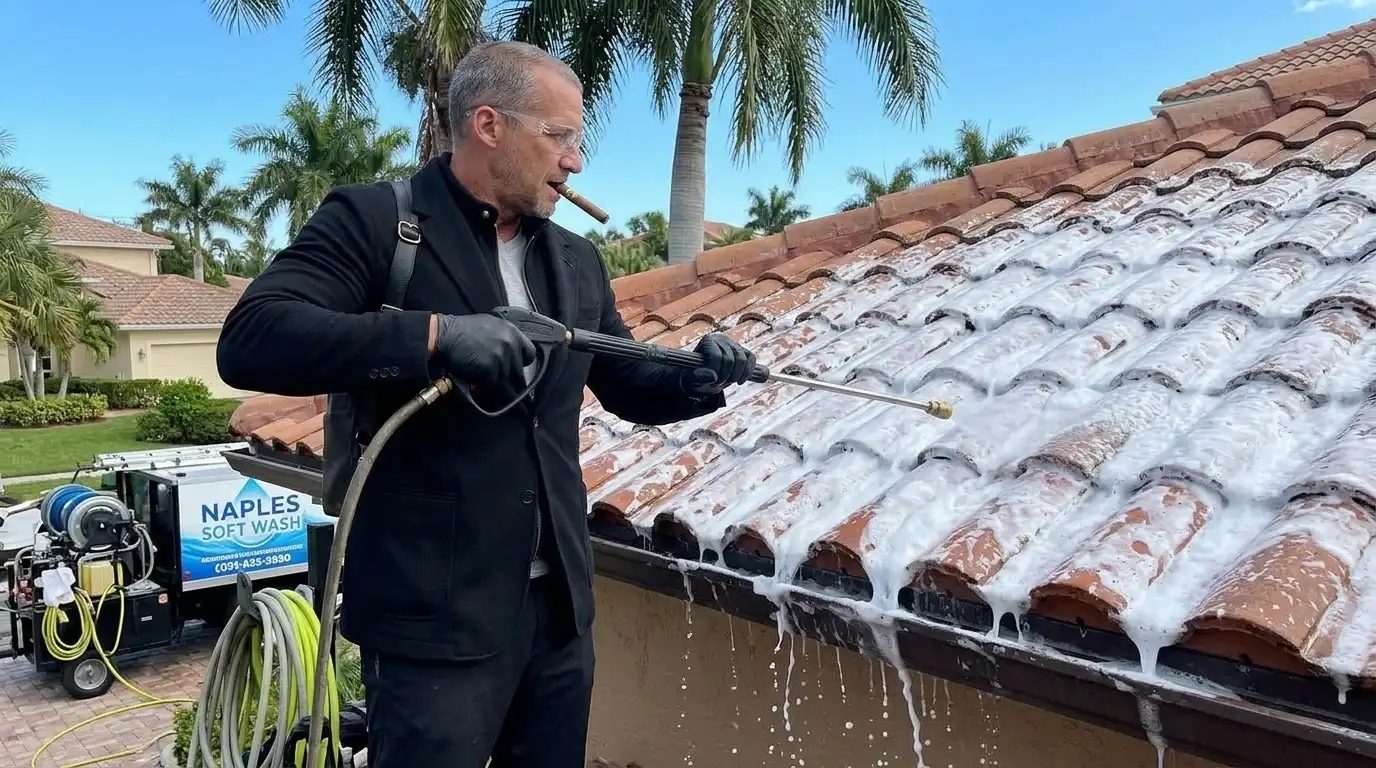
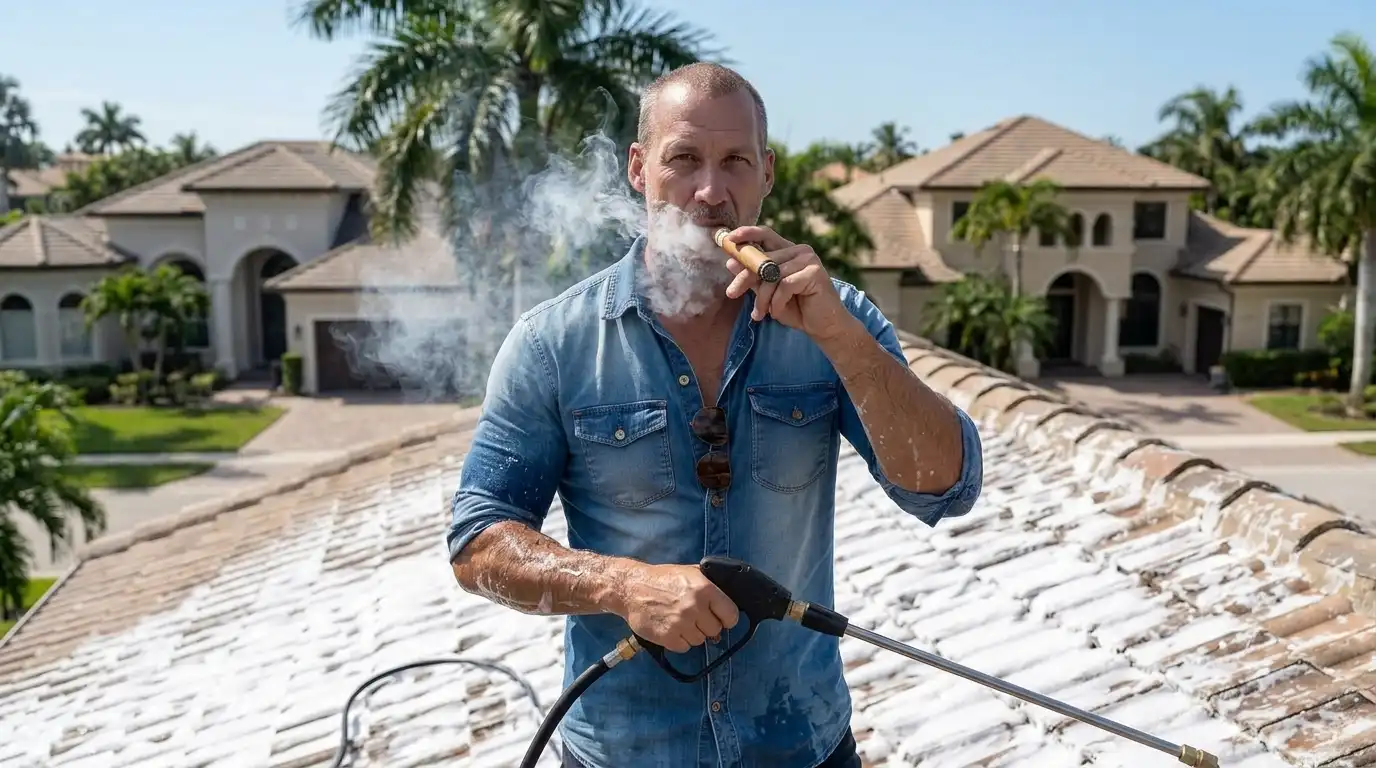
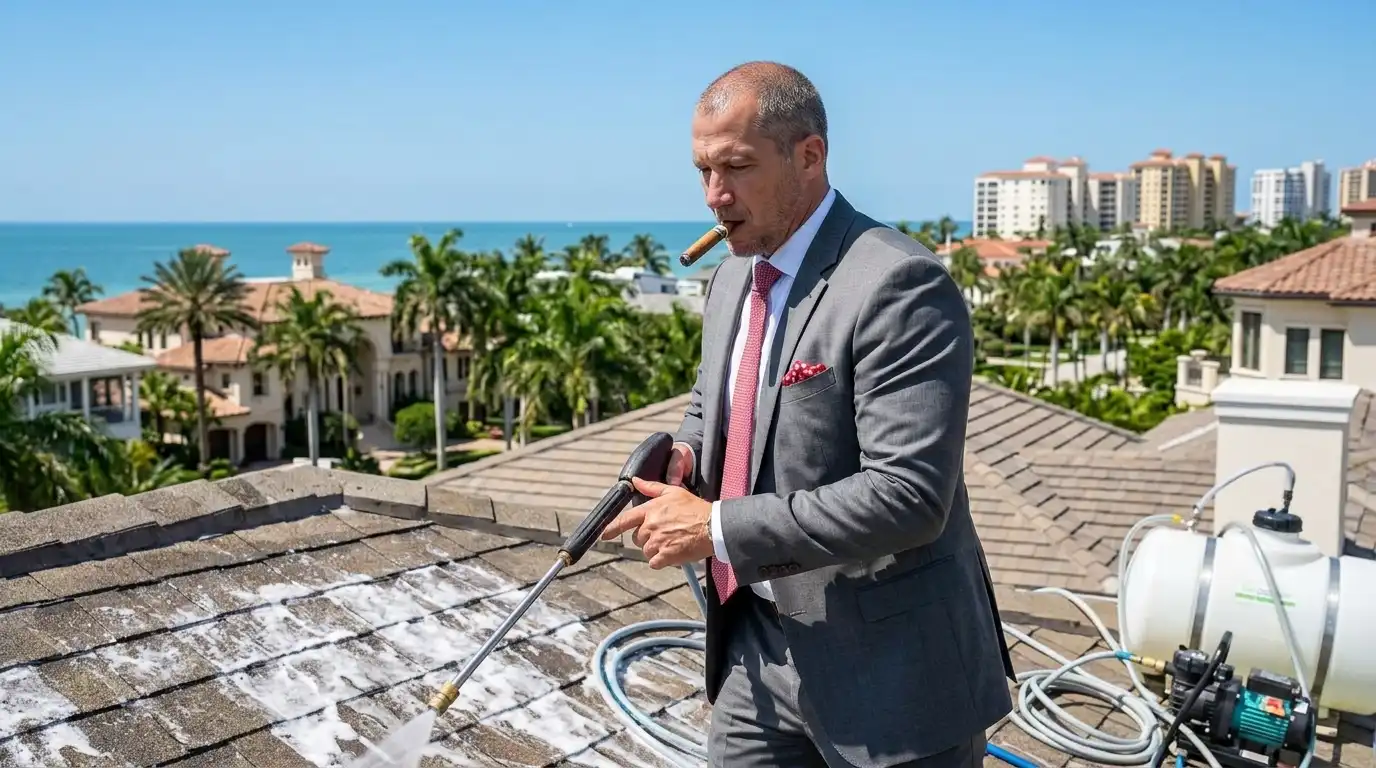
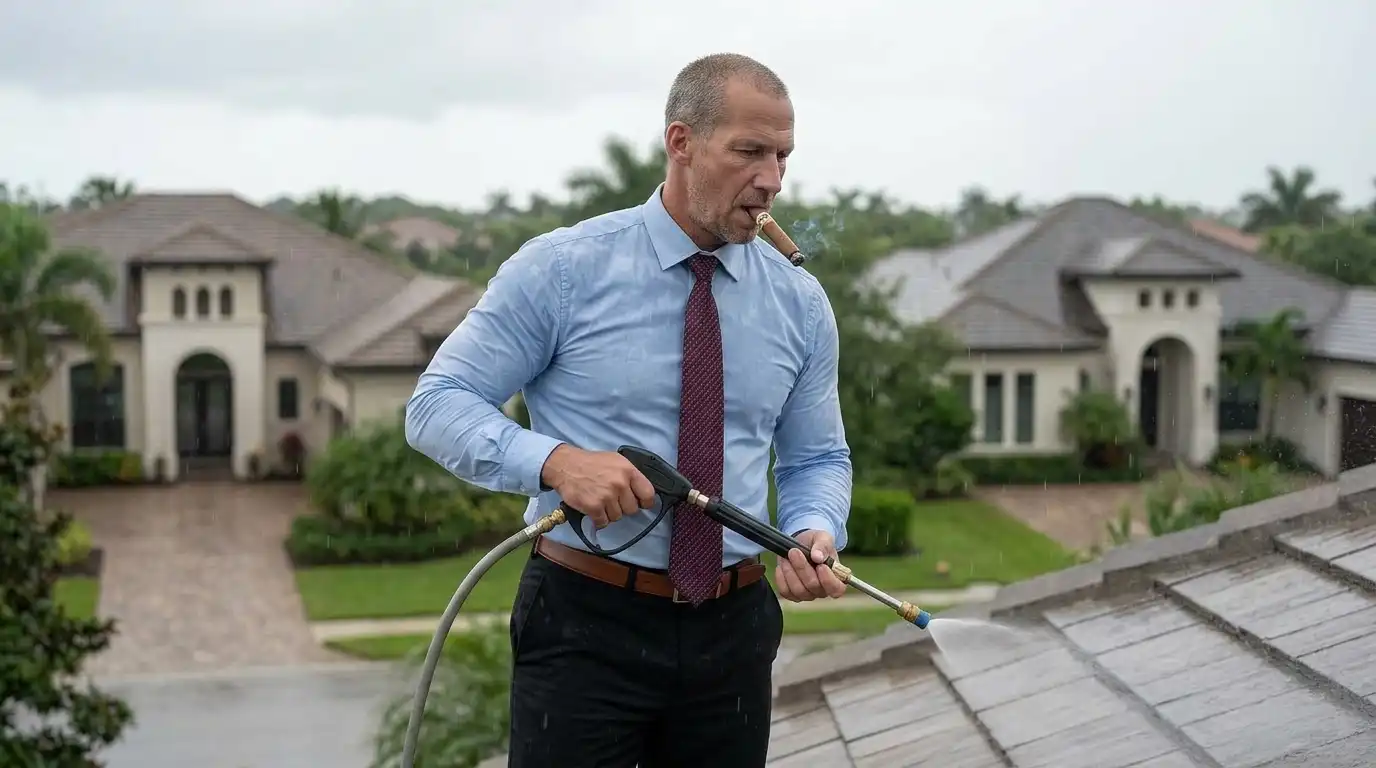
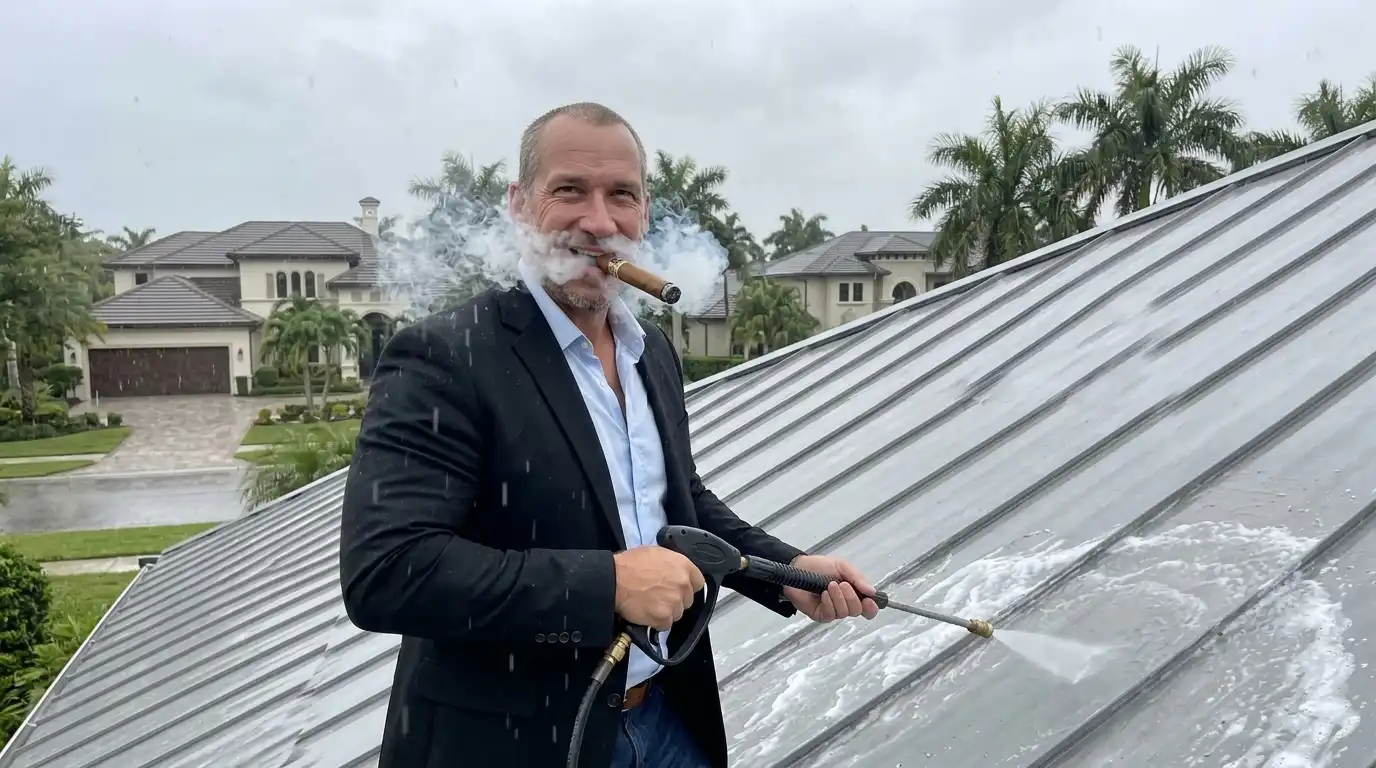
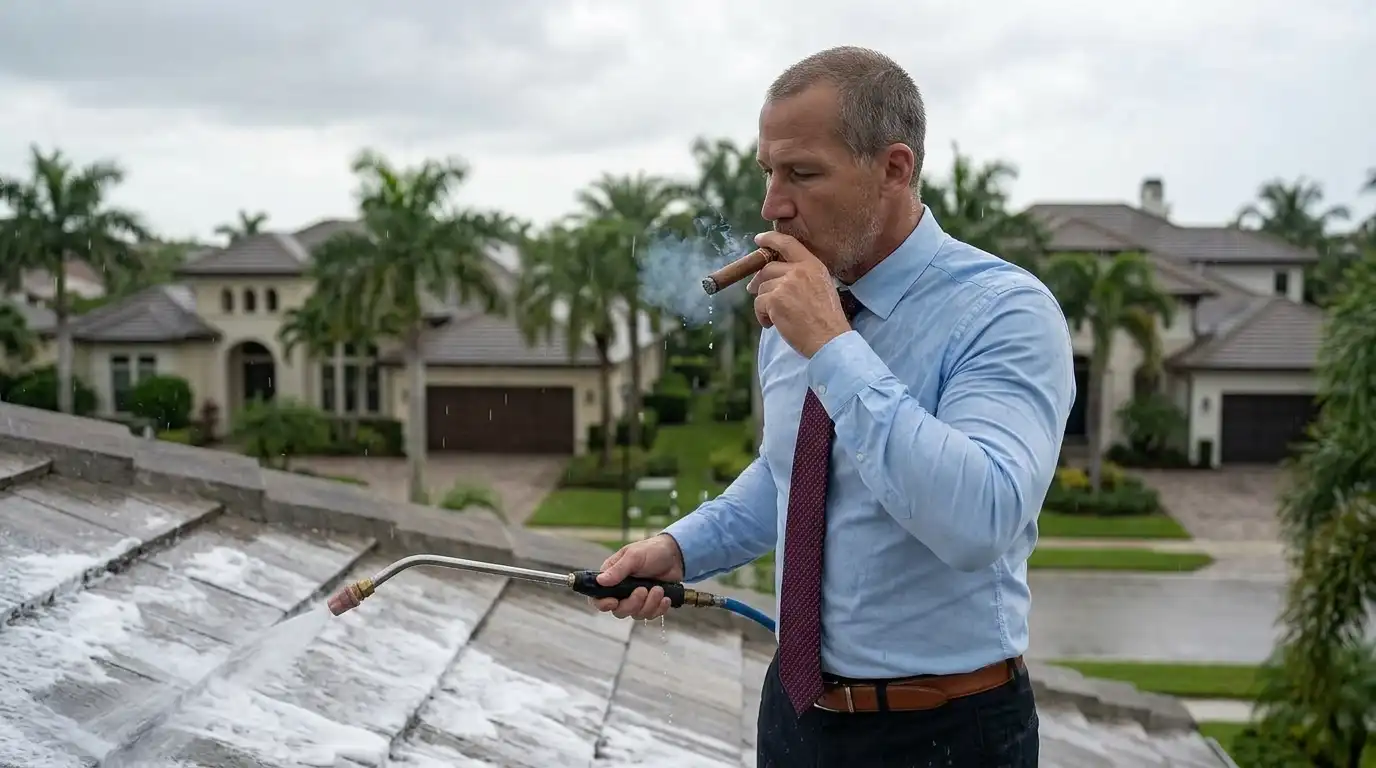
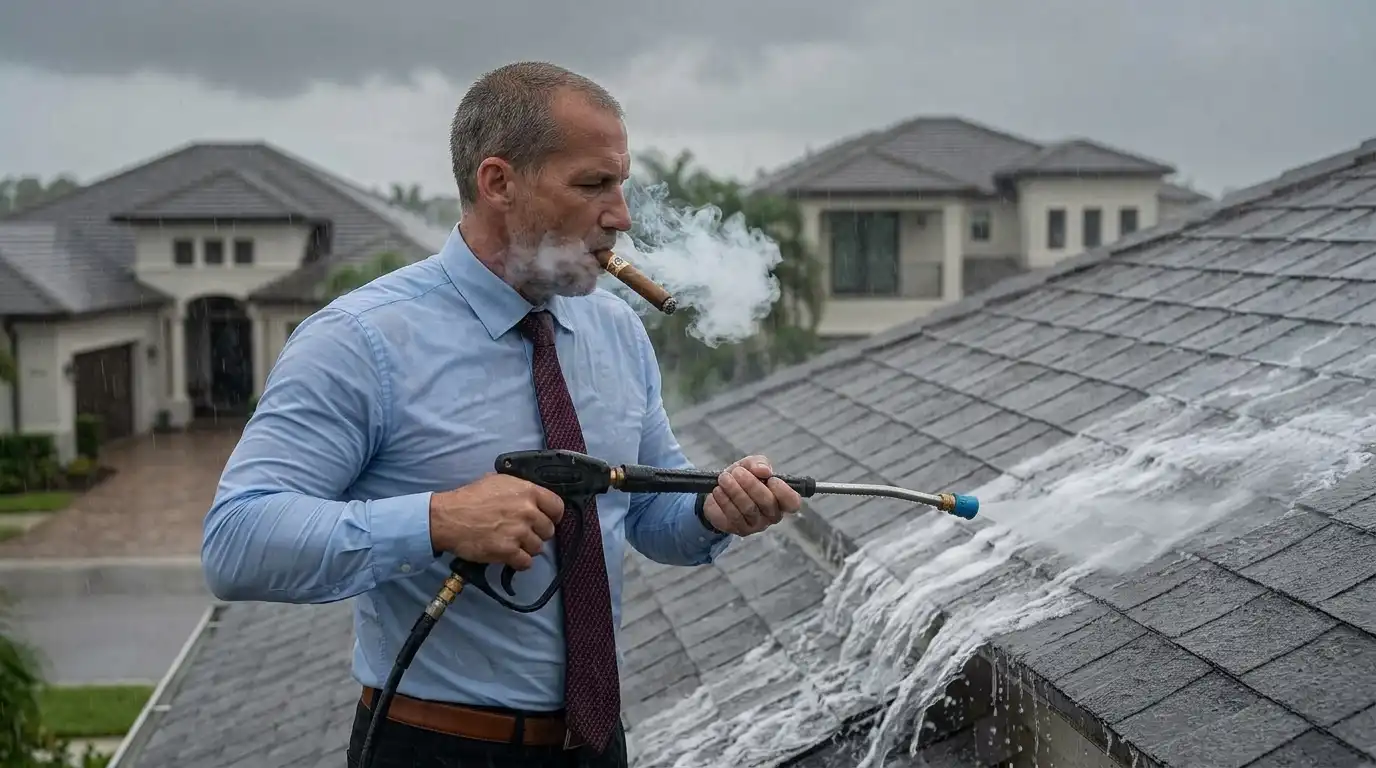
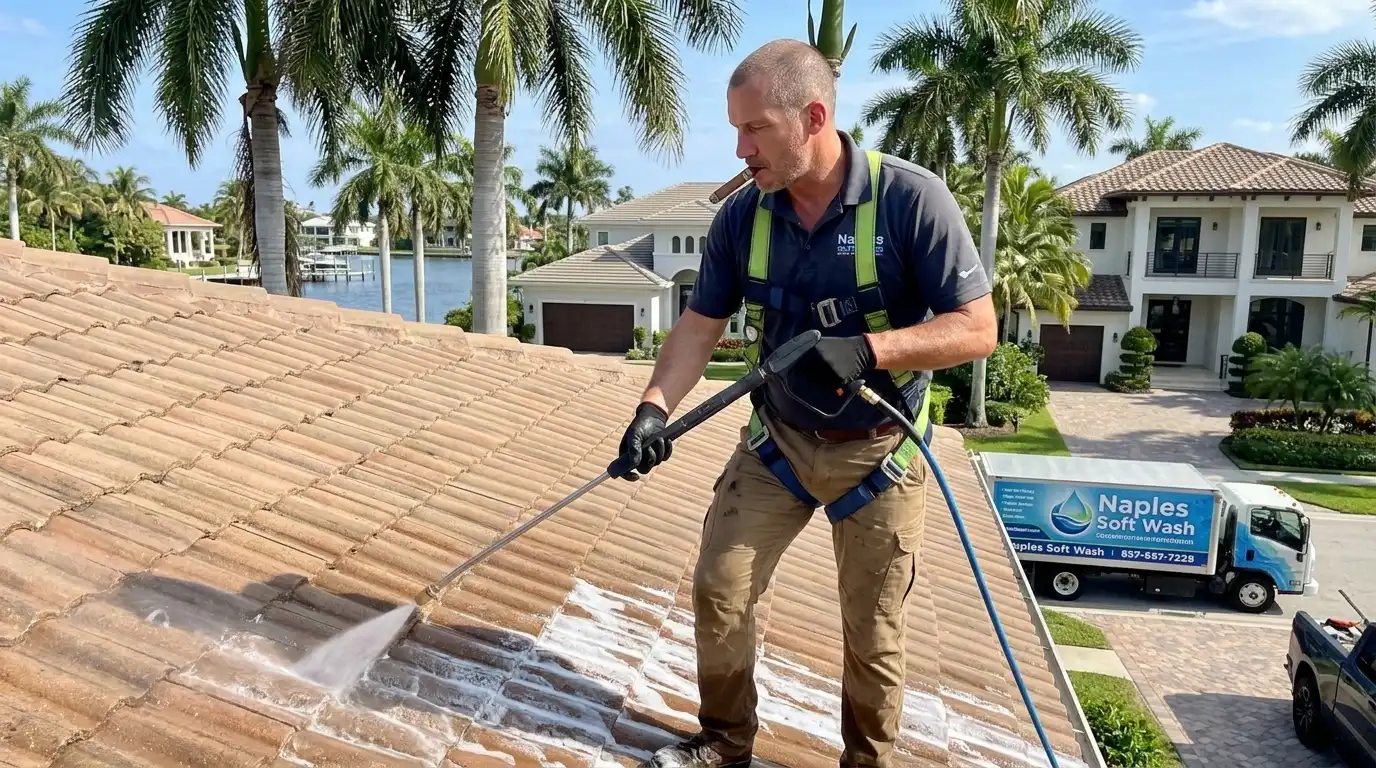
Careless barrel tile walking is one of the most common ways Naples homeowners end up with unexpected roofing repair bills after a cleaning. Clay and concrete barrel tile can support weight on the underside ribs — but the arched barrel sections crack under direct human weight, and mortar joints dislodge when a foot transfers lateral force across adjacent tiles. A single misstep on barrel tile can crack multiple tiles and dislodge mortar across a wide area.
Naples Pressure Washing applies soft wash solution from the eave line using extended reach equipment wherever possible, and our crews use trained foot placement whenever roof access is needed. We also offer a no-walk option on one-story homes without a pool cage.
Before hiring any roof cleaning company in Naples, ask them directly: “How do your crew members protect the tile during cleaning?” If they cannot explain their foot placement and pressure, do not book them. The only warranty-safe, tile-safe method is low-pressure soft wash with trained foot placement.
What “trained foot placement” actually means
Foot placement on barrel tile is not a slogan; it is described in the roofing literature. In a 1998 article on walking on roofs in Interface, the journal published by RCI (now the International Institute of Building Enclosure Consultants), professional engineer K. A. Schaak notes that barrel and S-shaped tiles will in most instances crack or fracture when someone steps on the center portion. The approach he describes is to set the foot perpendicular to the long dimension of the tile, over the head lap, spanning two covers with the heel on one and the toe on the other, and to walk in a sheet-metal-lined valley where that is possible.
Eagle Roofing Products gives matching advice for high barrel tiles: distribute your weight with the heel and toe on the high points of adjacent tiles. Its general advice for any tile roof is to orient your feet parallel with the ridge. Both sources make the same point that matters to a homeowner. A crew that walks up the middle of the pans, or plants a foot on the crown of a single tile, is putting weight exactly where barrel tile is weakest.
Loose tiles, wet tiles and storm season
The same article warns that foot traffic on loose-laid tile can dislodge unsecured tiles, and it advises avoiding roof access during rain, especially on steep roofs. A Tile Roofing Institute answer republished by Eagle makes the same point more simply: roofs are slippery when wet, so the work should be done by a qualified roofing professional.
In Naples that rules out walking a tile roof during an afternoon storm, and it means taking extra care in the weeks after a named storm, when tiles may have been lifted or cracked without anyone noticing from the ground. If we see a slipped, broken or loose tile during a cleaning, we stop work on that section, photograph it and tell you before anything else happens, so a roofer can secure it.
How much pressure does the tile industry allow?
Homeowners often hear conflicting numbers. The same Tile Roofing Institute answer on cleaning roof tiles, republished by Eagle Roofing, says professionals should not use a pressure setting above 1300 psi, to avoid damaging the surface of the tile, and it says diluted chlorine can help remove the final algae that might be present, while noting that plain water can be just as effective. It also states that dirt, algae or moss on the surface is not affecting the condition of the tiles and is more of an aesthetic issue that owners may wish to remove.
That gives useful context for the method on this page. Our soft wash works far below that stated upper limit, relying on the cleaning solution and dwell time rather than force. When a homeowner’s concern is appearance for an HOA review or a sale, the point that growth is cosmetic is reassuring: the goal is to remove it carefully, not to rush.
Before the crew goes up
- Whether you have spare tiles stored on the property, and where, in case a cracked piece is found.
- Any roof repairs, re-roofing or tile replacement in the last few years, and who did the work.
- Solar panels, skylights, satellite dishes or rooftop equipment that need a wider berth.
- Interior leaks or ceiling stains, so we can look at that part of the roof before any cleaning starts.
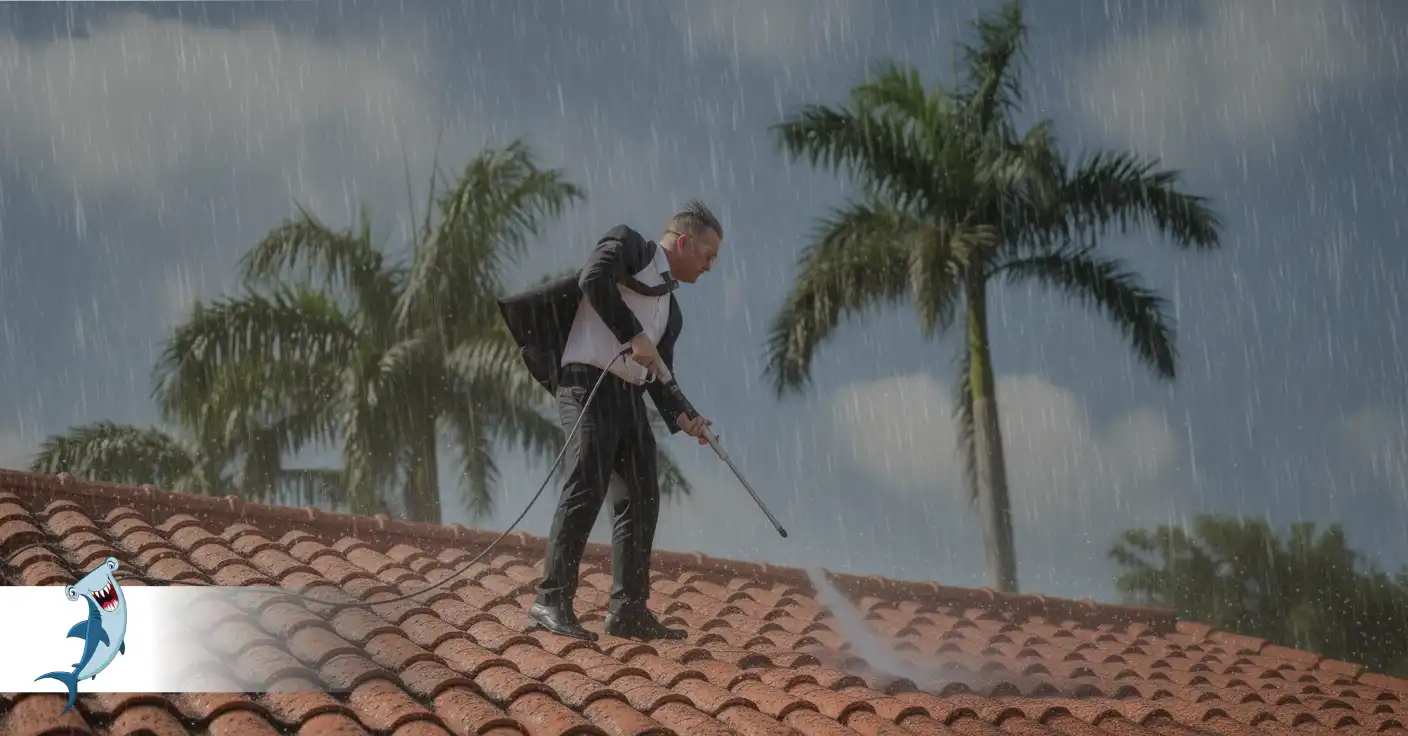
Black streaks GONE in 1 visit — and they stay gone for 2-3 years.
Soft wash chemistry kills Gloeocapsa Magma at the root, not just on the surface. No high pressure, no tile damage, no voided warranty.
Get Your Free Quote
Tell me what needs cleaning and where — I'll send a firm, no-obligation price by text or email, usually the same day.
Get My Quote →Lock in the best day for your schedule
Reserve the best time and date for your schedule and I'll follow up with your numbers. No payment to hold a spot and no obligation to keep the booking — reserve now, decide once you have the price.
About the Author
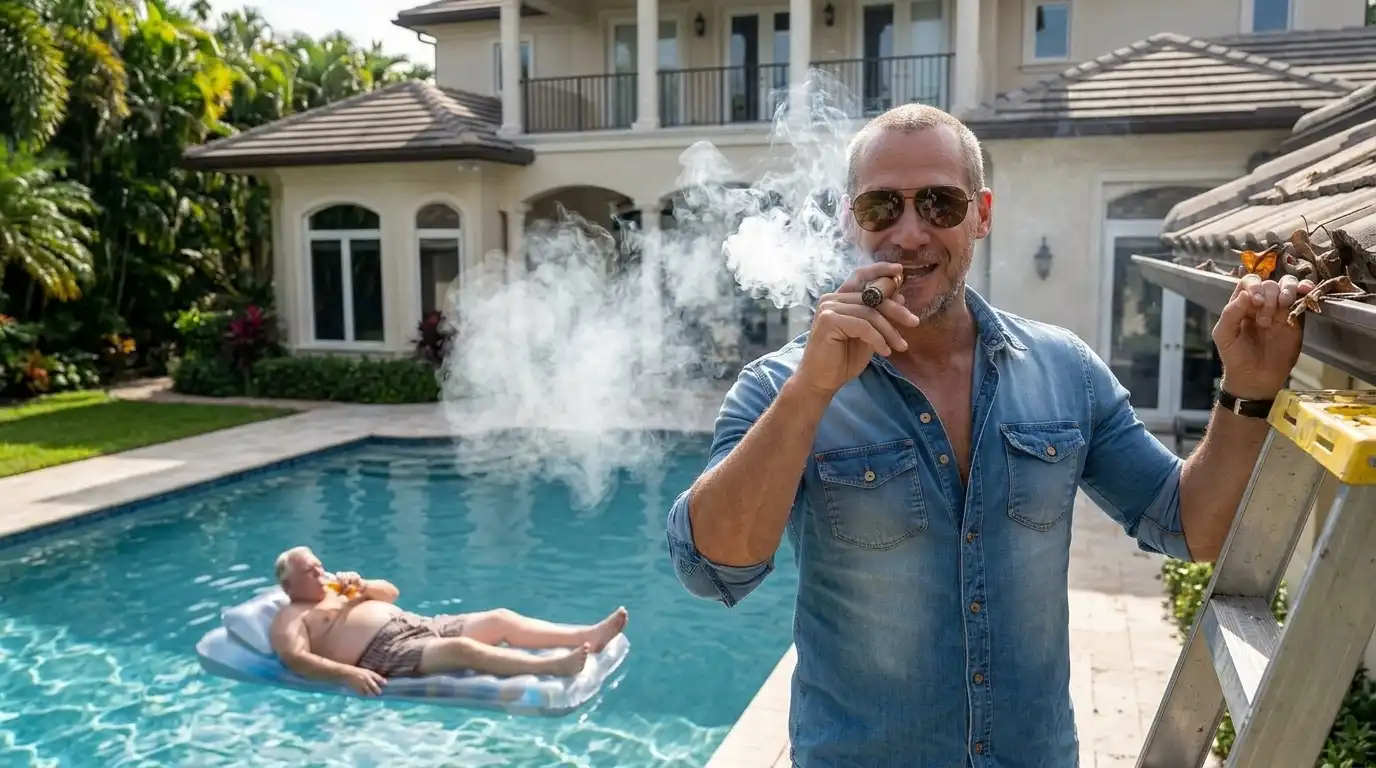
Owner Blane Perun started this company with a simple premise: Naples homeowners deserve a professional exterior cleaning option that doesn’t come with the inflated pricing of franchise operations and large corporate companies.