📍 Serving Naples, Bonita Springs, Marco Island & All SWFL | Licensed & Insured · Florida Contractor | 📞 239-544-1165

Lanai Screen Cleaning: What Pros Do Differently

If you live in Naples (or anywhere in Southwest Florida), you already know the pattern.

A few good weeks of “nice” weather. Then the humidity settles in, pollen shows up, lovebugs do their thing, and suddenly your lanai screens look… tired. Gray. Dusty. Sometimes with little black specks that do not come off with a quick hose rinse.

Most homeowners try the same routine first. Spray with the garden hose. Maybe a little dish soap. Maybe a broom. And it helps, kind of. For a minute.

Professional lanai screen cleaning looks similar from far away, but the results are way different up close. And it’s not because pros have some magic soap. It’s mostly process. Pressure control. The right chemicals in the right places. And not wrecking your screens, frames, or nearby surfaces while you’re trying to make things look better.

This is what the pros do differently.


The biggest mistake is treating screens like concrete

Screens feel tough until they don’t.

They’re thin mesh under tension, held in place by spline. The frames are usually aluminum. The fasteners might be a little corroded. And in Florida, everything is baking in sun and getting soaked, over and over.

So when someone blasts a screen panel like it’s a driveway… it’s a problem.

A pro thinks in terms of controlled rinse, not max force. The goal is to loosen and carry away the film (pollen, dust, mildew, salt air residue if you’re closer to the water) without deforming mesh or forcing water where it shouldn’t go.


Pros start with inspection, not spraying

This part sounds boring, but it matters.

Before any washing, a good tech is quietly noticing things like:

  • Loose spline or screens already pulling away at corners
  • Bent frames, missing screws, or shaky panel sections
  • Oxidation on aluminum (that chalky white residue)
  • Existing tears that could get worse with agitation
  • Areas where runoff could stain (pavers, painted walls, furniture, lanais with delicate finishes)

And yeah, also. What kind of cage is it? How high? How accessible? Any electrical fixtures? Outdoor kitchens? Ceiling fans? Speakers?

A homeowner sees “dirty screens.” A pro sees “stuff I need to not damage.”


They pre-wet and protect the surroundings (because runoff is real)

One reason DIY screen cleaning goes sideways is runoff. You’re cleaning the screen, but the dirty water goes somewhere.

Pros will typically:

  • Pre-wet nearby plants and rinse them after
  • Move or cover furniture if needed
  • Avoid pushing grime onto white soffits or freshly painted walls
  • Control where the rinse water flows, especially around pavers and pool decks

This is especially important when cleaners are involved. Even “eco-friendly” products can stress plants if you let concentrated runoff sit.


They use the right solution, and they do not overdo it

A lot of screen grime is not just dirt. It’s organic film. Pollen mixed with humidity. Mildew beginning to take hold. Airborne algae. Exhaust residue. Bug spots. All of it layered thinly so it looks like “just dust” until you wipe it and your rag turns black.

Pros often use light, surface-safe detergents designed for exterior cleaning. The goal is dwell time, not brute force.

Dwell time is the quiet trick. You apply a solution, let it work for a few minutes, and then rinse it off thoroughly. That’s where the cleaning actually happens.

Also, professionals know when not to use strong mixes. For example, if you have aluminum oxidation, the wrong approach can streak or create a blotchy look that’s worse than the dirt you started with.


They rinse differently: wider patterns, more distance, better angles

Here’s one of the most practical “pro” differences.

DIY rinsing usually happens straight-on, from too close, and for too long. It’s like power-sanding something delicate.

Pros will:

  • Use a wider fan tip and keep appropriate distance
  • Rinse at angles to lift debris out of the weave, not drive it deeper
  • Work top to bottom so dirty runoff does not re-contaminate clean sections
  • Keep pressure appropriate for screen mesh and framing

And they don’t just rinse until “it looks good from inside.” They rinse until the soap and suspended grime is truly gone.

Because if residue dries on the mesh, it can actually attract more dirt later.


They clean the frames and tracks too, not just the mesh

This is a big one that homeowners skip. Understandably.

You look at the screen. You clean the screen. But a lot of the ugliness is the frame. The corners. The bottom rails where dirt collects. The places where spider webs anchor.

Pros clean the whole system:

  • Screen mesh
  • Frame faces and edges
  • Bottom rails and kick plates
  • Door frames and thresholds
  • Corners where mildew likes to hide
  • Visible cobwebs and insect buildup

Because if you only wash the mesh, the cage still looks dingy. The “before and after” is in the details.


They know how to handle oxidation (and when not to chase it)

That white chalky stuff on aluminum framing is oxidation. It’s super common in Florida. Humidity, salt air, sun.

Here’s the tricky part. Oxidation is not just “dirt.” It’s the surface breaking down. You can improve it, but it takes the right method. And if you go too aggressive, you can end up with streaking or uneven bright spots.

A pro will typically set expectations first. Sometimes the goal is “clean and even-looking” rather than “brand new aluminum.”

If you want a perfect, like-new finish, that can move into restoration territory, and it’s not the same as a routine wash.


Pros use soft washing where it makes sense (even on cages)

When people hear “pressure washing,” they imagine blasting.

But many pros in Southwest Florida use soft wash methods for organic growth on exterior surfaces, including areas around lanais and pool cages. It’s more about chemistry and rinse than raw PSI.

This matters because algae and mildew are living organisms. You can knock them off temporarily with water, sure. But if you do not address the growth, it comes right back.

Companies like Naples Pressure Washing & Roof Cleaning lean into this approach across exterior cleaning, because it’s effective and surface-safe when it’s done right. Especially in our climate. Stuff grows here. Fast.


They avoid the “screen bow” problem (and they know how to fix it if it happens)

Ever seen a screen that looks slightly wavy after someone cleaned it?

That can happen when too much pressure hits the mesh, or the panel is already loose, or the spline is old. Once a screen bows, it may never snap back perfectly. Sometimes it needs re-tensioning or re-screening.

Pros prevent it by controlling pressure, distance, and angle. And by spotting weak panels early.

This is one of those things that makes professional service feel “worth it” later, when everything still fits and looks tight.


They clean higher sections safely (without sketchy ladders)

Lanai cages can be tall. And awkward. And slippery around pool decks.

Pros bring proper ladders, stabilizers, sometimes extension equipment, sometimes two-person crews depending on the structure. They’re not balancing on a chair trying to reach the top beam.

Also, safety aside, better access means better results. The upper areas collect grime too, and when you skip them, the cage still looks shadowy and uneven.


They know the Florida-specific stuff: lovebugs, salt, mildew cycles

Florida has its own cleaning calendar. You can almost set your watch to it.

  • Lovebugs leave acidic residue that can stain if ignored
  • Pollen cakes into corners and screen weave
  • Mildew and algae bloom in humid, shaded areas
  • Salt air (especially closer to the coast) leaves film and speeds corrosion
  • Summer rains create that constant wet-dry cycle that makes everything grow

Pros build their process around these realities. Not just “spray and pray.”

And they’ll usually recommend a maintenance rhythm that keeps you from needing heavy cleaning later.


What a “real” professional lanai screen cleaning includes

Not every service is the same, but if you’re hiring it out, you want something close to this:

  • Pre-inspection of screens, doors, and frame condition
  • Pre-wet of surrounding areas (plants, pavers) as needed
  • Light application of appropriate cleaner with dwell time
  • Gentle agitation only where necessary (not scrubbing everything aggressively)
  • Controlled rinse (correct pressure, correct angles)
  • Frame and corner detailing
  • Final rinse down of nearby surfaces so runoff doesn’t dry dirty

If someone quotes it like it’s a 10 minute job… you already know.


A simple DIY “okay” method (if you’re just doing a quick refresh)

If you’re not ready to hire it out yet, this is the safer DIY approach for routine upkeep:

  1. Rinse screens gently with a garden hose, top to bottom.
  2. Mix mild soap (like a small amount of dish soap) in a bucket of water.
  3. Use a soft brush or microfiber mop, very light pressure.
  4. Rinse thoroughly. Twice if needed.
  5. Do frames last, then rinse everything again.

Avoid high pressure tips, and do not get aggressive around spline edges. If a panel already feels loose, don’t push it.

That said. DIY can keep things decent. It just usually won’t hit the same “bright, clean, even” look you get when a pro does the full process.


When it’s time to call a pro

You’ll save yourself a lot of frustration if you bring in help when:

  • Screens look gray even after rinsing
  • You see mildew speckling, especially in corners
  • Frames look chalky and streaked, similar to how my black plastic frames get this chalky white
  • You have high sections you can’t reach safely
  • You want the cage to look good for guests, a listing, or just because you’re tired of staring at it

If you’re in Naples, Bonita Springs, or Marco Island, you can get a quote from Naples Pressure Washing & Roof Cleaning and just have it handled. It’s one of those services that feels unnecessary until you see the difference, then you kind of want it done on a schedule.


Images you can add in this post (recommended)

You can drop these into WordPress where they fit best.

1) Dirty lanai screen close-up (pollen, dust film)

Close-up of dirty lanai screen mesh with dust and pollen buildup

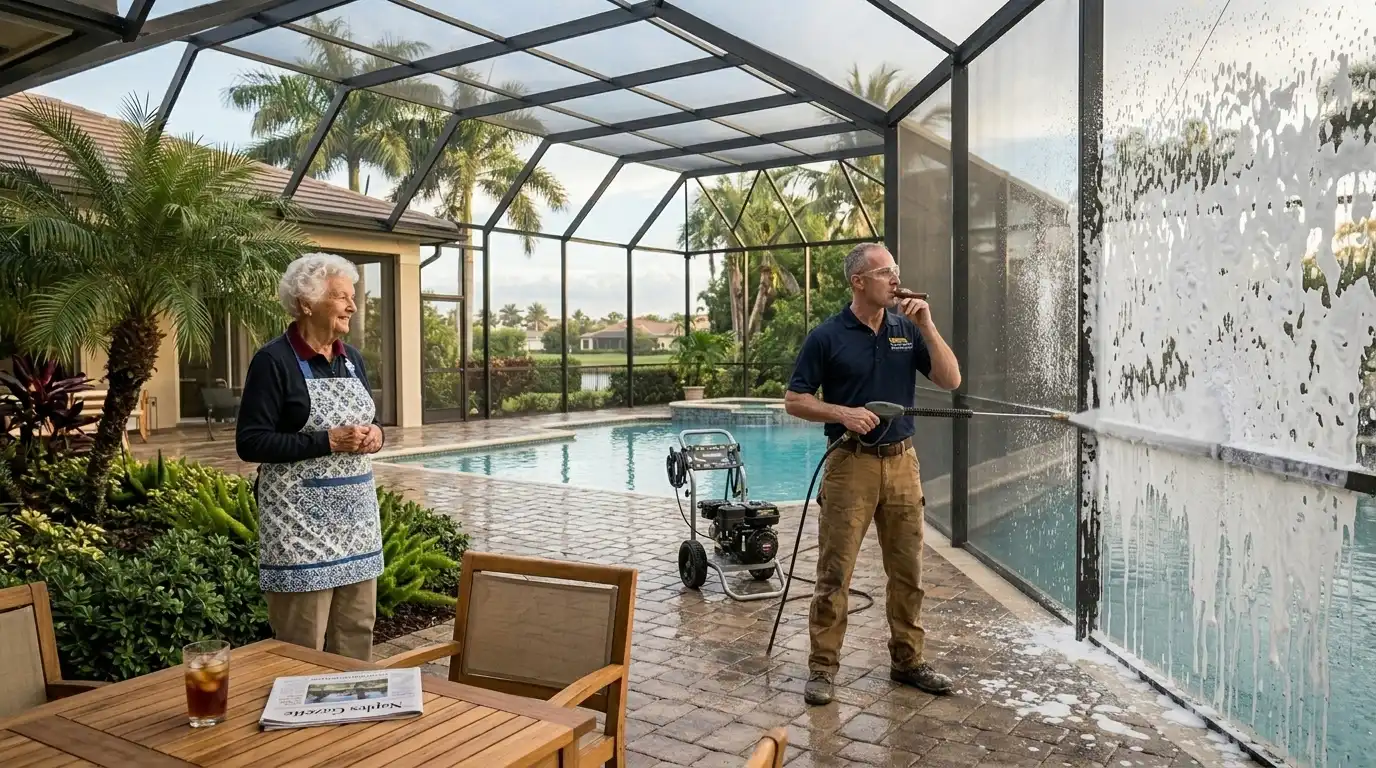
2) Technician soft washing exterior (process-style image)

3) Clean patio/lanai look (bright, inviting after cleaning)

Clean patio area with bright screens and outdoor seating


Final thought

Lanai screen cleaning is not complicated, but it’s easy to do slightly wrong. And “slightly wrong” is usually how screens get bowed, frames get streaked, and the cage still looks dull two days later.

Pros get better results because they slow down in the right places. They let solutions work. They control pressure. They clean the details. And they don’t turn a screen enclosure into a repair project.

FAQs (Frequently Asked Questions)

Why do my lanai screens in Southwest Florida look gray, dusty, and have black specks that don’t come off with a hose rinse?

In Southwest Florida, after a few weeks of nice weather, humidity, pollen, lovebugs, and environmental factors like salt air residue cause a thin organic film to build up on lanai screens. This film includes pollen mixed with humidity, mildew, airborne algae, exhaust residue, and bug spots. A quick hose rinse often isn’t enough to remove this buildup.

What common mistakes do homeowners make when cleaning lanai screens?

The biggest mistake is treating lanai screens like concrete by using high-pressure washing methods. Screens are thin mesh under tension with aluminum frames and can be damaged by excessive force. Homeowners often spray with garden hoses or use dish soap and brooms, which only help temporarily and can risk deforming the mesh or damaging frames.

How do professional lanai screen cleaners approach the cleaning process differently?

Professionals start with a thorough inspection to identify loose spline, bent frames, oxidation, tears, and sensitive surrounding areas. They pre-wet plants and protect furniture to control runoff. They use appropriate light detergents allowing dwell time for effective cleaning without overdoing it. Rinsing is done with wider fan tips at proper distances and angles to lift debris without damaging screens. They also clean frames and tracks thoroughly.

Why is controlling runoff important during lanai screen cleaning?

Runoff from cleaning solutions and dirty water can harm nearby plants, stain pavers or painted surfaces, and cause damage to outdoor furniture or delicate finishes. Professionals pre-wet plants, move or cover furniture, and control rinse water flow to prevent these issues.

How do professionals handle aluminum oxidation on lanai screen frames?

Aluminum oxidation appears as a chalky white residue caused by humidity, salt air, and sun exposure. Professionals know that oxidation isn’t just dirt but surface breakdown. They avoid using strong chemical mixes that can cause streaking or blotchy appearances and choose appropriate methods to manage oxidation without worsening the look.

What areas beyond the screen mesh do professionals clean during lanai screen maintenance?

Pros clean the entire screen system including the mesh, frame faces and edges, bottom rails and kick plates where dirt accumulates, door frames and thresholds, corners prone to mildew buildup, as well as visible cobwebs and insect residues. This comprehensive approach ensures a truly clean appearance rather than just cleaning the mesh alone.

Naples Pressure Washing & Roof Cleaning
Ready to Schedule?
"15-30% less than the competition — always."
239-544-1165