
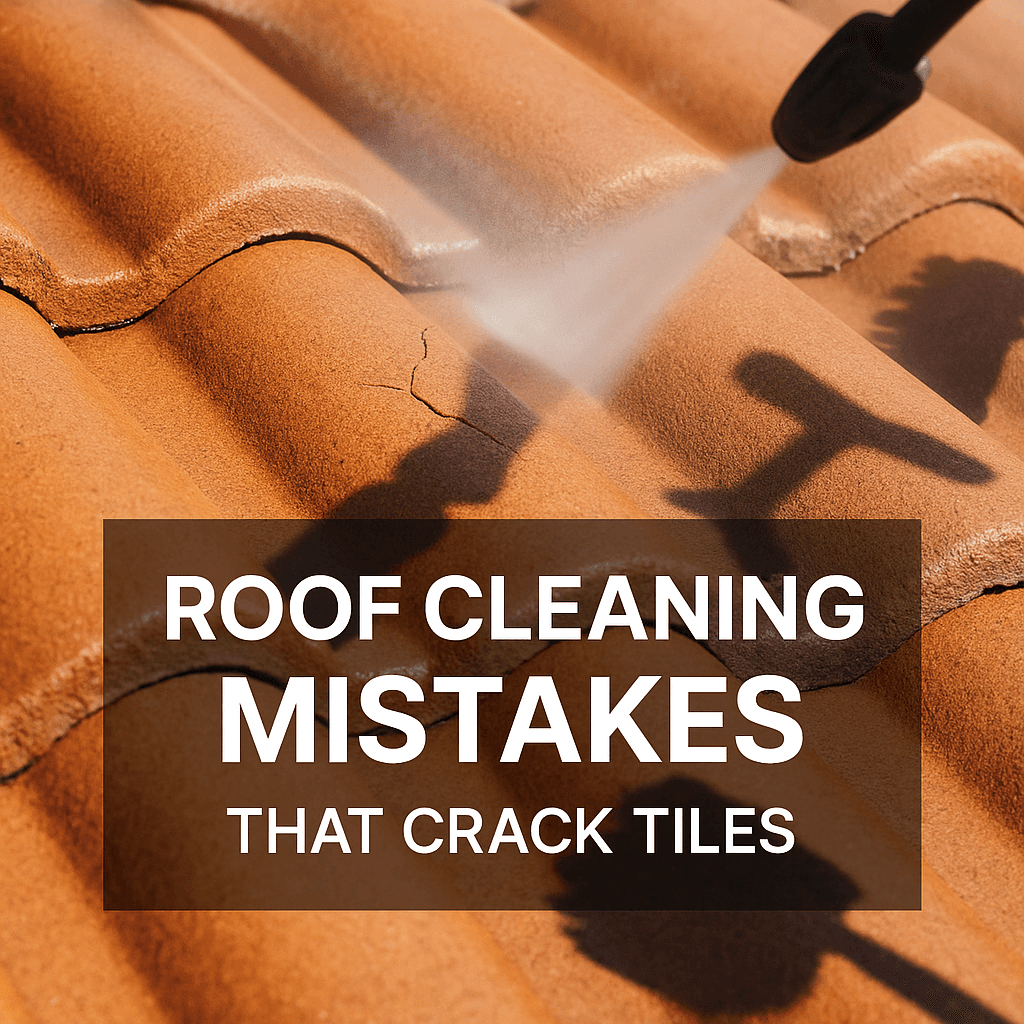
Tile roofs are tough. They look tough. They cost like they are tough.
And then one “simple roof cleaning” turns into a handful of cracked tiles, a leak you do not notice until the next big Naples downpour, and a repair bill that feels… personal.
I see this a lot in Southwest Florida. Not always because someone was careless on purpose. More like people assume tile is basically a rock. So it can take anything. Pressure, foot traffic, harsh chemicals, you name it.
But roof tile is brittle. Even when it is “good” tile. And cleaning mistakes can absolutely crack it.
Below are the most common tile roof cleaning mistakes that cause cracking, chipping, and breakage, plus what to do instead.
Quick visual guide: Tile types that crack differently
Before we get into mistakes, it helps to know what you are standing on.
- Concrete tile: thicker, more porous, heavy. Can chip at edges and corners, can crack from point loads.
- Clay tile: more brittle, classic look. Can crack cleanly and suddenly, especially if stepped on wrong.
- Lightweight or older tile: often more fragile than it looks. UV and age do not help.
Florida heat and humidity also play a role. Tiles expand and contract. Underlayment ages. Salt air in coastal areas does its thing. So if you hit a roof the wrong way during cleaning, the roof is already a little “stressed” before you even start.
It’s essential to recognize the differences between concrete and clay roofs, as this knowledge can greatly influence how we approach cleaning these different types of tiles without causing damage.
Mistake #1: Using high pressure like it is a driveway
This is the big one. The classic.
A tile roof is not a concrete slab. If someone takes a pressure washer wand up there and starts blasting, a few things can happen fast:
- Micro cracks form from impact, especially near edges and fastener points
- Corners chip and later break off in storms
- Tiles shift which creates pressure points that crack later
- Water gets forced underneath tiles which is its own mess
Even if a tile does not crack right away, you can create tiny fractures that become visible months later. Usually after thermal cycling and the first real wind event.
What to do instead: tile roofs should typically be cleaned with a soft wash method. Low pressure rinse. The cleaning comes from the solution, dwell time, and proper technique, not brute force.
Mistake #2: Walking the roof the wrong way (or letting “anyone” walk it)
This one surprises homeowners. They think the cracking comes from water pressure. But a lot of breaks come from footsteps.
Tile is strongest where it is supported. Step in the wrong spot and you are basically applying your body weight to a brittle arch.
Common walking mistakes:
- stepping on the high crown of a curved tile
- stepping on unsupported edges
- stepping where tiles are slightly lifted or not seated
- walking when tiles are hot and more fragile (yes, that matters)
Also, tile roofs are slippery. So people stomp harder to stabilize. That increases point load and… crack.
What to do instead: if you must access a tile roof, you walk in the correct channels and supported areas, move slowly, distribute weight, and ideally use proper footwear and safety setup. Professional roof cleaners who work on tile in Florida do this constantly and know the “feel” of it.
Mistake #3: Trying to scrape stains off with tools
Algae and mildew stains look like they are sitting on the surface. So someone grabs:
- a metal scraper
- a stiff brush
- a putty knife
- even a flat shovel edge (I have seen it)
That is how you chip glaze off clay tile or gouge concrete tile. And once you damage the surface, that tile tends to hold moisture and grow algae faster. Meaning you just created a permanent “dirty magnet.”
You can also crack a tile by levering against it while scraping. Especially along the overlap where tiles interlock.
What to do instead: use a roof safe chemical treatment that loosens organic growth, then rinse gently. The growth dies and the roof lightens over time without grinding your tiles down.
Mistake #4: Using the wrong chemical mix (too hot, too strong, too DIY)
There are two ways chemicals crack tile during cleaning:
- They weaken the tile surface over time (especially repeated misuse)
- They damage the systems around the tile, causing shifting and stress that leads to cracking
Common chemical errors:
- very high concentration mixes that are not meant for tile roofs
- leaving solution to dry too long in full sun
- mixing cleaners together like a science experiment
- using products that are not compatible with metal flashing, fasteners, or sealants
Also, runoff matters. In Florida, roof runoff hits landscaping, pavers, pool enclosures, and sometimes your neighbor’s stuff. Bad mix, bad day.
What to do instead: use biodegradable, roof appropriate solutions in the right dilution, apply evenly, control dwell time, and rinse correctly. This is basically the foundation of professional soft washing.
Mistake #5: Cleaning on the hottest part of the day
In Naples, roof surfaces can get brutally hot. When tile is hot:
- it expands
- it becomes more vulnerable to thermal shock
- it dries chemicals faster, which increases residue risk
- it becomes more slippery in weird ways, especially if humid
If someone sprays cooler water onto super heated tile, you can get quick temperature change at the surface. Thermal shock is not always dramatic, but it can contribute to micro cracking, especially on older tiles.
What to do instead: schedule roof cleaning for the right conditions. Many pros prefer mornings when surfaces are cooler and dwell time is controllable.
Mistake #6: Blasting debris out of valleys and edges with pressure
Valleys, hips, ridges, and edges are where you see buildup. Leaves, sand, tiny branches.
So the temptation is to blast it out. Hard.
But those areas are also where tiles are cut, fitted, and sometimes more vulnerable. Plus, valleys rely on proper water flow. If you dislodge tiles, break mortar, or damage valley metal, you can create a leak path.
What to do instead: controlled removal and gentle rinsing. Sometimes hand removal. Sometimes low pressure. It depends on the roof design.
Mistake #7: Ignoring cracked tiles that were already there
This is the sneaky one.
Many roofs already have a few cracked tiles from age, storms, or previous trades walking the roof. Cleaning does not cause those cracks. But cleaning can make them worse if the cleaner:
- steps on compromised areas
- forces water underneath
- dislodges pieces so the crack opens up
Then the homeowner thinks, “the cleaning cracked my roof.” Sometimes yes, sometimes no, sometimes it was already on its way.
What to do instead: do a quick visual inspection before and after. Take photos. Note any existing damage. A professional company will usually notice problem spots and adjust how they move and rinse.
Mistake #8: Using a surface cleaner attachment or rotary nozzle on tile
Rotary nozzles and surface cleaners are great. On flat concrete.
On a roof. No. The impact pattern can be aggressive, and it is very easy to catch an edge, lift a tile, or focus too much energy in one spot. The vibration and repeated impact can create chips and cracks.
What to do instead: soft wash application and a wide fan rinse at low pressure, keeping distance and angle correct.
Mistake #9: Treating tile like it is the only thing that matters
Tile roofs are a system. Tiles. Underlayment. Flashing. Fasteners. Vents. Seals. Gutters.
A cleaning method that is “fine for tile” can still cause cracks indirectly if it messes with the system:
- damaging flashing can redirect water under tiles
- disturbing ridge caps can change support points
- forcing water where it should not go can weaken underlayment
- clogged gutters can back up water and increase saturation and stress
And increased saturation plus heat plus shifting can turn minor tile flaws into cracks.
What to do instead: clean with the whole roof system in mind. Especially in Florida where heavy rain exposes every weakness fast.
What a safer tile roof cleaning usually looks like
Not every roof is the same. But in general, a tile roof cleaning that avoids cracking tends to involve:
- soft wash solution to kill algae, mold, mildew
- proper dwell time so growth releases without scrubbing
- low pressure rinse and controlled runoff
- careful movement on roof, or minimizing foot traffic when possible
- protecting landscaping and exterior surfaces below
That is basically why soft washing is the standard approach for tile roofs in our area.
Realistic warning signs you hired the wrong “roof cleaner”
If you are getting quotes and someone says or does any of this… pause.
- “We will just pressure wash it real quick.”
- They do not ask what type of tile you have.
- They cannot explain soft washing in plain English.
- They show up with only a pressure washer and no plan for plant protection.
- They are eager to walk everywhere on the roof without discussing access.
Tile is expensive. Repairs are annoying. So you want someone who treats it like a roof, not like a sidewalk with a slope.
Images you can add to this post (recommended)
Add a few visuals to make this article easier to skim. Here are some good options.
1) Cracked concrete or clay roof tile close up
2) Technician soft washing a tile roof (low pressure)
3) Example of algae staining on tile in humid Florida
If you do not have these exact images on your site yet, you can swap the URLs for your real Media Library file links in WordPress. The placements above are about right.
If you are in Naples, this is the simple move
If you are local and you want your tile roof cleaned without rolling the dice on cracked tiles, it is usually worth hiring a team that does tile roofs all the time and uses a soft wash process.
Naples Pressure Washing & Roof Cleaning does exactly that. Roof soft washing, exterior washing, the whole thing. You can read more here and request a quote: https://naples-pressure-washing.com/
Because honestly. Cleaning should make your roof look better. Not turn it into a repair project.
The short takeaway
Most tile roof cracking during cleaning comes from:
- too much pressure
- wrong walking technique
- scraping or aggressive tools
- harsh chemical misuse
- poor timing and sloppy rinsing
Do it gently, do it deliberately, and treat tile like the fragile, expensive surface it is. That is how you get a clean roof without the surprise cracking later.
FAQs (Frequently Asked Questions)
Why do tile roofs crack during cleaning even though they seem tough?
Tile roofs appear tough but are actually brittle, especially under pressure, foot traffic, or harsh chemicals. Even good quality tiles like concrete and clay can crack or chip if cleaned improperly due to their porous and fragile nature.
What is the biggest mistake people make when cleaning tile roofs?
The most common mistake is using high-pressure washing like on a driveway. This can cause micro cracks, chips at corners, tile shifting, and water intrusion under tiles. Tile roofs require a gentle soft wash method with low pressure to avoid damage.
How should I walk on a tile roof to prevent cracking?
Walk carefully on supported areas and channels of the tile roof, avoiding stepping on high crowns, unsupported edges, or lifted tiles. Move slowly, distribute your weight evenly, use proper footwear, and ideally have safety setups. Avoid walking when tiles are hot as they become more fragile.
Can scraping stains off tile roofs cause damage?
Yes. Using metal scrapers, stiff brushes, putty knives, or similar tools can chip glaze off clay tiles or gouge concrete tiles. Damaged surfaces hold moisture and algae faster, worsening the problem. Instead, use roof-safe chemical treatments that loosen organic growth for gentle rinsing.
What chemical mistakes should be avoided when cleaning tile roofs?
Avoid using overly strong or hot chemical mixes not designed for tile roofs. Don’t let solutions dry in full sun or mix incompatible cleaners. Use biodegradable, roof-appropriate solutions at correct dilutions to prevent weakening tiles or damaging flashing and fasteners.
Why is timing important when cleaning tile roofs in Florida?
Florida’s heat and humidity cause tiles to expand and contract; cleaning during the hottest part of the day makes tiles more fragile and prone to cracking. Cleaning should be done during cooler parts of the day to minimize stress on aged and weathered tiles.