
If you have ever stood outside looking at a green roof streak, a blackened driveway, or that film on your pool cage screen… you have probably had this exact thought.
“Do I need pressure washing for this. Or is soft washing the safer thing.”
And yeah, people ask it like it is a simple choice. Like picking regular vs premium gas.
It is not that complicated though, once you remember one easy rule.
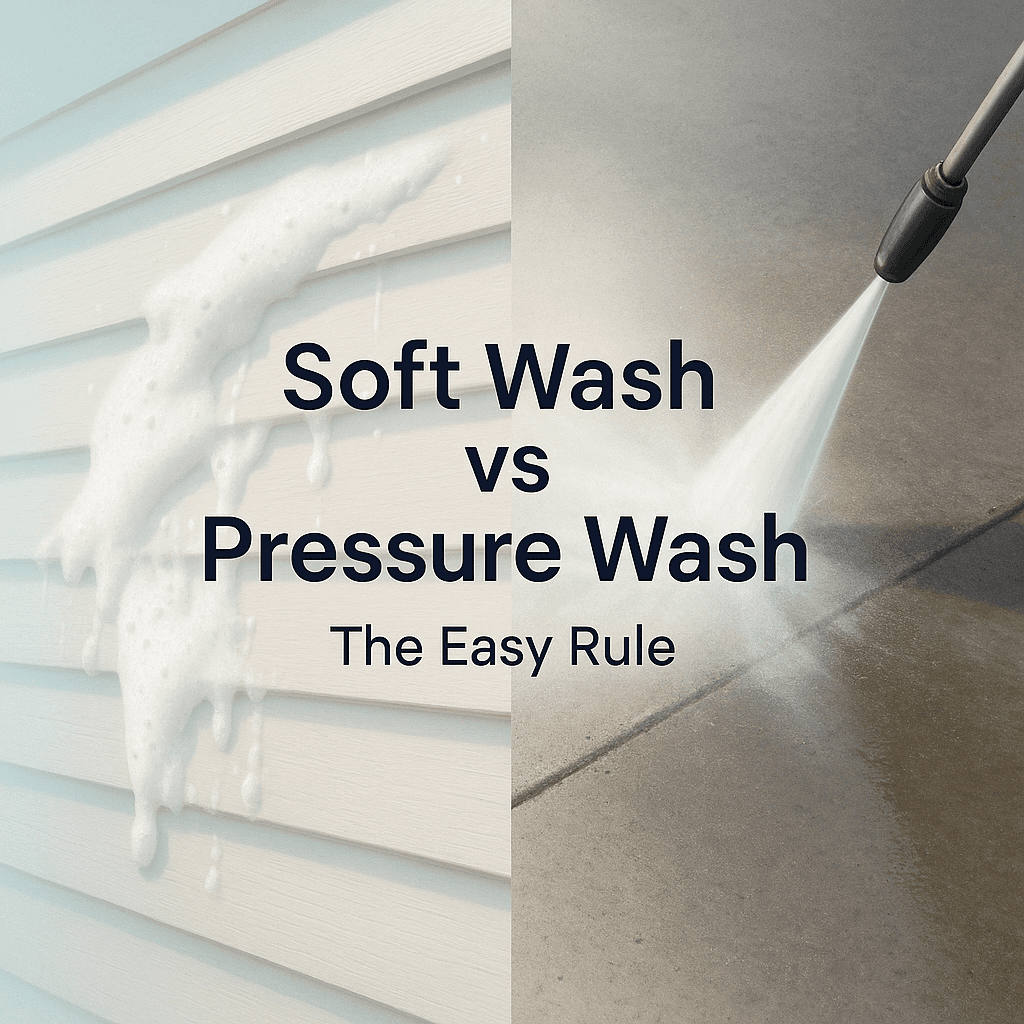
The easy rule (save this)
If it can be damaged by force, use soft wash. If it can handle force, use pressure wash.
That is it.
But to actually use that rule, you need to know what “damaged by force” means in real life. Because in Southwest Florida, surfaces get old fast. Sun, humidity, salt air, algae, all of it. Stuff that looks “solid” can be more fragile than you think.
So let’s break it down in a practical way. No jargon. Just what to use, where, and why.
First, what is pressure washing really
Pressure washing is what most people picture. Water blasting out of a wand at high pressure.
It is great for:
- hard surfaces
- heavy soil
- chewing gum type gunk
- layers of dirt that need mechanical force
But pressure has a downside. It can:
- etch concrete
- strip paint
- shred window screens
- dent soft wood
- blow water behind siding
- loosen roof shingles or tiles if used wrong
So pressure washing is not “strong cleaning”. It is impact cleaning.
And impact is not always your friend.
What soft washing is (and what it is not)
Soft washing is lower pressure water paired with cleaning solutions that do the actual work. Think of it like this:
Pressure washing relies on force.
Soft washing relies on chemistry and dwell time.
Soft washing is used to kill and remove:
- algae
- mold
- mildew
- bacteria
- organic staining
Which is… most of what turns things green, black, and ugly in Florida.
And no, soft washing is not just “pressure washing on low”. A real soft wash setup uses the right mix, applied safely, then rinsed carefully.
If you want the surface cleaned and also treated so growth does not immediately come back, soft wash is usually the move.
The simplest way to choose: a quick surface cheat sheet
Here is the short version. Then we will go deeper.
Usually soft wash
- Roofs (tile, shingle, metal)
- Painted siding
- Stucco
- Screen enclosures and pool cages
- Lanai ceilings
- Wood fences (most of the time)
- Outdoor furniture cushions, fabric, delicate surfaces
- Anything with old paint or aging materials
Usually pressure wash
- Concrete driveways
- Concrete sidewalks
- Some pavers (careful though)
- Garage floors
- Heavy duty stone surfaces (again, depends)
And right there is why people get stuck. Because pavers and concrete can be either one depending on condition.
Roof cleaning: this is almost always soft wash
Let’s just be blunt.
If someone offers to pressure wash your roof, that is a red flag.
Roofs in Naples get algae staining (those dark streaks) and sometimes lichen. That is biological growth. You do not need 3000 PSI to solve a biology problem.
You need the right solution, applied correctly, so it kills the growth at the root.
Pressure on a roof can:
- crack tiles
- loosen fasteners
- remove protective granules from shingles
- force water where it should not go
Soft washing is the industry standard for roof cleaning for a reason. It cleans, it kills, and it does not rely on blasting.
If you are looking for a professional soft wash roof cleaning in Southwest Florida, this is literally what Naples Pressure Washing & Roof Cleaning focuses on. You can start here and request a quote: https://naples-pressure-washing.com/
House washing: soft wash wins most of the time
Most homes here are stucco, painted surfaces, or a mix.
And the enemy is usually mildew and algae film. It looks like dirt but it is alive. Especially on the north side of the house, shaded areas, under soffits, around gutters.
Pressure washing a house can work in small controlled situations. But it is also how people:
- carve lines into stucco
- blow out caulk
- force water behind trim
- leave zebra stripes on siding
Soft washing is safer and it tends to look better because it cleans evenly.
You spray it on. Let it dwell. Rinse. Done.
Driveways and sidewalks: pressure wash, but with some respect
Concrete is tough. That is why pressure washing is popular for driveways.
But here is the part nobody tells you: concrete is tough, but the surface can still be damaged.
If you use too much pressure or the wrong nozzle angle, you can etch it. That etched area then grabs dirt faster and can look permanently “different”.
So yes, pressure washing is usually the right tool for concrete.
But it should be done with:
- the correct PSI (not “max power always”)
- the right tip
- consistent distance
- ideally a surface cleaner for uniform results
And if you have oil stains, rust stains, or fertilizer stains, pressure alone might not do it. You may need pre-treatment or spot treatment.
Pavers: the tricky middle ground
Pavers are where people get burned. Sometimes literally.
Because pavers can be cleaned with pressure washing. But…
- the joint sand can be blown out
- the surface can be scarred
- the sealer (if any) can be stripped
- you can create uneven “clean stripes” that look worse than the dirt
A lot of the time, you want a combination approach:
- gentle pressure to lift grime
- treatment to address algae/mildew
- proper rinse
- re-sanding joints if needed
- optional sealing for longer lasting results
If you have pavers around the pool, on the driveway, or the lanai, ask specifically about paver cleaning and paver sealing so it is handled as a system, not just a blast-and-go.
Pool cages and lanais: soft wash, almost always
Screens and aluminum frames do not need high pressure.
High pressure can:
- tear screens
- bend frame pieces
- drive water into places you do not want it
- cause oxidation issues to look worse
Soft washing is typically the best way to remove mildew and green growth on pool cages, lanais, patio ceilings, and screen enclosures.
Also, these areas are where runoff matters. Good companies use biodegradable solutions and rinse landscaping properly. That is a big deal in Florida because you have plants everywhere and irrigation systems that spread water around.
Gutters: depends on what you mean by “clean”
People say “gutter cleaning” but they mean two things.
- Clearing debris inside the gutter (leaves, grit, roof granules)
- Brightening the outside face (those tiger stripes)
Clearing debris is not a pressure washing job. That is hands-on.
Brightening can be soft wash or a more targeted chemical clean depending on staining. Many gutter stripes are oxidation and electrostatic bonding, not just dirt.
So the “easy rule” still applies: gutter metal can be damaged cosmetically by too much force. Soft wash is often safer.
Windows: pressure is not the point
If you are thinking pressure washing for windows, pause.
Windows are about:
- technique
- safe detergents
- proper rinsing
- avoiding hard water spots
- not forcing water into seals
A lot of exterior cleaning companies offer window cleaning as an add-on, which is nice because you can bundle it with house washing and lanai cleaning. Just do not assume “high pressure” is what makes windows clean. It is usually the opposite.
Why soft washing often lasts longer (especially here)
In Naples, Bonita Springs, Marco Island, you are not just cleaning dirt.
You are fighting regrowth.
Humidity plus shade plus organic spores equals fast return. So if you pressure wash a surface and you do not kill the algae or mildew, you can get that “looks clean for a month then it fades” problem.
Soft washing, when done correctly, is basically a treatment. It removes the visible staining and knocks down the living growth that causes it.
That is why roof soft washing is such a big deal. Those streaks are not just cosmetic. They are organisms.
A quick “don’t do this” list (seriously)
Some common mistakes homeowners make:
- Pressure washing roof tiles because “it is faster”
- Getting too close to stucco and leaving permanent lines
- Using a zero degree tip on concrete and carving it
- Blasting pavers and removing all the joint sand
- Using bleach randomly without protecting plants or knowing dwell time
- Mixing chemicals without understanding what they do (dangerous)
If you are renting a machine and doing it yourself, just go slower than you think you need to. Most damage happens in the first 10 minutes when people are “testing it”.
So what should you do for your place in Naples
Here is a simple way to decide without overthinking it.
Ask yourself:
- Is this surface painted, sealed, or easily marked by water pressure?
If yes, soft wash. - Is this surface hard mineral material like concrete that needs mechanical lift?
If yes, pressure wash (done correctly). - Is the main issue green/black growth, not mud or clay?
Soft wash first, even if you use some pressure later.
And if you want the fast answer without guessing, just get a quote and ask what method they would use and why. A professional should be able to explain it in plain language.
If you are local, Naples Pressure Washing & Roof Cleaning offers both, which matters because you do not want a “pressure washing only” company trying to solve every problem with one tool. You can check services and request a quote here: https://naples-pressure-washing.com/
Images you can add in this post (drop them where it fits)
Here are a few relevant images to include throughout the article. Add your own originals if you have them, but these are good placeholders:
- Soft wash roof cleaning example
- Pressure washing a driveway with a surface cleaner

- Cleaning a pool cage / screen enclosure
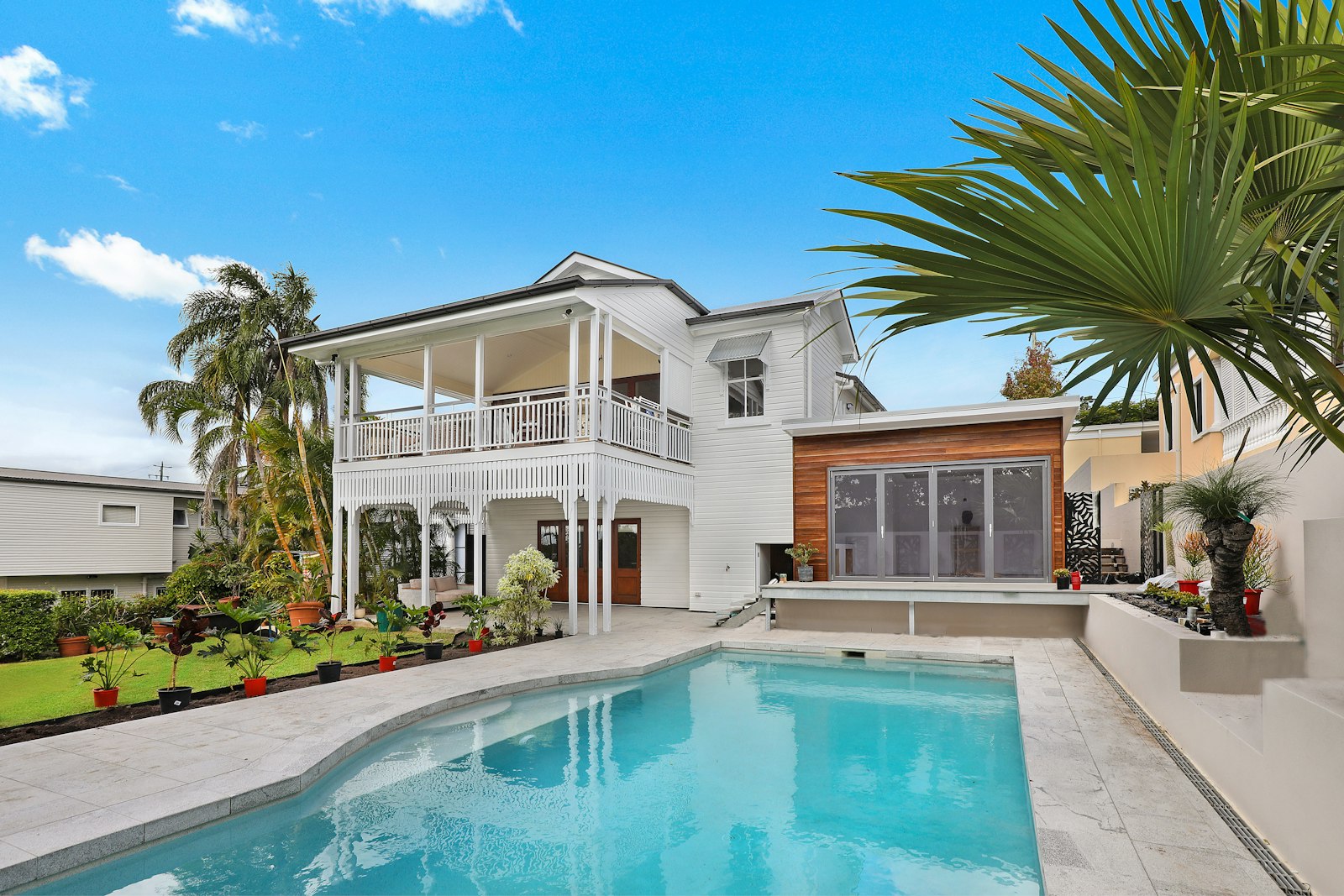
- Paver patio cleaning

The takeaway (the rule again)
Soft wash when force could damage the surface. Pressure wash when the surface can take it.
And if you are still unsure, that is normal. Some properties need a mix. Most do, honestly.
The main thing is not to treat every job like it is the same job. Roof, stucco, pavers, driveway, pool cage. Different materials, different risks, different best method.
If you want someone to just handle it and use the right approach for each surface, you can request a quote from Naples Pressure Washing & Roof Cleaning here: https://naples-pressure-washing.com/
FAQs (Frequently Asked Questions)
What is the main rule to decide between pressure washing and soft washing?
The easy rule to remember is: If a surface can be damaged by force, use soft wash. If it can handle force, use pressure wash. This helps you choose the safest and most effective cleaning method.
What surfaces are best cleaned with pressure washing?
Pressure washing is ideal for hard surfaces that can handle mechanical force, such as concrete driveways, sidewalks, garage floors, and some heavy-duty stone surfaces. It effectively removes heavy soil, chewing gum, and layers of dirt using high-pressure water impact.
When should I use soft washing instead of pressure washing?
Soft washing is best for delicate or aging surfaces that can be damaged by high pressure. This includes roofs (tile, shingle, metal), painted siding, stucco, screen enclosures and pool cages, lanai ceilings, wood fences (most of the time), outdoor furniture cushions and fabrics. Soft washing uses low pressure combined with cleaning solutions to kill algae, mold, mildew, bacteria, and organic stains.
Why is soft washing recommended for roof cleaning in Southwest Florida?
Roofs in Southwest Florida often develop algae staining and lichen growth. Pressure washing can damage roof tiles by cracking them, loosening fasteners, removing protective granules from shingles, or forcing water behind roofing materials. Soft washing safely kills biological growth without causing damage by using the right cleaning solutions applied carefully.
What precautions should be taken when pressure washing concrete driveways and sidewalks?
Although concrete is tough and usually suitable for pressure washing, excessive pressure or incorrect nozzle angles can etch the surface causing permanent marks that attract dirt faster. To avoid damage, use the correct PSI settings (not maximum power), appropriate nozzle tips, maintain consistent distance from the surface, and ideally use a surface cleaner attachment for uniform results.
Why are pavers considered tricky when choosing between pressure and soft washing?
Pavers can be cleaned with pressure washing but are vulnerable to joint sand being blown out, surface scarring, sealer stripping if any exists, and uneven ‘clean stripes’ that look worse than dirt. The choice depends on the condition of the pavers; improper technique can cause more harm than good.