
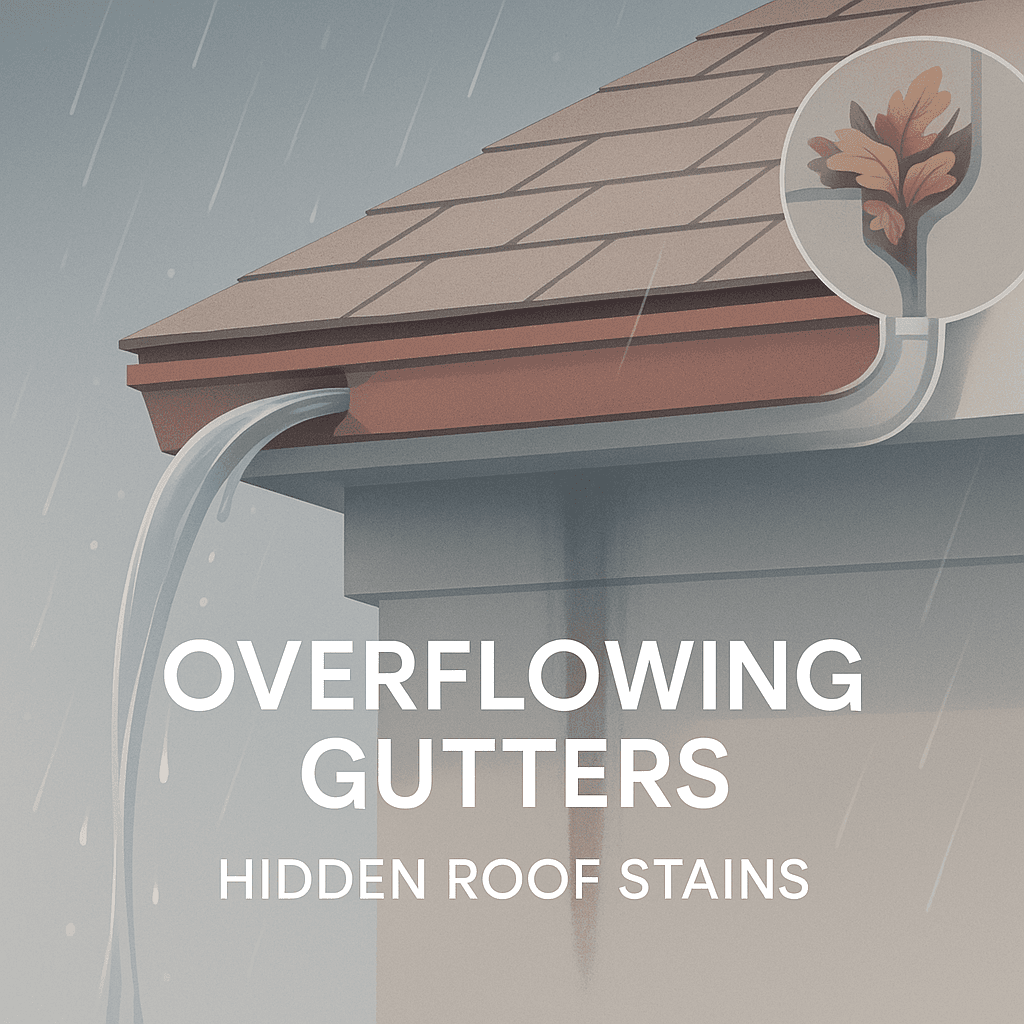
You notice it during the first big summer downpour.
Water is pouring over the edge of the gutter like a mini waterfall. Not from one spot either. A few sections. Maybe the whole run. And then, a day or two later, you spot it. Those dark streaks on the roof. The ones that weren’t there (or weren’t that obvious) a couple months ago.
So you do the normal thing. You assume the gutter is clogged with leaves, shingle grit, maybe a tennis ball, who knows. You start thinking about gutter guards. Or you tell yourself you’ll “get to it” when it’s cooler out.
But in Southwest Florida, there’s a sneaky connection people miss all the time.
Sometimes the gutters aren’t just overflowing because they’re dirty.
Sometimes they’re overflowing because the roof is dirty. And the roof is feeding the problem.
And yeah, it can go the other way too. Overflowing gutters can literally help create roof stains and make them spread faster. It’s annoying like that.
Let’s break it down in a way that actually makes sense, without the vague “it could be anything” stuff.
The quick visual checklist (what you’re probably seeing)
If any of this sounds familiar, you’re in the right place:
- Gutters spilling over during heavy rain, even if they look “fine” from the ground
- Black or dark brown streaks on shingles (often starting near gutter lines or roof edges)
- Green patches near the drip edge or in shaded roof sections
- Water stains on fascia, soffit, or the exterior wall under the gutter
- Little plants growing out of the gutter seams (this one is… a classic)
Here’s a simple example of what overflowing gutters can look like when they can’t move water fast enough:

And here’s the kind of roof staining people usually notice after that:

(Images are illustrative. Your roof might show staining in streaks, patches, or a dark “shadow” along edges.)
The hidden cause: roof algae feeds your gutters (and vice versa)
In Naples and the surrounding areas, the most common “mystery stain” on roofs is algae, usually Gloeocapsa magma. It’s not mold like people assume. It’s airborne, it loves humidity, and it settles into asphalt shingles like it pays rent.
Now here’s the part most homeowners don’t connect.
When algae and roof grime build up, rainwater becomes… chunky
Not chunky like oatmeal. More like a constant rinse of:
- dead algae cells
- fine roof grit (that black sandy stuff)
- pollen
- tiny bits of organic debris that stick to damp shingles
Over time, that rinse runs straight into your gutters. And it creates a sticky sludge layer inside them. Even if you don’t have big leaf clogs, that sludge can slow drainage down a lot.
So during a heavy storm, the gutter can’t move water fast enough. It backs up. It spills over.
And then it keeps the roof edge wet longer.
And algae loves that.
It’s basically a feedback loop.
Why roof stains often start near the gutter line
You’ll hear people say, “My roof stains are only at the bottom, near the gutters. Isn’t that just dirt?”
Sometimes it is dirt. But usually it’s dirt plus moisture plus biology.
Here’s why the bottom edge gets hit first:
- The roof edge stays damp longer
Gutters hold water. If they’re slow-draining or holding sludge, humidity hangs around that edge. - Overflow splashes back up onto shingles
In hard rain, overflowing gutters don’t just spill down. They splash. And that splash hits the first few courses of shingles. - Organic buildup collects at the drip edge
The drip edge is basically a catching point. Stuff settles there. Then it grows.
So what looks like a “roof problem” can start as a “gutter performance problem”… which was originally caused by roof runoff.
Yeah. It’s circular.
The other hidden culprit: shingle granules and “roof sand” clogging gutters
Even a healthy roof sheds granules over time. If you’ve ever cleaned gutters and found what looks like dark sand, that’s it.
In moderation, it’s normal.
In excess, it’s a sign of aging shingles or damage. But either way, it fills the trough of the gutter and creates a dam effect. Water flows over the top before it flows out the downspout.
And here’s the detail that matters: granules don’t always block the downspout like a leaf ball would. They can just reduce capacity. So everything looks fine until the storm hits.
Overflowing gutters can stain your roof in a different way too
Not all roof stains are algae streaks.
When gutters overflow repeatedly, you can get staining from:
- tannin runoff from wet leaves and pine needles
- rust from metal fasteners or old gutter sections
- mud splashback from the ground during storms
- mildew growth on fascia and soffit that creeps upward visually
So you might be scrubbing the roof edge or looking at shingle discoloration, when the real “stain factory” is the gutter line staying wet and dirty for weeks.
Florida-specific: why this happens faster here
Southwest Florida is kind of the perfect lab for exterior staining.
You’ve got:
- humidity most of the year
- warm nights (less dew drying)
- heavy rain cycles
- roof surfaces that stay warm and damp
- shaded sections from trees and neighboring structures
So the timeline is faster. In some climates, gutters might take years to get gross. Here, you can see major buildup in a single season if conditions line up.
So what do you do first? Roof, gutters, or both?
If you’re trying to be practical (and not waste money), here’s the simplest way to think about it.
Clean gutters first if:
- water is spilling over during rain right now
- you see standing water in gutters days after a storm
- plants are growing out of them
- you have water marks down the fascia or wall
Clean the roof first if:
- you have widespread black streaks or green patches
- the gutters keep filling with dark sludge even after cleaning
- roof edges look “dirty” no matter what you do to the gutters
- you’re seeing staining travel upward from the lower roofline
Most of the time, the real answer is:
Do both. But do them in the right way.
Because blasting your roof with high pressure to “fix stains” can shorten shingle life. And rinsing gutters without removing the sludge layer is like wiping a greasy pan with water and calling it done.
The safe method for roof stains: soft washing (not pressure)
A lot of roof stains in Naples are biological. Algae, mildew, lichen in some cases. And those don’t need aggressive force. They need the right cleaning mix, the right dwell time, and a controlled rinse.
That’s what soft washing is.
It’s low pressure, chemical assisted cleaning designed for roofs and delicate surfaces.
Here’s a visual of what roof soft washing equipment can look like in the field:

If you’re in the Naples area and you want it handled without the guesswork, Naples Pressure Washing & Roof Cleaning offers professional roof soft washing and exterior cleaning that’s built for Florida conditions. You can check services and request a quote here: https://naples-pressure-washing.com/
Not a hard sell. Just… this is one of those jobs where doing it “mostly right” can still cause damage.
What a proper gutter cleaning should include (quick reality check)
A real gutter cleaning is not just spraying water through it.
At minimum, it should mean:
- removing debris by hand or with proper tools
- flushing downspouts to confirm flow
- clearing sludge and granule buildup so the trough is restored
- checking for loose sections or bad pitch (water should move toward downspouts)
Because if the gutter has the wrong slope, it can be clean and still overflow. That’s another one people miss. They clean it twice and think it’s cursed. It’s not cursed. It’s angled wrong.
A simple test you can do the next time it rains
You don’t need a ladder for this. Just watch a few things.
During a steady rain:
- Is water overflowing evenly along a long section?
That points to capacity reduction (sludge, granules, improper pitch). - Is it overflowing at one spot like a waterfall?
That usually points to a blockage near that point or a downspout choke. - Do you see water running behind the gutter?
Could be apron issues, drip edge problems, or the gutter pulling away from fascia.
Then check the next day:
- do those overflowing sections line up with the worst roof edge staining?
Often they do. Not always, but enough that it’s worth noticing.
The long-term fix is boring, but it works
You don’t need a complicated system. You need a routine.
In this area, most homes benefit from:
- periodic gutter cleaning (especially after heavy pollen seasons and storm months)
- roof soft washing as needed to remove algae before it becomes a full roof blanket
- house washing so overflow stains don’t become permanent on stucco and trim
If you’re trying to protect curb appeal and avoid wood rot and fascia staining, this stuff matters more than people want to admit. It’s not glamorous maintenance. It’s just… the difference between a house that always looks a bit tired and a house that stays sharp.
What to do next (if you want the problem to actually stop)
If your gutters are overflowing and you’re noticing roof stains at the same time, treat it like a connected issue. Because it usually is.
A good next step is to have someone look at:
- the gutter interior condition (sludge, granules, downspouts)
- roof staining type and spread
- whether overflow is causing fascia and soffit issues
- whether a soft wash would remove the stains safely
If you’re in Naples, Bonita Springs, or Marco Island, you can reach out to Naples Pressure Washing & Roof Cleaning and get a quote or schedule service here: https://naples-pressure-washing.com/
Sometimes it’s a 20 minute fix. Sometimes it’s a “we should clean the whole system and reset it” fix. Either way, you’ll know what you’re dealing with. And you’ll stop watching your gutters overflow like they’re auditioning for a fountain show.
FAQs (Frequently Asked Questions)
Why are my gutters overflowing during heavy rain even when they look clean?
Gutters can overflow during heavy rain not only because of visible clogs like leaves but also due to a sticky sludge layer formed by roof algae, dead cells, pollen, and fine roof grit washing down from your shingles. This sludge slows water drainage, causing gutters to back up and spill over.
What causes dark streaks or stains on my roof near the gutter line?
Dark streaks on your roof near the gutter line are often caused by algae called Gloeocapsa magma. These stains start near gutters because the roof edge stays damp longer due to slow-draining gutters holding moisture, overflow splashes back onto shingles, and organic buildup collects at the drip edge, creating ideal conditions for algae growth.
How does roof algae contribute to gutter problems?
Roof algae and grime wash down with rainwater into gutters as a mix of dead cells and organic debris, forming a sticky sludge inside gutters. This sludge reduces water flow capacity, leading to backups and overflows that keep the roof edge wet longer, encouraging more algae growth—a feedback loop worsening both roof staining and gutter performance.
Can shingle granules clog my gutters even if there are no leaves?
Yes. Over time, asphalt shingles shed granules or ‘roof sand’ which accumulate in gutters. While moderate amounts are normal, excessive granule buildup can create a dam effect that reduces gutter capacity and causes water to overflow during storms without necessarily blocking downspouts visibly.
How do overflowing gutters contribute to roof staining beyond algae?
Repeated gutter overflows can cause additional roof stains from tannins—organic compounds leached from leaves and other debris—that splash back onto shingles. This type of staining is different from algae streaks but equally affects the roof’s appearance and potentially its longevity.
What signs indicate that my gutters and roof need cleaning or maintenance?
Look for these signs: gutters spilling water during rain despite appearing clean; black or dark brown streaks on shingles near edges; green patches on shaded roof areas; water stains on fascia or walls under gutters; and small plants growing in gutter seams. These indicate clogged or slowed drainage often linked to roof grime feeding into your gutters.