
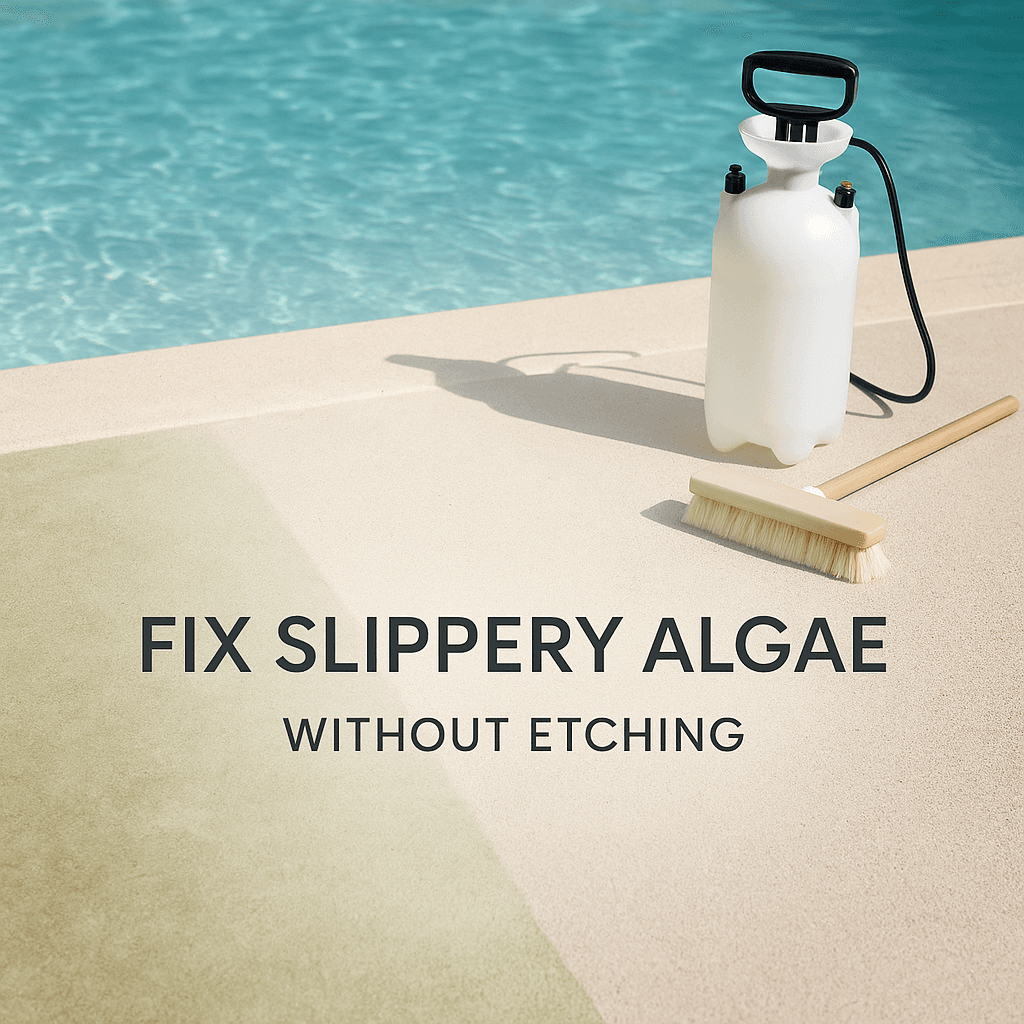
If your pool deck feels like an ice rink lately, you are not imagining it. In Southwest Florida, the combo of heat, humidity, shade, and daily sprinkler overspray basically invites algae to move in. And once it does, the surface can go from “a little dingy” to genuinely slippery, especially on textured concrete, cool deck coatings, pavers, and those older brushed finishes.
The part that trips people up is this. They want it clean fast, so they crank the pressure up. Or they grab the harshest chemical they can find. And yeah, the green disappears… but the deck ends up etched. Rough in some spots, streaky in others, and sometimes permanently lighter. Not great.
So let’s talk about how to remove algae and get your traction back without chewing up your surface.
Why algae makes pool decks so slippery (and why it keeps coming back)
Algae is basically a living film. It doesn’t just “sit” on the deck, it clings. When it mixes with moisture, sunscreen oils, and fine dirt, you get that slick layer that turns the deck into a slip hazard.
In Naples, Bonita Springs, Marco Island, all around here, the biggest repeat offenders are:
- Shaded areas that stay damp longer
- North facing sections that do not dry quickly
- Spots where the pool overflows a bit or the cage drips after rain
- Sprinklers hitting the deck daily
- Areas under planters, furniture, or mats where water gets trapped
And if your deck is coated (cool deck, acrylic coatings, painted finishes), algae loves the tiny pores and texture. It is comfortable there. Too comfortable.
The big mistake: blasting it clean (aka how etching happens)
Etching is surface damage. It happens when pressure is too high, the tip is too aggressive, the wand is too close, or the cleaner uses a turbo nozzle like they are stripping a driveway.
What it looks like in real life:
- Zebra stripes from uneven passes
- “Fuzzy” concrete where the top layer got torn up
- Light spots that never match the surrounding area again
- Exposed aggregate showing through unexpectedly
- A rough feel under bare feet, especially obvious on pool decks
And pool decks are extra easy to mess up because many are softer finishes than driveways. A pool deck is meant to be comfortable, not bulletproof.
So the goal is not maximum pressure. The goal is the right chemical, enough dwell time, and controlled rinsing. That is how you remove algae without etching.
The safer approach: kill the algae first, then rinse it away
Here is the simple truth. Algae removal is mostly chemistry, not force.
A good process usually looks like this:
- Dry debris removal (blow off leaves, sand, dirt, pollen)
- Pre-wet surrounding landscaping (especially if using stronger cleaners)
- Apply an algae killing solution and let it dwell
- Light agitation only if needed (soft deck brush, not grinding)
- Low to moderate pressure rinse with wide fan tip
- Final rinse and cleanup so residue does not sit around the pool
The dwell time is the part most DIY attempts miss. People spray something on, rinse 30 seconds later, then wonder why it returns in a week.
What to use (and what not to use)
I am going to keep this practical, not chemical textbook stuff.
Usually safe options for many pool decks
These are common choices depending on the surface:
- Sodium hypochlorite solutions (the active ingredient in liquid pool chlorine and many professional mixes)
- Dedicated exterior algae and mildew removers labeled for concrete or coatings
- Oxygen bleach products (often gentler, sometimes needs more scrubbing, works slower)
Sodium hypochlorite is popular because it works. Fast. But it needs to be mixed correctly, applied carefully, and rinsed well. Also, it can spot or fade certain coatings if abused. So. Respect it.
What I would avoid
- Straight acid washing on most pool decks (can etch concrete and damage coatings)
- Ultra high PSI rinsing to “make up for weak chemicals”
- Metal wire brushes on coated decks
- Mixing random chemicals together (seriously, do not do that)
If your deck is painted or coated and you are unsure what product is safe, that is usually the moment to stop guessing.
Step by step: how to clean algae off a pool deck without etching
This is the DIY friendly version, with the same logic pros use. Adjust based on your material.
1) Pick a calm, cloudy time if possible
Direct blazing sun can dry chemicals too quickly. You want the solution to stay wet long enough to work. Early morning is often best.
2) Clear the surface
Sweep or blow off dirt and leaves. If you apply cleaner over gritty sand, you can grind that grit into the surface while scrubbing. Not ideal.
3) Pre-wet plants and nearby grass
If you are anywhere near landscaping, soak it with water first. This helps reduce the chance of chemical stress. Then rinse plants again after the job. It’s important to follow a guide to the safe use of home and garden chemicals to avoid harming your plants.
4) Apply cleaner evenly
Use a pump sprayer. Keep it even. Do not “spot treat” with super strong mix in one corner and weak mix elsewhere unless you want a patchy look.
Let it dwell. Usually 5 to 15 minutes, sometimes longer, depending on the product. Keep it from drying out. Light misting can help.
5) Light brushing only where needed
If algae is thick, use a soft deck brush. You are not sanding a boat hull. Just loosening the film.
6) Rinse with low to moderate pressure
Use a wide fan tip and keep distance. The rinse should carry the dead algae away, not carve the surface.
If you see lines forming, you are too close or too much pressure. Back up immediately.
7) Final rinse around the pool edge
You do not want residue washing into the pool if you can avoid it. Rinse toward drains or away from the pool when possible.
Special notes by surface type (because not all decks are the same)
Cool deck and acrylic coated decks
These can be the most sensitive. Too much pressure can peel or scar the coating. Strong mixes can sometimes fade color.
The key is: chemical does the work, rinse gently.
If your coating is already flaking or chalky, even a gentle clean can reveal problems underneath. That is not the cleaning “causing” it, it is the coating reaching end of life, but it still surprises people.
Broom finished concrete
Usually durable, but still easy to stripe if you are inconsistent with rinsing. Keep your passes even and do not use a zero degree tip.
Pavers (especially around pools)
Algae can grow in the joints and on the paver face. Cleaning is one part. Stabilizing the joints after, and keeping the area dry when possible, matters too. If you have sand loss already, aggressive pressure can blast joint sand out causing pavers to shift which leads to new problems. For more information on how to prevent such issues and maintain your paver surfaces, you might find this guide on designing and building a paver walkway helpful.
How to keep algae from coming back so fast
You cannot fully stop biology in Florida. But you can slow it down a lot.
A few things that genuinely help:
- Adjust sprinklers so they do not spray the deck every day
- Trim back shrubs to improve airflow and sunlight
- Rinse the deck weekly with a garden hose to remove surface grime and sunscreen oils
- Clean the pool cage and lanai structure since it drips and shades areas (this is a big one)
- Consider a routine exterior cleaning schedule instead of waiting until it is slick again
If you have pavers, sealing can sometimes help reduce moisture intrusion and staining, depending on the condition and the product used. To ensure optimal results while sealing, it’s important to follow certain minimum workmanship standards.
When it is time to call a pro (and what “good” looks like)
If any of these are true, a pro is usually the smarter move:
- The deck is coated and you are not sure what it can handle
- You have heavy black algae staining, not just light green film
- You already see etching, striping, or surface damage from past cleaning
- You want it cleaned without harming nearby plants, screens, and pool equipment
- You do not want runoff issues around the pool and drains
A professional soft wash approach focuses on the right mix, controlled application, and a rinse that cleans without scarring. That is the difference.
If you are in Naples or nearby and you want it handled carefully, Naples Pressure Washing & Roof Cleaning does pool deck and patio cleaning with the kind of process that removes algae without tearing up the surface. You can check out the service area and request a quote here: https://naples-pressure-washing.com/
A quick reality check on “etching” vs “cleaning marks”
One more thing, because it matters.
Sometimes people think they have etching, but it is actually:
- Uneven algae removal (still dirty in certain pores)
- Cleaner dried too fast and left residue
- Hard water staining showing after the algae film is gone
- Old patchwork from previous coatings or repairs
Actual etching is physical damage. If you run your hand across it and it feels rougher in streaks, or you see the texture changed, that is usually real. To avoid such confusion in the future, it’s important to understand how to identify hard water stains. For some helpful tips on removing hard water stains, make sure to follow these guidelines carefully.
Wrap up
A slippery pool deck is not just annoying; it poses a safety issue. However, you don’t need to resort to extreme measures to fix it.
Start by eliminating the algae, allowing it to work its magic, then rinse with controlled pressure. This method will ensure a clean deck while preserving the finish.
If you’re weary of experimenting with your own pool deck (which is completely understandable), hiring a professional soft wash service is often more cost-effective than repairing an etched or damaged surface later.
Moreover, when considering safety and accessibility, it’s essential to adhere to guidelines such as those provided by the ADA. If you’re local and in need of such services, you can start your search here: https://naples-pressure-washing.com/
FAQs (Frequently Asked Questions)
Why does algae make pool decks slippery and hard to keep clean?
Algae forms a living film that clings to pool deck surfaces, mixing with moisture, sunscreen oils, and fine dirt to create a slick, slippery layer. It thrives especially in shaded, damp areas, spots with sprinkler overspray, or under furniture where water gets trapped, making the deck a slip hazard that keeps coming back if not treated properly.
What common mistakes cause damage when cleaning algae off pool decks?
A big mistake is using too high pressure during power washing or applying harsh chemicals aggressively. This can cause etching—surface damage characterized by zebra stripes from uneven cleaning, fuzzy or rough concrete textures, light spots that don’t match surrounding areas, and exposed aggregate. Pool decks are softer than driveways, so excessive force or harsh treatment can permanently damage the surface.
How can I safely remove algae from my pool deck without damaging it?
The safest approach is to use the right chemical treatment first to kill the algae and then rinse it away gently. This involves removing dry debris, pre-wetting nearby landscaping, applying an algae-killing solution evenly and allowing sufficient dwell time (letting it sit), using soft agitation if needed, then rinsing with low to moderate pressure using a wide fan tip. This method avoids etching and preserves your deck’s finish.
What cleaning products are recommended for removing algae from pool decks?
Common safe options include sodium hypochlorite solutions (found in liquid pool chlorine), dedicated exterior algae and mildew removers labeled for concrete or coatings, and oxygen bleach products which are gentler but may require more scrubbing and longer dwell time. Sodium hypochlorite works fast but must be mixed correctly and rinsed well to avoid spotting or fading coatings.
Which cleaning methods or products should I avoid when treating algae on pool decks?
Avoid straight acid washing as it can etch concrete and damage coatings. Do not use ultra-high PSI pressure washing to compensate for weak chemicals. Avoid metal wire brushes on coated decks as they can scratch surfaces. Also never mix random chemicals together as this can be dangerous and damage your deck or plants.
What is the step-by-step DIY process to clean algae off a pool deck effectively?
- Choose a calm, cloudy day or early morning to prevent quick drying of chemicals.
- Clear the surface by sweeping or blowing off dirt and leaves.
- Pre-wet surrounding plants and grass to protect them from chemical stress.
- Apply an even coat of algae-killing cleaner using a pump sprayer.
- Allow sufficient dwell time for the solution to work.
- Use gentle agitation with a soft brush if necessary.
- Rinse thoroughly with low to moderate pressure using a wide fan tip.
- Final rinse nearby landscaping again after cleaning to minimize chemical impact.