
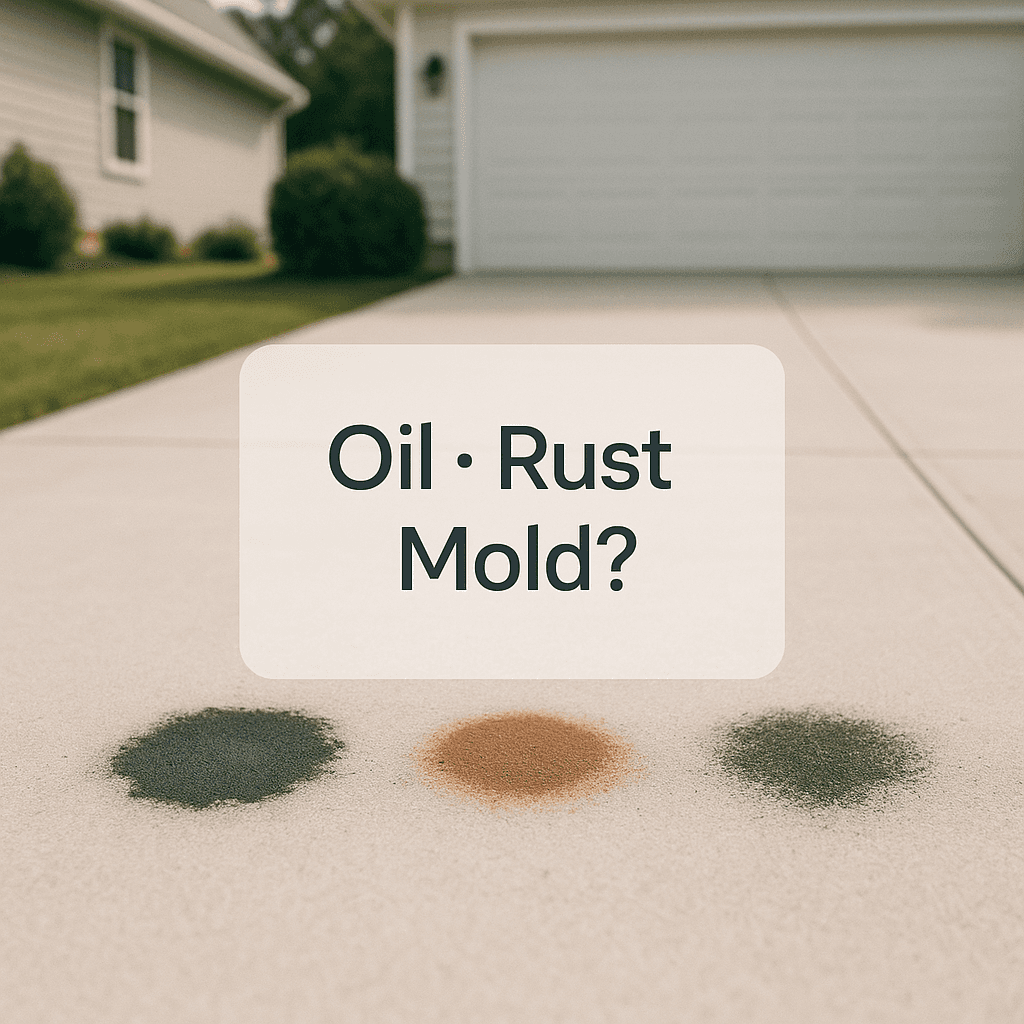
You step outside, coffee in hand, and there it is again. Those black spots on the driveway.
At first you assume it is just “dirt”. Then they do not rinse off. Then you try scrubbing one spot and it kind of smears, kind of lightens, kind of laughs at you.
In Naples and the rest of Southwest Florida, driveway stains are super common because we have the perfect combo of humidity, afternoon rain, heat, and organic growth. But not every dark stain is the same thing. And the fix depends on what it actually is.
So let’s figure it out. Is it oil, rust, or mold? Or something else hiding in the cracks?
First, the quick truth: most “black spots” are not rust
Rust is usually orange, brown, or that weird tea color that spreads into a blotch. It can look darker when wet, sure, but if you are staring at true black spots, rust is not the first suspect.
Black is usually:
- Oil or other automotive fluids
- Mold, mildew, algae, or lichen
- Rubber marks (tires, golf carts, bikes)
- Irrigation staining mixed with organics (this is a sneaky one)
- Old sealant failure on pavers (if you have pavers, not plain concrete)
To tackle these issues effectively, you might want to follow some tips for easy concrete maintenance or learn about how to clean a driveway properly. We will break it down in a way that makes it pretty obvious which one you have.
How to tell what the black spots are (without guessing)
Here’s a simple “driveway stain diagnosis” you can do in 3 minutes.
1) Look at the shape and edges
Oil stains tend to look like:
- Random blobs, drips, puddle shapes
- Darkest in the middle, feathering out
- Often near where cars park, turn, or idle
Mold or algae tends to look like:
- Speckled patches, freckling, or thin dark films
- Growth that spreads in shady or damp zones
- Often worse near grass edges, downspouts, pool decks, or north facing areas
Tire rubber tends to look like:
- Stripes, arcs, or repeated curves where tires pivot
- Usually near the garage entrance or tight turns
Rust tends to look like:
- Orange, reddish brown halos
- Drips under sprinklers or metal items
- Spots that “bleed” outward like a watercolor stain
2) Feel it (yeah, with a glove)
If it feels slightly slick or greasy, that points to oil. If it feels like it is part of the surface, gritty, or almost dusty, it is usually organic growth or embedded dirt.
3) Do the water test
Spray water on it.
- If the stain looks basically the same, oil is more likely.
- If it almost disappears when wet then reappears as it dries, that is often organic staining sitting in pores.
- If it turns into a slimy film when wet, that is a big mold or algae clue.
4) Smell it (only if you are close already)
Oil and fuel stains sometimes have that faint garage smell, especially on warm days. Mold does not smell like oil. It smells like… Florida. Musty, earthy, damp.
If it’s oil, here’s what’s actually happening
Concrete is porous. So when oil drips, it does not just sit on top. It wicks down into tiny holes and capillaries, which is why you can pressure wash it and still see the ghost of it.
Common driveway oil sources:
- Engine oil
- Power steering fluid
- Brake fluid
- Transmission fluid
- Gasoline (less common but it happens)
- Even lawn equipment parked on the driveway
Why oil stains look so black
Oil changes how the concrete reflects light. It darkens the pores. Even if you remove surface residue, the embedded staining can remain unless you use the right degreaser and dwell time.
What not to do with oil stains
- Do not just blast it with high pressure and call it a day. You can etch concrete and still keep the stain.
- Do not mix random household chemicals. Especially anything with bleach and acids together. Bad idea.
- Do not expect one pass to erase a stain that has been soaking in for months.
What usually works (the real method)
A proper approach is typically:
- Apply a professional grade degreaser
- Let it dwell long enough to emulsify the oil
- Agitate the surface (brush or surface cleaner)
- Hot water helps a lot, if available
- Rinse and extract
- Repeat if needed
Sometimes you also need a poultice style treatment for old deep stains. That is the part most DIY attempts skip.
If it’s mold or algae, the stain is alive. Kind of.
This is the big one in Naples.
Those black spots that look like pepper or freckles, especially in damp areas, are often mold, mildew, algae, or lichen. Driveways and sidewalks in humid climates basically become a petri dish, especially if sprinklers hit them daily.
Organic growth clues:
- Worse after rainy weeks
- Concentrated in shade
- Comes back fast if you only pressure wash with water
- Looks like a film, clusters of dots, or blotchy dark patches
Why pressure washing alone does not fix it
Water and pressure can remove the top layer, but not always the roots. Organic growth can embed into pores. The cleaner needs to actually kill it, not just strip it off.
This is where professional surface cleaning plus the right solution makes a night and day difference. Not just “brighter”. Like, you suddenly remember what color your concrete was.
A note about bleach
People ask this a lot. Bleach can work on organics, but the problem is how it is used. Too strong and it can damage surrounding landscaping, discolor nearby surfaces, and still not fully remove staining if it is not paired with proper surfactants and technique.
In Florida, you also want to be mindful of runoff and plants. The “just pour it on” approach is how you end up with dead grass stripes along the driveway.
If it’s rust, it’s usually from sprinklers or metal
Rust stains are usually not black, but sometimes people lump all “dark stains” together.
Rust sources around driveways:
- Irrigation water with high iron content
- Fertilizer overspray
- Metal furniture legs, tools, rebar exposure
- A/C condensate line dripping near metal components
Rust has its own removal chemistry. Degreasers do not fix rust. Bleach does not fix rust. And using the wrong product can actually set the stain deeper.
If you see orange halos or drip marks that start at a sprinkler head, that is your sign.
The “weird black spot” category people forget
A few more that show up a lot:
Tire marks
If the spots are more like arcs and stripes near the garage, that is often tire rubber. Especially if you do three point turns in the same spot, or if you park a heavier vehicle and the tires twist when backing out.
Paver sealer failure (for paver driveways)
If you have pavers and the black areas look patchy or glossy in spots, you might be seeing old sealer failing, trapping dirt and organics underneath. That usually needs cleaning and then resealing the right way.
Mixed staining
This is common. A driveway can have oil near the garage, algae along the sides, and rust dots near sprinkler coverage. So if you are thinking, “mine looks like all of the above”, you might not be wrong.

Can you remove black driveway spots yourself?
Sometimes yes. Sometimes you will spend a Saturday, burn through a couple bottles of cleaner, and still have the same stains but now the concrete looks uneven.
DIY can work if:
- The stains are fresh
- The area is small
- You can identify the stain type correctly
- You have the right cleaner and you let it dwell
DIY gets frustrating when:
- The stains are old and set in
- You have lots of square footage
- You use too much pressure and leave wand marks
- You remove organics in one place but not evenly, so it looks patchy
Also, quick safety thing. If you are working with chemical cleaners, protect plants, wear eye protection, and do not let runoff go where it should not. Basic stuff, but still.
The most reliable fix: professional driveway cleaning (done carefully)
A good driveway cleaning is not just blasting concrete with a wand. For stubborn black spots, it usually needs:
- Proper pre treatment
- Surface cleaner for even results (no zebra stripes)
- Rinse and post treatment if organics are involved
- Controlled pressure so the concrete is not etched
- The right product for the right stain
This is exactly the kind of work Naples Pressure Washing & Roof Cleaning handles all the time, especially in humid Florida conditions where algae and mildew keep coming back. If you want to skip the trial and error and just get the driveway looking normal again, you can request a quote here: https://naples-pressure-washing.com/
How to keep black spots from coming back (or at least slow them down)
You cannot control the weather. But you can reduce stain triggers.
A few simple habits that help:
- Fix small vehicle leaks early. A drip pan can save your driveway.
- Reroute downspouts so water does not constantly soak one area.
- Adjust sprinklers so they are not hitting concrete daily.
- Sweep and rinse occasionally, especially after storms.
- Schedule routine exterior cleaning in the wetter months.
If you have pavers, sealing after a proper cleaning can also help reduce absorption and make future stains easier to remove. Not magic, but it helps.
A simple cheat sheet (so you can decide fast)
Black blob under where your car parks
Probably oil.
Black freckles or a dark film that spreads in shade
Probably mold, mildew, or algae.
Orange or brown drip marks near sprinklers
Probably rust or iron.
Dark curved stripes near the garage entrance
Probably tire rubber.
Patchy dark areas on pavers that look uneven or glossy
Could be old sealer failure plus dirt.
Wrap up
Most driveway black spots in Naples are either oil that soaked in, or organic growth that keeps feeding on moisture. Rust is its own thing and usually shows orange, not black. The trick is identifying it correctly before you throw the wrong solution at it.
If you want, you can take a couple photos in good daylight, one close up and one from a few steps back. That alone usually makes the cause pretty obvious. And if you would rather have it cleaned professionally, Naples Pressure Washing & Roof Cleaning is set up for exactly this kind of staining and the Florida climate that causes it in the first place.
Request a quote or check out services here: https://naples-pressure-washing.com/
FAQs (Frequently Asked Questions)
What causes black spots on driveways in Southwest Florida?
Black spots on driveways in Southwest Florida are commonly caused by a combination of humidity, afternoon rain, heat, and organic growth. These spots can be oil or automotive fluids, mold, mildew, algae, lichen, rubber marks from tires, irrigation staining mixed with organics, or old sealant failure on pavers.
How can I identify if driveway stains are oil, rust, or mold?
You can identify the type of driveway stain by observing its shape and edges, feeling the texture with gloves, performing a water test to see how it reacts when wet, and smelling for distinctive odors. Oil stains appear as random dark blobs and feel slick; rust is usually orange or brown with watercolor-like bleeding; mold or algae appear as speckled patches that turn slimy when wet.
Why do oil stains on concrete look so black and hard to remove?
Oil stains look black because oil darkens the pores of porous concrete by changing how it reflects light. The oil seeps deep into tiny holes and capillaries in the concrete surface, making it difficult to remove even with pressure washing unless the right degreaser and dwell time are used.
What is the proper method to remove oil stains from a driveway?
The effective method includes applying a professional-grade degreaser to emulsify the oil, allowing it to dwell sufficiently, agitating the surface with a brush or cleaner, using hot water if available for better results, rinsing thoroughly, and repeating as necessary. For older deep stains, a poultice treatment might be required.
Why should I avoid using high-pressure washing alone or mixing household chemicals on oil stains?
High-pressure washing alone can etch the concrete surface while leaving the embedded oil stain intact. Mixing household chemicals like bleach and acids can cause harmful reactions and damage your driveway. Also, one cleaning pass is often insufficient for long-standing stains.
How can I distinguish mold or algae stains on my driveway?
Mold or algae stains typically appear as speckled patches or thin dark films that spread in shady or damp zones such as near grass edges or downspouts. When sprayed with water, these stains often turn into a slimy film. They feel gritty or dusty rather than slick and have a musty, earthy smell typical of humid environments like Florida.