Paver Restoration Naples FL —
Bring Old Pavers Back
Restoration takes faded, stained, weedy and uneven pavers and brings them back without replacing the whole surface. Sealing packages start from $399 for patios and $599 for standard driveways, and repair work is quoted online.
📞 Call for a Free Quote — 239-544-1165Part of our Paver Sealing service →
Sand, Seal
Driveway
Competition
Record
A paver surface ages in layers. First the color fades and the surface turns gray with grime. Then the joint sand washes out, weeds and ants move in, and edges start to rock under car tires. Finally whole sections sink where water has washed out the base, usually near downspouts, pool drains and the edge of the driveway.
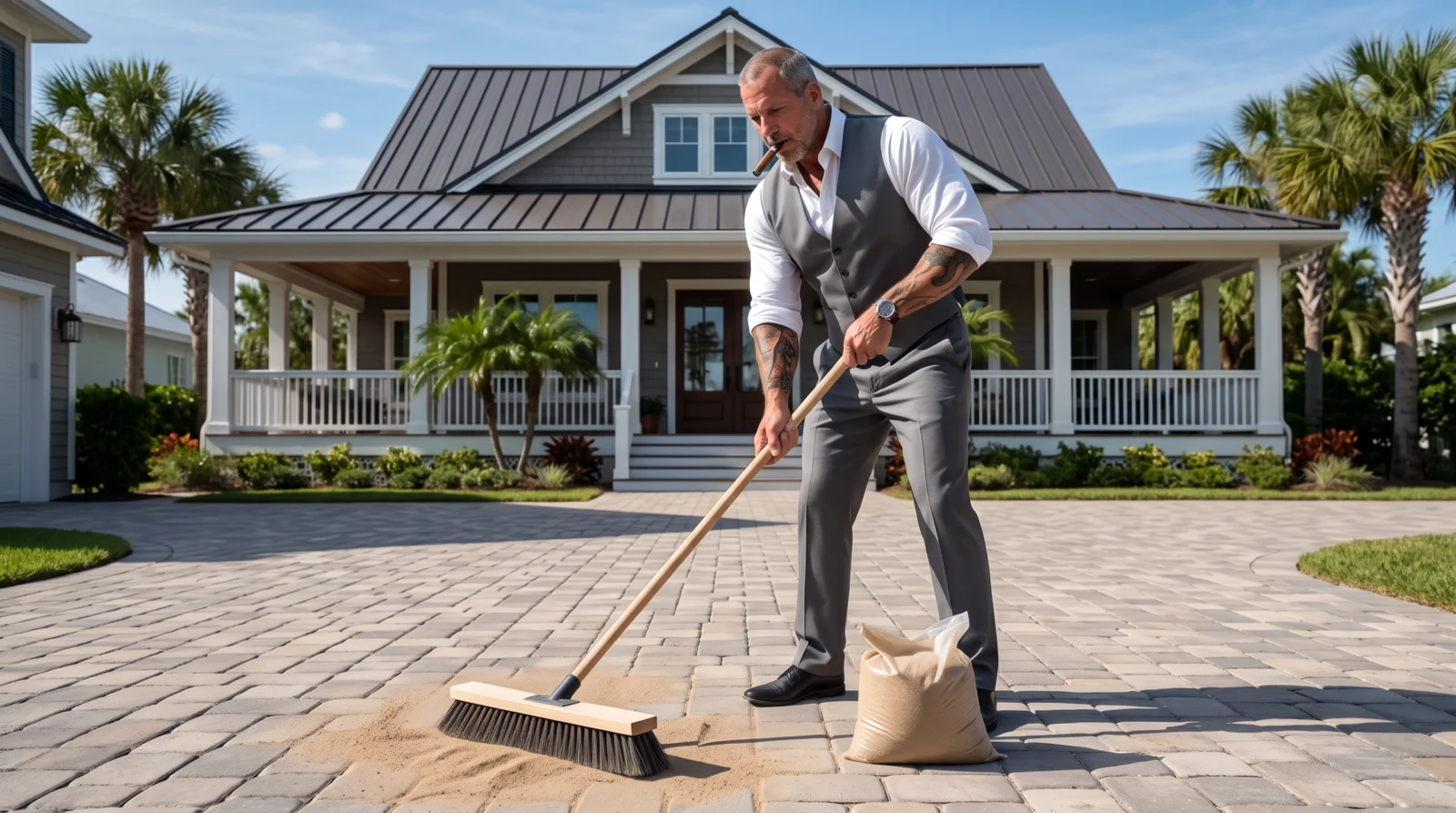
A pressure wash alone only handles the first layer. Restoration handles all of them in one job. We clean the surface, reset the low spots, rebuild the joints with polymeric sand and seal the whole area so the work holds.
For a lot of Naples homes built in the late 1990s and 2000s, the original pavers are still sound. The pieces are thick and dense and only look worn. Restoring them costs a fraction of tearing out and replacing, and it keeps the original pattern and color your community approved.
Restoration has limits. If the base has failed across the whole driveway, or many pavers are cracked and no matching replacements exist, a contractor rebuild may be the better answer. We will tell you that when we quote instead of selling a job that will not last.
Restoring existing pavers usually keeps you inside your HOA’s approved color and pattern. If you plan to change sealer sheen, check with your ARC first.
Cleaning comes first and goes deeper than a routine wash. We treat mildew, rust and oil, then clean the joints out so the old dirty sand and weed roots come out with the grime.
Low spots are reset by lifting the sunken pavers, adding and compacting base sand, and setting the pavers back level with their neighbors. Cracked pieces are swapped if you have spares or a matching paver can be sourced.
The joints are rebuilt with polymeric sand. It contains a binder that activates with water and stiffens in the joint, which resists washout and makes it harder for weeds and ants to get through. A sealer then goes over the top to protect the color and lock the surface of the sand.
| Stage | What we do | Why it matters |
|---|---|---|
| Clean | Surface clean, stain treatment, joint clean-out | Removes grime and old sand so new work bonds |
| Reset | Lift, re-base and relay sunken pavers | Removes trip edges and puddles |
| Re-sand | Polymeric sand swept, compacted, activated | Locks pavers together, slows weeds |
| Seal | Natural or wet look sealer | Protects color and the top of the joints |
Tire Ruts and Oil
Driveways take the most load. We focus on edge stability and oil spots near the garage.
Shade and Splash
Pool decks lose sand fastest. We rebuild joints with sand suited to wet areas.
Root Heave
Walks near trees often lift. We reset pavers we can level, and point out roots that need an arborist.
Entry Patios
Small entry courts show every stain. Restoration and a wet look coat make the biggest visual change here.
Our sealing packages cover clean, re-sand and seal. Resetting sunken areas and replacing pavers is added after we see the surface.
If the builder left extra pavers in the garage or side yard, keep them. They are the best match for cracked pieces.
Online quote
From your photos we note sunken areas, cracks, stains and drainage problems and agree on scope and sealer.
Deep clean
Mildew, rust and oil are treated, then a surface cleaner and joint clean-out remove grime and old sand.
Reset low spots
Sunken pavers are lifted, the base is built back up and compacted, and the pavers relaid level.
Replace damaged pieces
Cracked pavers are swapped for spares or matched replacements.
Re-sand
Polymeric sand is swept in, compacted and activated.
Seal and record
Sealer is applied once dry, and you receive a written record of the work and products.
We provide paver restoration in Naples FL and throughout Southwest Florida:
Why a deep dip gets new base, not extra sand
It is tempting to fix a sunken patch by pulling the pavers and pouring in more bedding sand until the surface looks level. Industry guidance warns against that. Mutual Materials’ maintenance guidelines for concrete paving products, which point readers to the Interlocking Concrete Pavement Institute’s Tech Specs 5 and 6, say that pavers in uneven areas can be removed, the settlement adjusted and the units reinstated, and that for a real dip the pavers and bedding sand should come out so additional base material can be placed and compacted to the correct level. They add that bedding sand alone should not be used to adjust the level where its thickness would exceed 1 1/2 inches (40 mm).
That is why a re-leveling quote for a deep depression by the garage or along a pool deck edge can look different from a shallow one. A shallow settlement is a quick lift and relay. A deeper one means rebuilding the base under that patch, compacting it, then relaying, filling the joints and compacting the surface again so the repaired patch sits on the same firm footing as the pavers around it.
White haze on younger pavers
If your pavers are only a few years old and have a chalky white cast that keeps coming back, it may be efflorescence rather than dirt. The same guidelines describe it as a white haze that may appear on the surface of pavers sometime after installation, and they say it stops once there is no more calcium hydroxide available to move to the surface. They are also clear that it is an aesthetic concern, not a structural one.
On a restoration quote we point it out rather than promise to make it vanish for good. Cleaning removes what is on the surface today, and we talk through with you whether to seal now or wait, since a haze that is still developing can show up again after the job.
Oil spots by the garage and where cars park
Driveway restorations in Naples often include a few oil drips where cars sit. The Mutual Materials guide recommends wiping excess oil as soon as possible, applying liquid detergent and letting it soak for several minutes before washing the pavers with hot water, and it says cleaners made specifically for oil stains on concrete pavers are recommended because they give good results. That advice to act as soon as possible applies between visits too: if a new drip appears before we arrive, blot the excess and put a little liquid detergent on it.
The guide also notes that pavers should be cleaned before sealing to get the best performance and appearance. We treat oil spots during the cleaning stage, then judge whether any shadow that remains is light enough to seal over or needs a second treatment first.
Joint sand, stabilizer or sealer: which problem are you solving?
Not every joint problem calls for the full four-stage job. The guidelines say pavers may lose some joint sand that can simply be replenished with dry sand, and that if the loss keeps recurring, sealers will help hold the sand in the joints. They also describe a freshly cleaned pavement as an opportune time to apply a joint sand stabilizer or a sealer, and say sealers may need to be reapplied from time to time because of wear and weather.
In practice that gives three levels of work. A patio that has lost a little sand in one corner may only need re-sanding. A pool deck that washes out every summer is a candidate for polymeric sand and sealer. A driveway with settled patches, oil and faded color is a full restoration. The quote tells you which level we recommend and why.
Get a firm price for Paver Restoration, usually the same day.
Tell us what needs cleaning and where. We review your photos, send a written price by text or email, and handle gate and building access.
Get Your Free Quote
Tell me what needs cleaning and where — I'll send a firm, no-obligation price by text or email, usually the same day.
Get My Quote →Lock in the best day for your schedule
Reserve the best time and date for your schedule and I'll follow up with your numbers. No payment to hold a spot and no obligation to keep the booking — reserve now, decide once you have the price.
About the Author
Owner Blane Perun started this company with a simple premise: Naples homeowners deserve a professional exterior cleaning option that doesn’t come with the inflated pricing of franchise operations and large corporate companies.