Pool Deck Sealing Naples FL —
Paver Pool Decks & Lanais
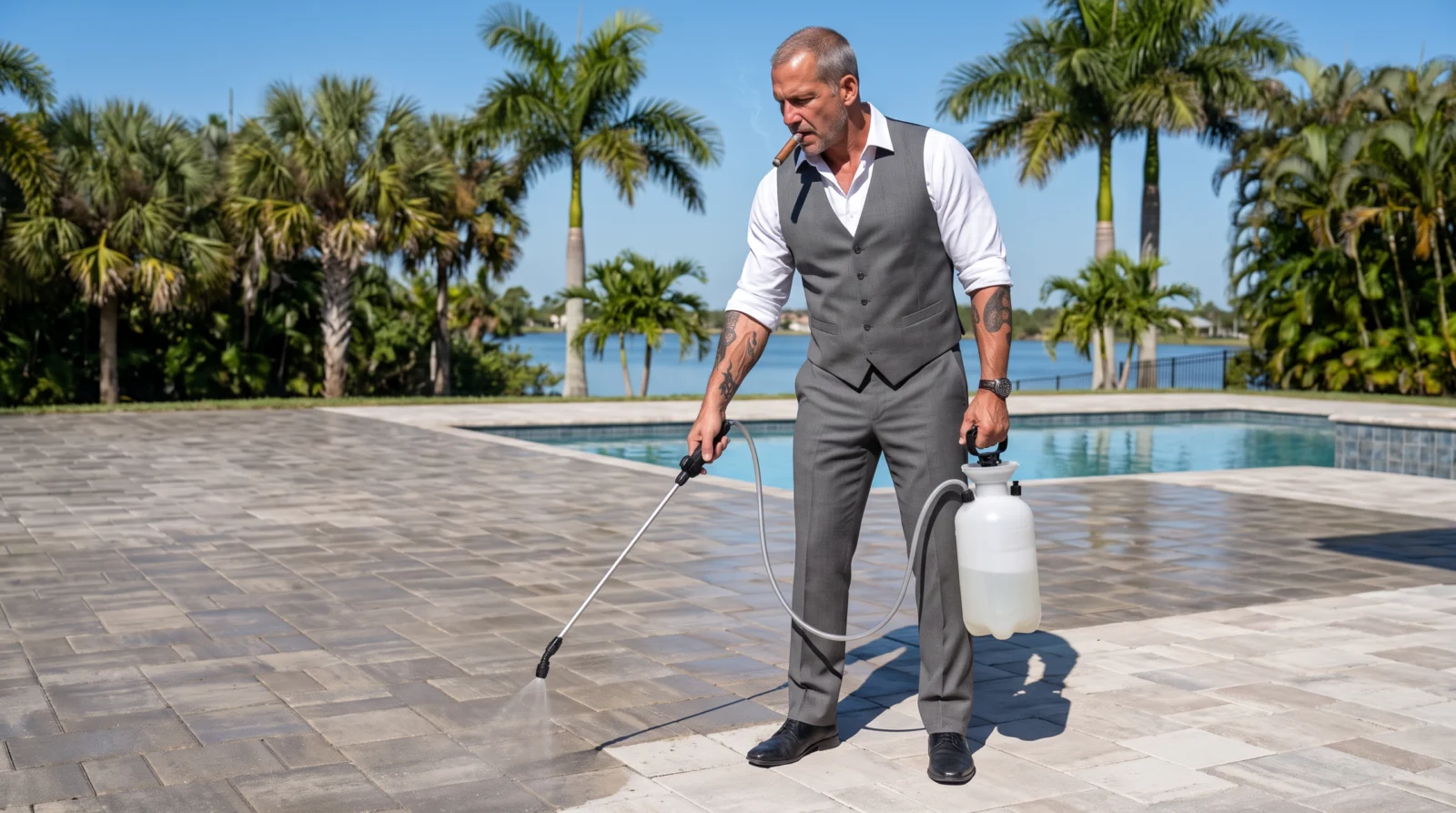
Pool deck pavers live with bare feet, splash-out, sunscreen and the shade of a pool cage, so they need a sealer chosen for grip and chemical exposure. Pool deck sealing starts from $499, and cage plus floor cleaning starts from $399 if the enclosure needs it too.
📞 Call for a Free Quote — 239-544-1165Part of our Paver Sealing service →
Sealing
Additive
Floor Clean
Competition
Most Naples pool decks sit under a screened cage. The screen cuts sunlight just enough that the pavers stay damp longer after rain and after every swim. Damp, shaded concrete is where algae and mildew grow best, and that green or black film is what makes a deck slick near the steps and along the cage base.
Splash-out is the other factor. Chlorinated and salt water dries on the pavers again and again. Salt crystallizes in the surface and in the joint sand, and chlorine slowly bleaches the color. Sunscreen and pool toys add oily residue that dirt sticks to.
Joint sand washes out faster here than on a driveway. Pool cage downspouts, deck drains and hosing off the deck all move sand. Once the joints open, pavers shift, ants move in and weeds root in the gaps along the screen wall.
Sealing addresses all three. It slows algae from rooting into the pavers, shields the color from chlorine and sun, and locks the top of the joint sand in place. Because people walk on it barefoot and wet, the sealer has to be one that keeps traction.

A slick pool deck is a fall risk. If your deck feels slippery today, cleaning alone helps right away. Sealing helps it stay that way.

We lean toward water-based acrylic or penetrating sealers on pool decks. They tolerate chlorine and salt splash, dry with a low sheen and let moisture escape from under the pavers. Solvent-based high-gloss products look richer but can be slick when wet.
When an owner wants more color, we add a fine anti-slip grit to the final coat. The grit is almost invisible but gives bare feet something to grip. Coping stones and the first row of pavers at the water get extra attention because that is where people step in and out.
Timing matters. The sealer needs to cure before the deck gets wet, so we watch the forecast, keep sprinklers off and ask that the pool not be used until the cure time on the product label has passed.
| Sealer | Sheen | Wet traction | Notes |
|---|---|---|---|
| Water-based acrylic | Low to satin | Good | Common choice for pool decks |
| Penetrating silane / siloxane | None | Unchanged | Most natural look |
| Solvent-based wet look | Medium to high | Lower | Needs grit additive near water |
| Any sealer + anti-slip grit | Varies | Improved | Recommended near steps and coping |
Green and Black Film
Soft wash solution kills it at the root before we seal, so it does not grow back under the coat.
Open Joints
Washed-out joints are refilled with polymeric sand rated for wet areas.
Salt and Efflorescence
White crust from salt pools and new pavers is treated before sealing so it is not locked in.
Cage and Furniture Marks
Rust from cage screws, furniture feet and well water is spot treated with a paver-safe remover.
Pool deck sealing includes cleaning, joint sand and sealer. Many owners pair it with a cage cleaning so the screens and deck are done the same week.
We schedule sealing for a dry stretch and tell you exactly when the deck and pool can be used again.
Clear and protect
Furniture is moved, skimmers covered and screen bottoms protected from overspray.
Kill the algae
Soft wash solution goes on first so growth dies before we touch it with pressure.
Clean the pavers
A surface cleaner and low-pressure rinse clear the deck and joints without blasting sand into the pool.
Re-sand
Polymeric sand is swept into the joints, compacted and set with a light mist.
Seal with grip
Once dry, we apply sealer in thin coats and add anti-slip grit where you want it.
Return the space
After cure, furniture goes back and you get a written service record.
We provide pool deck sealing in Naples FL and throughout Southwest Florida:
Two families of sealer show up on Naples pool decks, and their data sheets read very differently. SEK-Surebond’s SB-1300 Joint Stabilizing Sealer is a water-based acrylic co-polymer that dries clear with a matte finish, and its sheet specifically calls it ideal for shaded areas, pool decks and outdoor showers where mildew, fungus and algae are a concern. It forms a thin film on the paver and also binds the top of the joint sand. The same company’s SB-4000 is a water-based silane/siloxane penetrating water repellent: it soaks in, is non-film-forming, and dries transparent on most surfaces, though some may darken slightly.
The practical difference for a family that swims daily is grip and appearance. A matte acrylic film deepens color a little and locks sand in the joints. A penetrating repellent leaves the paver looking almost untreated but beads water. Neither one is a gloss coat, and that is deliberate around a pool.
For SB-1300, the manufacturer asks for at least 24 hours of drying after cleaning or rain before sealer goes down, application only when day and night temperatures sit between 40°F and 95°F, and a surface temperature no higher than 120°F. Foot and vehicle traffic can return in 24 hours depending on site conditions. Those limits explain most of our scheduling on pool decks: the wash happens one day, the deck dries under the cage overnight, and sealing starts in the cooler part of the next morning, before the sun heats the pavers nearest the water.
The SB-4000 sheet allows a shorter window, about two hours of drying after cleaning or rain, with the area rain safe and open to traffic in two to four hours. That faster turnaround is one reason a penetrating product suits a deck that must be back in use the same day.
On slip resistance, the SB-1300 sheet says some surfaces may require an anti-slip additive to increase friction, and recommends one for surface inclines or around consistently wet areas. On a pool deck, that describes the coping, the steps, the path from the outdoor shower and any sloped section near a drain.
Coverage is quoted per gallon for one coat and varies with the type, age, condition and porosity of the paver. SB-1300 lists 80 to 120 square feet per gallon when it is used to stabilize joints, or 150 to 250 without joint stabilization. The re-application guidance is equally conditional: SB-1300 may need re-application every two to three years and SB-4000 every five to seven, both depending on surface type and site conditions. A deck in full sun with heavy splash-out will sit at the short end; a shaded deck with light use may not.
Every sheet also asks for a test patch in an inconspicuous spot first. On travertine-edged or mixed-material decks, we do that test on an out-of-the-way corner before committing the whole deck to one product.
Get a firm price for Pool Deck Sealing, usually the same day.
Tell us what needs cleaning and where. We review your photos, send a written price by text or email, and handle gate and building access.
Get Your Free Quote
Tell me what needs cleaning and where — I'll send a firm, no-obligation price by text or email, usually the same day.
Get My Quote →Lock in the best day for your schedule
Reserve the best time and date for your schedule and I'll follow up with your numbers. No payment to hold a spot and no obligation to keep the booking — reserve now, decide once you have the price.
About the Author
Owner Blane Perun started this company with a simple premise: Naples homeowners deserve a professional exterior cleaning option that doesn’t come with the inflated pricing of franchise operations and large corporate companies.