
Pressure Washing in Naples, FL
Matching the method to the surface
Pressure washing is the right tool for hard, dense surfaces like concrete, pavers and pool decks. It is the wrong tool for shingles, screens and painted stucco. This page explains how we decide, what we use, and how a Naples job is priced.
📞 Free Quote — 239-544-1165single story
under 800 sq ft
and re-sand
on request
What does pressure washing actually mean?

Pressure washing is cleaning with a stream of water that a pump forces through a narrow nozzle. The pump on a commercial rig pushes water out at several thousand pounds per square inch, and that force is what knocks dirt, algae film and loose grime off a surface. On its own, plain water at high pressure does most of the work on concrete; on other materials the pressure is turned down and a cleaning solution does the heavy lifting instead.
People use “pressure washing,” “power washing” and “soft washing” almost interchangeably, but a contractor should not. In our trade, pressure washing means cold water at high pressure. Power washing usually means the same equipment with a burner that heats the water, which matters for grease and gum. Soft washing means low pressure with a diluted cleaning solution that is left to dwell and then rinsed. A good crew uses all three on the same property, surface by surface.
The tool most homeowners picture is a wand with a narrow tip. For flat work we rarely use one. A rotary surface cleaner, which looks like a round deck with spinning nozzles underneath, holds the nozzles at a fixed height above the concrete. That gives an even clean without the striped “zebra” pattern you see when someone sweeps a wand back and forth by hand.
Which surfaces in Naples can take high pressure?
High pressure belongs on hard, mineral surfaces that are thick enough to absorb the force without being cut. Around a typical Southwest Florida home that list is longer than people expect.
- Poured concrete driveways, walkways and garage aprons. Broom-finished concrete is the most forgiving surface on the property, and a surface cleaner pulls out the black mold that settles into the texture.
- Interlocking pavers. Pavers clean well under pressure, but the joint sand between them washes out at the same time, which is why paver cleaning is normally followed by re-sanding.
- Pool decks without a coating. Bare concrete and paver pool decks can be pressure washed, with the pool protected from runoff and debris.
- Curbs, gutters at the street and parking pads. These collect irrigation rust, tire marks and organic staining that pressure alone will not always lift, so a pre-treatment is often added.
- Block walls and unpainted masonry. Bare concrete block and some natural stone tolerate moderate pressure, adjusted to the condition of the mortar.
The common thread is that the surface is hard all the way through. When the top layer is a thin coating, a soft material or a painted finish, high pressure stops being a cleaning tool and starts being a removal tool.
Which surfaces should never be pressure washed?
The most expensive mistakes we see in Naples come from pointing a pressure wand at the wrong thing. These surfaces get low pressure and a cleaning solution, or a hand method, every time.
- Asphalt shingle roofs. High pressure strips the protective granules that shield the shingle from sun. The roofing industry’s own guidance tells homeowners not to pressure wash shingles.
- Concrete and clay tile roofs. Tile can crack under foot traffic and under concentrated pressure, and older tile loses its surface coating. Tile is cleaned with a solution applied from low-pressure equipment.
- Pool cage and lanai screens. Screen mesh tears or stretches out of its spline under a pressure tip. Screened enclosures are cleaned with a soft approach; see our pool cage and lanai cleaning page for how that work is done.
- Painted stucco and painted block. Pressure can drive water behind hairline cracks, lift paint that is already chalking and etch the stucco texture.
- Window glass, seals and screens. High pressure can push water past window gaskets into the wall cavity.
- Coated pool decks, wood, vinyl and outdoor fabric. Coatings peel, wood fibers fur up, and fabric fades or tears.
If a contractor quotes a roof or a lanai cage and describes the method only as “pressure washing,” ask exactly what pressure and what solution they plan to use.
What is in the cleaning solution, in plain terms?
For organic growth such as algae, mold and mildew, the active ingredient in most professional exterior cleaning is sodium hypochlorite. That is the same chemical family as household bleach, delivered at a higher starting strength and then diluted on site to a percentage that suits the surface. A surfactant, which is essentially a soap, is added so the mix clings to vertical surfaces instead of running straight off.
On concrete, the solution is often used as a pre-treatment before the surface cleaner runs. It kills the growth rooted in the pores so that the pressure is removing dead material rather than fighting living mold. That shortens the time the pressure is on the surface and helps the clean last longer.
Rust is a different problem. The orange streaks from irrigation water and fertilizer are iron deposits, and bleach does nothing to them. They need an acid-based rust remover, chosen for the surface so it does not etch the concrete or discolor pavers. Oil stains need a degreaser, and often hot water.
Using the right product on the right stain is half of the job. Pressure that is turned up to compensate for the wrong chemistry is how surfaces get scarred.
How are plants, pools and pets protected?
Southwest Florida yards are dense with planting right up to the house, and pool water sits only feet from the deck. Protection is a routine part of every job, not an extra.
Before any solution goes down, beds next to the work area are soaked with plain water. Wet foliage and wet soil take up far less of the diluted solution. During the job the crew keeps rinsing plants, and when the work is finished the beds are rinsed again so any overspray is diluted well below the level that harms leaves.
Around pools, we keep cleaning solution and loosened debris out of the water. On decks that slope toward the pool, we rinse in the direction that carries runoff away from it, and we skim debris before we leave. Pool equipment pads and their electrical connections are kept dry.
Wash water should not go down the storm drain carrying chemicals. Many Naples storm drains empty to canals, lakes and eventually the Gulf. We locate drains before the work starts, and the rinse is managed so that chemical-laden water does not flow straight into them. Pets should stay inside until the surfaces have been rinsed and the area has dried.
How often should you pressure wash in Southwest Florida?
There is no single schedule, because growth in Naples depends on shade, water and airflow far more than on the calendar. A driveway in full sun with no sprinkler overspray can stay presentable for a long stretch. The same concrete under an oak canopy, or on the north side of the house where it never fully dries, can turn green within months.
The pattern most homes follow looks like this. Driveways and walks are cleaned once a year or so. Paver areas are cleaned, re-sanded and sealed on a longer cycle. Pool decks are cleaned more often because algae on a wet deck becomes a slipping hazard. Anything hit daily by reclaimed irrigation water will show rust sooner and needs that addressed at the sprinkler head as well as on the concrete.
The rainy season from roughly June through September is when growth accelerates. Many homeowners book cleaning in the drier months, which also gives sealers better curing conditions. Communities with strict appearance standards often have their own expectations, and a courtesy notice from an association is a common reason people call.
What happens on the day of the job?
The crew starts with a walk around the property to confirm what is being cleaned and to spot anything fragile: loose pavers, cracked tile, low-voltage landscape lights, a gap in a screen panel. Cars come out of the garage, doormats and planters are moved, and outdoor outlets are checked so water stays away from them.
Next comes protection: beds are soaked, drains are identified and the pool area is set up. Surfaces that need a pre-treatment get it first, and it is left long enough to work. The flatwork is then cleaned with the surface cleaner, edges and corners are finished with a wand held at a safe distance, and everything is rinsed toward a safe discharge point.
Before the crew leaves, we walk the work with you or photograph it if you are away, rinse the plants one more time and put moved items back. If the job included re-sanding or sealing, you will be told when the surface can take foot traffic and when it can take a car.
What does pressure washing cost in Naples?
Pricing depends on square footage, condition, access and which method each surface needs. The figures below are the starting prices we publish. Every job is quoted for the specific property, and a written quote is free.
Plain concrete flatwork such as a driveway, sidewalk or patio is priced after we see the size and the staining, because a lightly soiled slab and one with rust and oil spots are very different jobs. Our services overview lists every surface we handle.
What should you ask a pressure washing contractor?
A clean driveway photo on a website tells you very little. These questions separate a careful contractor from someone with a rented machine.
- What method will you use on each surface? Expect a different answer for the roof, the screens, the walls and the concrete.
- Can you send a certificate of insurance? A real business can email one, and many gated communities require it before a crew is admitted.
- How will you protect my plants, pool and drains? The answer should be specific: pre-wetting, rinsing, drain protection, runoff direction.
- What happens to the joint sand on my pavers? If they plan to clean pavers, ask whether re-sanding is included or priced separately.
- Do you treat rust separately? Bleach does not remove rust. A contractor who says pressure alone will take it out is guessing.
- Will I get a written description of what was done? A short service record is useful for your own files, for an association and for a future buyer.
We are licensed and insured, issue a COI on request, pre-register at community gates where that is required, and leave a written record of each job.
Detailed pages on the specific jobs we do under Pressure Washing.
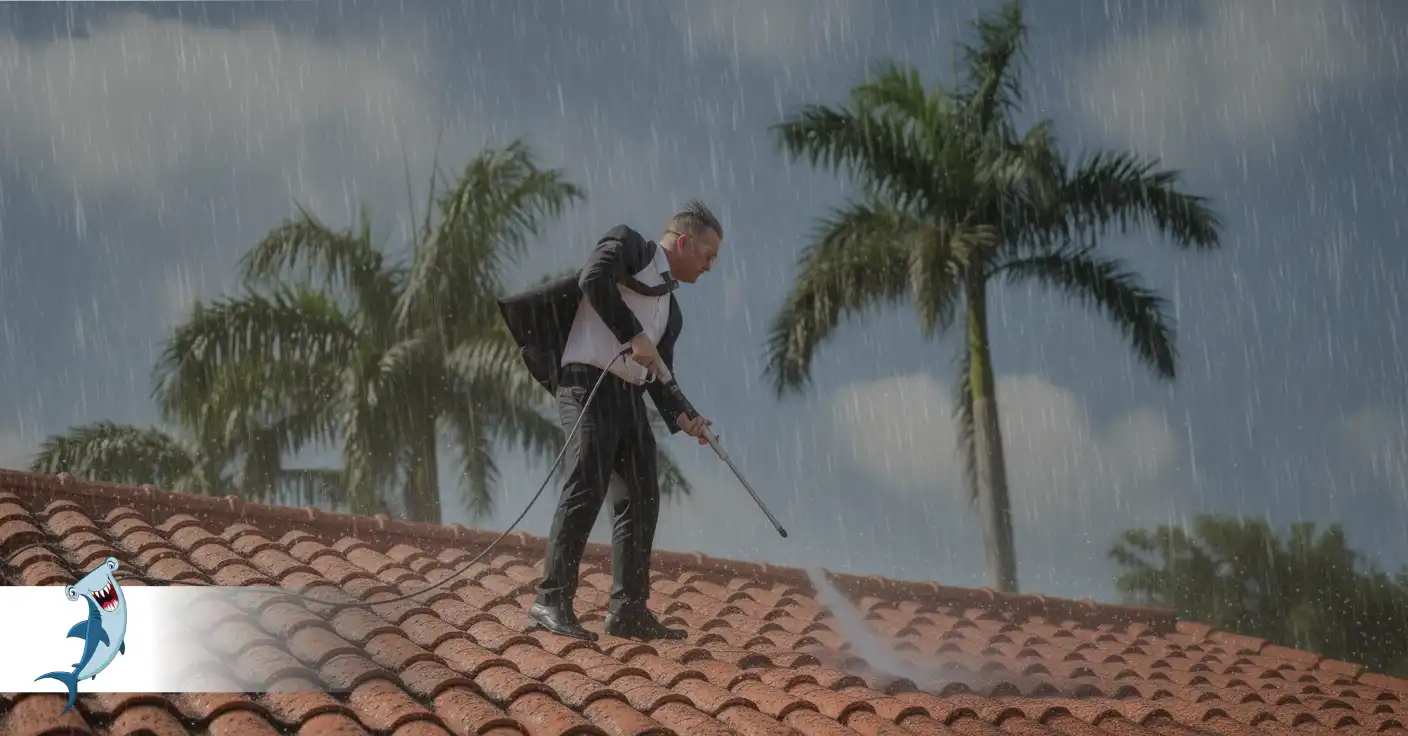
Black streaks GONE in 1 visit — and they stay gone for 2-3 years.
Soft wash chemistry kills Gloeocapsa Magma at the root, not just on the surface. No high pressure, no tile damage, no voided warranty.
Get Your Free Quote
Tell me what needs cleaning and where — I'll send a firm, no-obligation price by text or email, usually the same day.
Get My Quote →Lock in the best day for your schedule
Reserve the best time and date for your schedule and I'll follow up with your numbers. No payment to hold a spot and no obligation to keep the booking — reserve now, decide once you have the price.
Frequently Asked Questions
Is pressure washing the same as power washing?
Can you pressure wash a lanai or pool cage?
Will pressure washing damage my concrete?
Do I need to be home during the job?
How long does it take for surfaces to dry?
Is the cleaning solution safe for my grass and shrubs?
About the Author

Owner Blane Perun started this company with a simple premise: Naples homeowners deserve a professional exterior cleaning option that doesn’t come with the inflated pricing of franchise operations and large corporate companies.
