Oil Stain Removal Naples FL —
Concrete & Paver Driveways
We lift motor oil, transmission fluid and power steering leaks out of Naples driveways with degreasers, hot water and a surface cleaner. Spot treatment and a full driveway wash are both quoted on sight.
📞 Call for a Free Quote — 239-544-1165Part of our Pressure Washing service →
Pressure Wash
Stains
Competition
in Florida
Concrete and pavers are porous. When a car leaks, the oil does not sit on top. It wicks down into the pores and spreads sideways under the surface, which is why a small drip turns into a dark patch the size of a dinner plate.
Naples heat makes it worse. A driveway in full summer sun gets hot enough to thin the oil, so it travels deeper and faster. Months later the oil oxidizes and turns into a gummy, darker residue that plain water and a cold pressure washer will not move.
Afternoon storms add a second problem. Rain floats a little oil back to the surface and carries it downhill, so you get a rainbow sheen and a long gray streak toward the street. On pavers the oil also settles into the sand joints, where it feeds a dark line around each brick.
Most of the stains we see come from older vehicles, seasonal cars that sat for months, boat trailers, contractor trucks during a remodel and lawn equipment parked in the same spot every week. In communities with driveway appearance rules, a set of dark patches near the garage is often what triggers a courtesy letter.

If the leak is fresh, cover it with clay cat litter or sawdust and leave it. Do not hose it. Water spreads fresh oil across a wider area and pushes it deeper.

We start dry. Any loose residue gets scraped and any wet oil gets blotted. Then we apply a commercial alkaline degreaser and work it into the stain with a stiff brush. The degreaser needs dwell time to break the oil into a form that water can carry, so we let it sit in the shade or keep it wet in the sun.
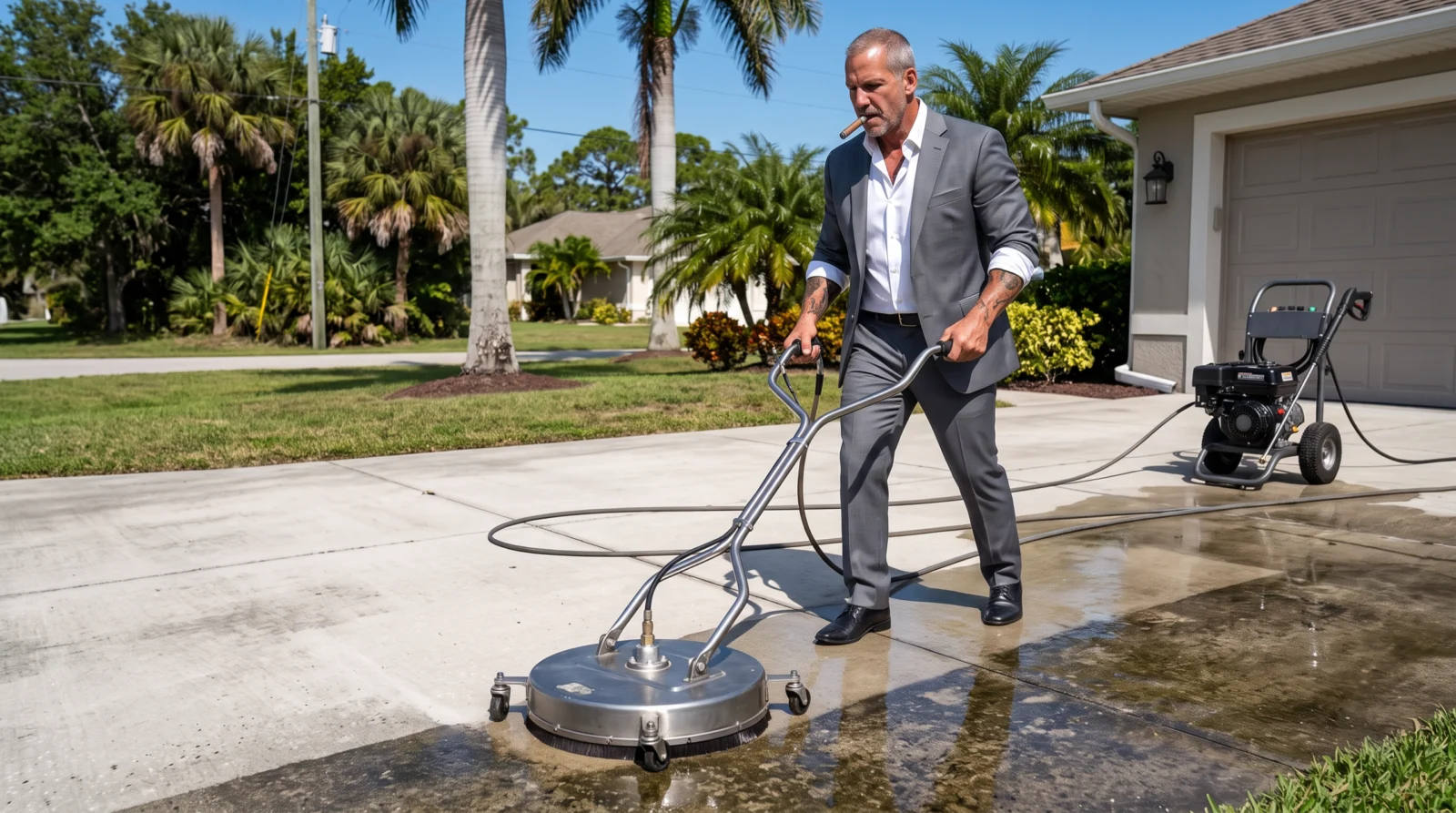
Next comes hot water. Our heated units push water hot enough to emulsify petroleum, run through a rotating surface cleaner that keeps the wand distance even and avoids the stripes a hand nozzle leaves. Hot water does most of the work that people expect pressure to do.
Deep, old stains get a poultice. That is an absorbent paste mixed with a solvent, spread over the stain and left to dry. As it dries it draws oil up out of the concrete. Some stains need two rounds. For pavers we may suggest pulling and flipping or replacing a few badly soaked bricks, which is often cheaper than chasing a stain that runs the full depth of the paver.
| Stain Type | What It Looks Like | Usual Treatment |
|---|---|---|
| Fresh drip (days old) | Wet, dark, still spreading | Absorb, degreaser, hot water rinse |
| Set-in motor oil | Dark gray patch, dry to the touch | Degreaser dwell plus hot water, often 2 passes |
| Old baked stain | Black center with a faded halo | Poultice, then hot water wash |
| Transmission or power steering fluid | Reddish or pinkish tint | Degreaser plus hot water; tint may fade over weeks |
| Oil in paver joints | Dark lines between bricks | Clean, remove stained sand, re-sand joints |
Broom-finish concrete
The most common job. We treat the stains, then wash the whole slab so the cleaned spots do not stand out as lighter patches.
Brick and travertine
Oil travels into both the paver and the sand joints. We clean, pull the stained sand and re-sand. Sealing afterward makes the next drip easy to wipe up.
Side yards and boat spots
Trailer and RV pads see slow leaks over long periods. These stains tend to be large and old, so they usually get poultice treatment.
Assigned spaces
Association parking areas collect drips space by space. We quote by the lot online and can work in sections so residents can still park.
Stain treatment depends on how many stains there are, how old they are and whether the surface is concrete or pavers. We price the spot work after we see it and pair it with a full wash so the driveway looks even.
Fresh and medium stains usually come out completely. Stains that have been there for years often fade to a light shadow rather than vanishing. We will tell you which kind you have before we start.
Look and test
We check the stain age, the surface type and whether there is a sealer on it, then test the degreaser on a small corner.
Remove loose oil
Wet oil is absorbed and any crust is scraped off so the cleaner reaches the stain itself.
Degrease and dwell
Degreaser is brushed in and kept wet long enough to break the oil down. In summer sun that means misting it so it does not dry on the surface.
Hot water wash
A surface cleaner fed with hot water flushes the loosened oil out of the pores and off the slab.
Poultice if needed
Stains that remain get a poultice and a return visit to rinse it off once it has pulled the oil up.
Final rinse and record
We rinse the whole driveway, check the edges and leave a written service record of what was treated.
We provide oil stain removal in Naples FL and throughout Southwest Florida:
A stain treatment only lasts as long as the car stops leaking. If the same vehicle is going back onto the same spot with the same leak, the patch will darken again, and you will have paid to clean concrete that is about to be stained again. Before booking, it is worth getting the leak diagnosed, or at least sliding a drip pan or a piece of cardboard under the engine until it is fixed. A pan also tells you which fluid is leaking: amber to black for engine oil, red or pink for transmission or power steering fluid, which matches the tint we see on the slab.
Florida’s Department of Environmental Protection puts the reason for care in plain numbers. It says just 5 gallons of motor oil can render 1 million gallons of water undrinkable, and that nationwide about 200 million gallons of used oil are dumped on the ground or poured into storm drains every year. Its used oil program lets Floridians dispose of up to 5 gallons of used oil free of charge at public collection centers.
In Collier County, the Hazardous Material Drop-Off Center at 3730 White Lake Boulevard lists used oil and oil filters among the items residents can bring at no charge, along with antifreeze, pool and cleaning chemicals, pesticides and herbicides. If you change your own oil, or you find an old jug of it in the garage while clearing space for us, that is where it belongs, not in the trash or poured on the ground.
On the day, our part of that is simple: the cat litter or absorbent that has soaked up fresh oil is swept up and bagged rather than washed into the street, and wash water from the degreasing step is kept off the storm drain inlet at the curb.
Get a firm price for Oil Stain Removal, usually the same day.
Tell us what needs cleaning and where. We review your photos, send a written price by text or email, and handle gate and building access.
Get Your Free Quote
Tell me what needs cleaning and where — I'll send a firm, no-obligation price by text or email, usually the same day.
Get My Quote →Lock in the best day for your schedule
Reserve the best time and date for your schedule and I'll follow up with your numbers. No payment to hold a spot and no obligation to keep the booking — reserve now, decide once you have the price.
About the Author

Owner Blane Perun started this company with a simple premise: Naples homeowners deserve a professional exterior cleaning option that doesn’t come with the inflated pricing of franchise operations and large corporate companies.