Courtyard & Driveway Paver Sealing
Avellino Isles
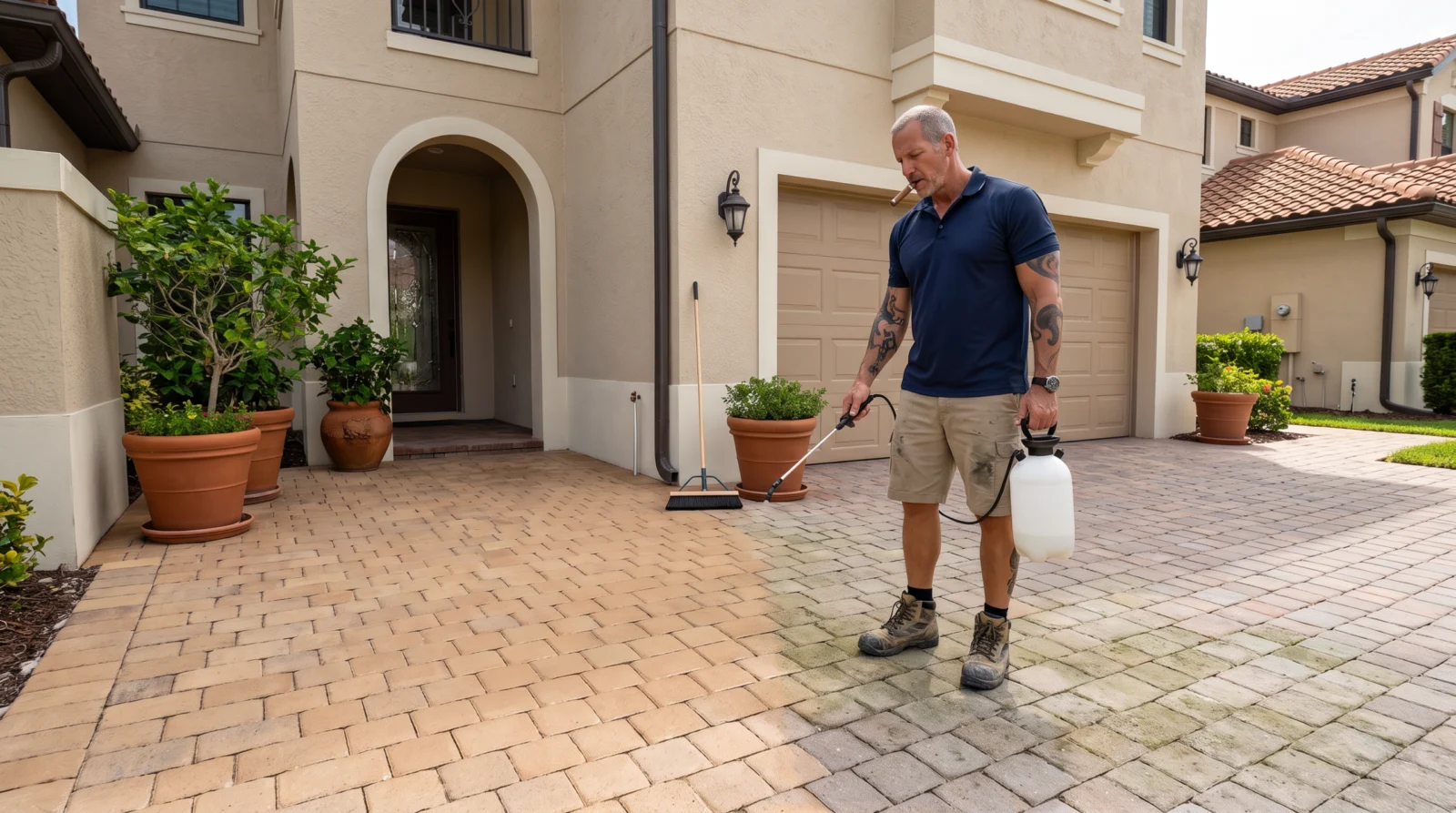
Avellino Isles coach homes are entered through courtyards and garage aprons laid in pavers, and the shade cast by these two- and three-story buildings keeps them damp. We clean them, refill the joints with polymeric sand and seal them so the entry looks as fresh as the Mediterranean facade above it.
Starting Price
Life
Every Home
Courtyards, Aprons and Twenty-Year-Old Pavers
Courtyard entries are tucked between two- and three-story walls, so the pavers see less sun than an open driveway. They stay wet after rain and irrigation, and a green, slick film grows in the joints and across the surface within months. On a walkway owners and guests use every day, that is a slip risk as much as a looks problem.
Garage aprons get a different kind of dirt: tire marks, drips and the grit that cars carry in. Unsealed pavers soak it up, and pressure washing them without a plan blows the sand out of the joints, which lets pavers rock and weeds take root.
The fix is the full sequence — clean, re-sand, seal. Polymeric sand locks the joints, and a sealer closes the paver surface so algae, oil and dirt sit on top where the next rinse can lift them.
The last neighborhood built in The Vineyards. Avellino Isles went up in the mid-2000s, the final piece of The Vineyards, and its nearly 200 coach homes are grouped in Mediterranean-style buildings with lake and golf views. That means most of the pavers here are now close to twenty years old. Paver concrete that age has usually lost some of its original color on the top surface, joints have been rinsed out many times, and some sections around drains and garage lips have settled. A first-time seal on an older paver looks different from a seal on a brand-new one, and we set expectations before we start.
Old sealer, if there is any. Some courtyards here have been sealed before, sometimes more than once, and sometimes with different products. Layers of old film-forming sealer can turn cloudy, peel in traffic lanes or trap white haze underneath. We test a small area first. If the old coat is sound, we clean and recoat. If it is failing, we tell you, because putting a new coat over a peeling one only makes the next problem bigger.
Shared buildings, individual entries. In a coach-home building, each owner has a separate entry, but the pavers run together along the front of the building. One courtyard sealed glossy next to a neighbor’s faded, matte one is noticeable from the street. That is why neighbors often book on the same day, and why we suggest a natural or low-sheen finish unless the whole building agrees on something else. Who is responsible for pavers, the owner or the association, varies by community and by document, so it is worth checking your declaration or asking the manager before you book.
Double-gated scheduling. Avellino Isles sits behind both The Vineyards’ main gate and its own neighborhood gate. We pre-register the crew and trailer through both, give you an arrival window, and keep the vehicle and equipment clear of shared drives and neighbors’ garages so no one is blocked in while the joints are being sanded.
Polymeric sand in tight courtyards. Courtyard joints along walls and steps are harder to fill than an open driveway. Manufacturer instructions still apply: the pavers must be completely dry, the sand goes in to full depth and stops about an eighth of an inch below the paver top, and it is compacted, swept and compacted again before misting. Where a plate compactor will not fit against a wall, we hand-tamp. Where joints are deeply eroded, the old material comes out at least an inch and a half deep first rather than being topped up.
Lake air and morning dew. Many buildings here overlook lakes, and lake-facing sides hold morning dew longer than street sides. In a shaded courtyard that can mean the surface is not truly dry until midday. Haze after sanding usually comes from damp pavers or high humidity at install, so on humid mornings we wait. It costs a few hours; skipping it costs a white film that has to be cleaned off later.
Choosing the sealer. For shaded entries we lean toward breathable penetrating sealers, which let trapped moisture escape and do not build a slick film. A joint-stabilizing acrylic sealer can help hold sand in place on a garage apron, but heavy coats on dense pavers can become slippery. Manufacturers also set different waits between sanding and sealing, from about 24 hours to as long as 30 days, so some jobs are finished as a second, shorter visit.
Pool decks and the clubhouse. Lanai and pool areas around Avellino Isles get sun, splash and chlorine rather than shade, and those surfaces call for a slip-resistant sealer. For association-owned decks we can quote through our HOA and property management program and work around posted pool hours.
What you get afterward. Every job ends with a written service record listing the cleaner, the joint sand and the sealer used, along with the date and the cure times we were working to. If you sell, rent seasonally or simply forget when the courtyard was last done, that sheet answers the question. It also lets the next maintenance visit match the same product, which keeps the finish even from one coat to the next instead of building up mismatched layers.
Courtyards here are part of a shared Mediterranean facade. Clear or natural-finish sealers keep the look consistent; if you want a tinted or high-gloss finish, check with the association first.
Naples, FL 34119
Collier County
Courtyard, Walk and Apron in One Visit
Surface Clean
A rotary surface cleaner removes algae and dirt evenly, and tire marks or drip stains on the garage apron are pre-treated.
Dry and Check
Pavers dry fully. Any loose or sunken pavers near drains or the garage lip are pointed out before we seal over them.
Polymeric Sand
Joints filled, compacted and swept clean, then misted so the sand sets firm against rain and future rinsing.
Seal
A breathable sealer goes on evenly; walkway areas get a slip-resistant additive. Walking and driving times depend on the product, often about 24 hours for feet and 24 to 72 hours for cars.
Sealer only bonds to dry pavers. In shaded courtyards we allow extra drying time so the finish cures clear instead of cloudy.
Paver Sealing & Sanding Pricing in Avellino Isles
| Service | Typical Price | Notes |
|---|---|---|
| Re-sanding only, up to 400 sq ft | From $199 | Courtyard entry and front walk |
| Clean + re-sand | From $349 | Courtyard plus garage apron, no sealer |
| Clean + sand + seal, up to 400 sq ft | From $399 | Most courtyard entries |
| Driveway clean + sand + seal | From $599 | Two-car garage apron and walk together |
| Pool deck sealing | From $499 | Clubhouse or lake-view pool deck, for the association |
Final pricing depends on size, access and condition. Call 239-544-1165 for a free written quote.
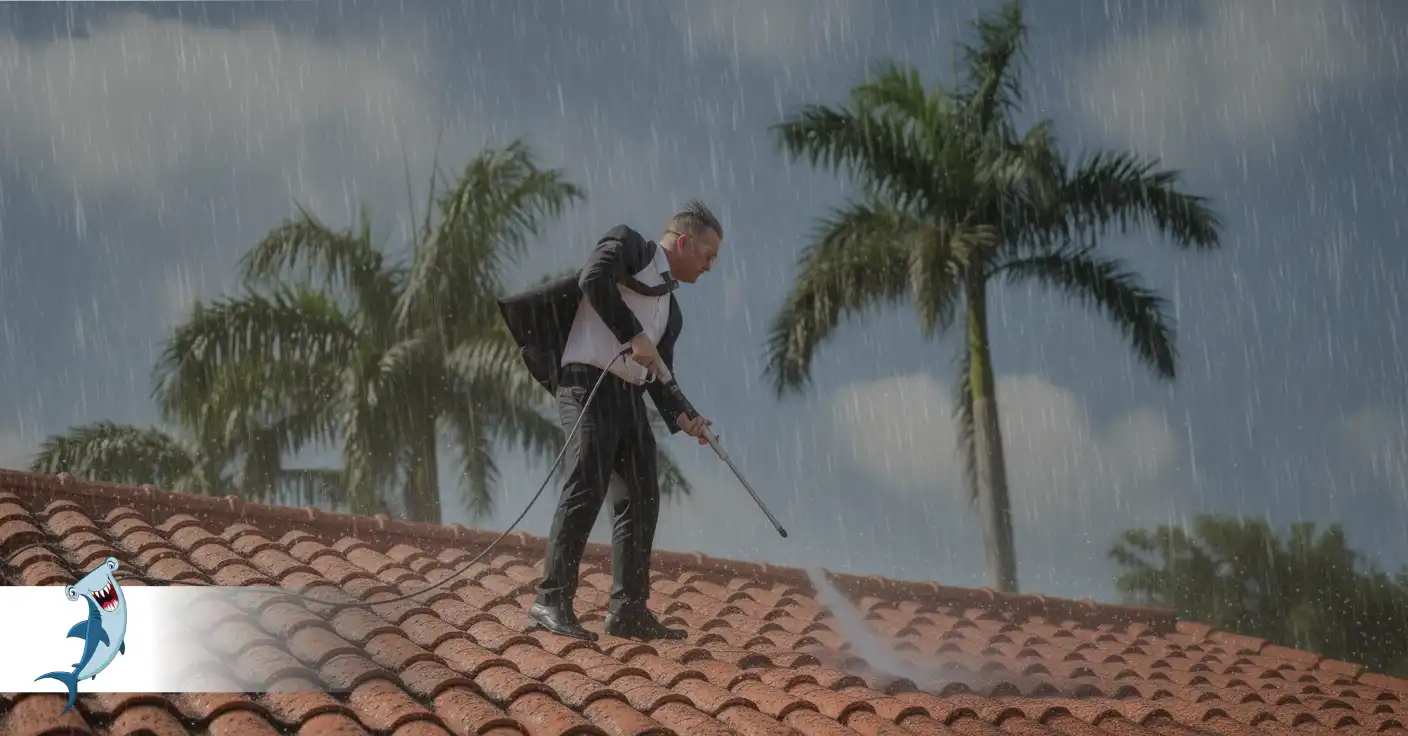
Black streaks GONE in 1 visit — and they stay gone for 2-3 years.
Soft wash chemistry kills Gloeocapsa Magma at the root, not just on the surface. No high pressure, no tile damage, no voided warranty.
Get Your Free Quote
Tell me what needs cleaning and where — I'll send a firm, no-obligation price by text or email, usually the same day.
Get My Quote →Lock in the best day for your schedule
Reserve the best time and date for your schedule and I'll follow up with your numbers. No payment to hold a spot and no obligation to keep the booking — reserve now, decide once you have the price.
Frequently Asked Questions
Why is my courtyard entry slippery?
Can neighbors share a visit?
Will sealing change the color of my pavers?
Do you clean the clubhouse pool deck?
How long until I can park in the garage again?
My pavers were sealed years ago and look cloudy. Can you fix that?
More Avellino Isles Services
See every exterior cleaning service we offer in Avellino Isles on the Avellino Isles service page.
