Paver Sealing & Sanding
Bonita National
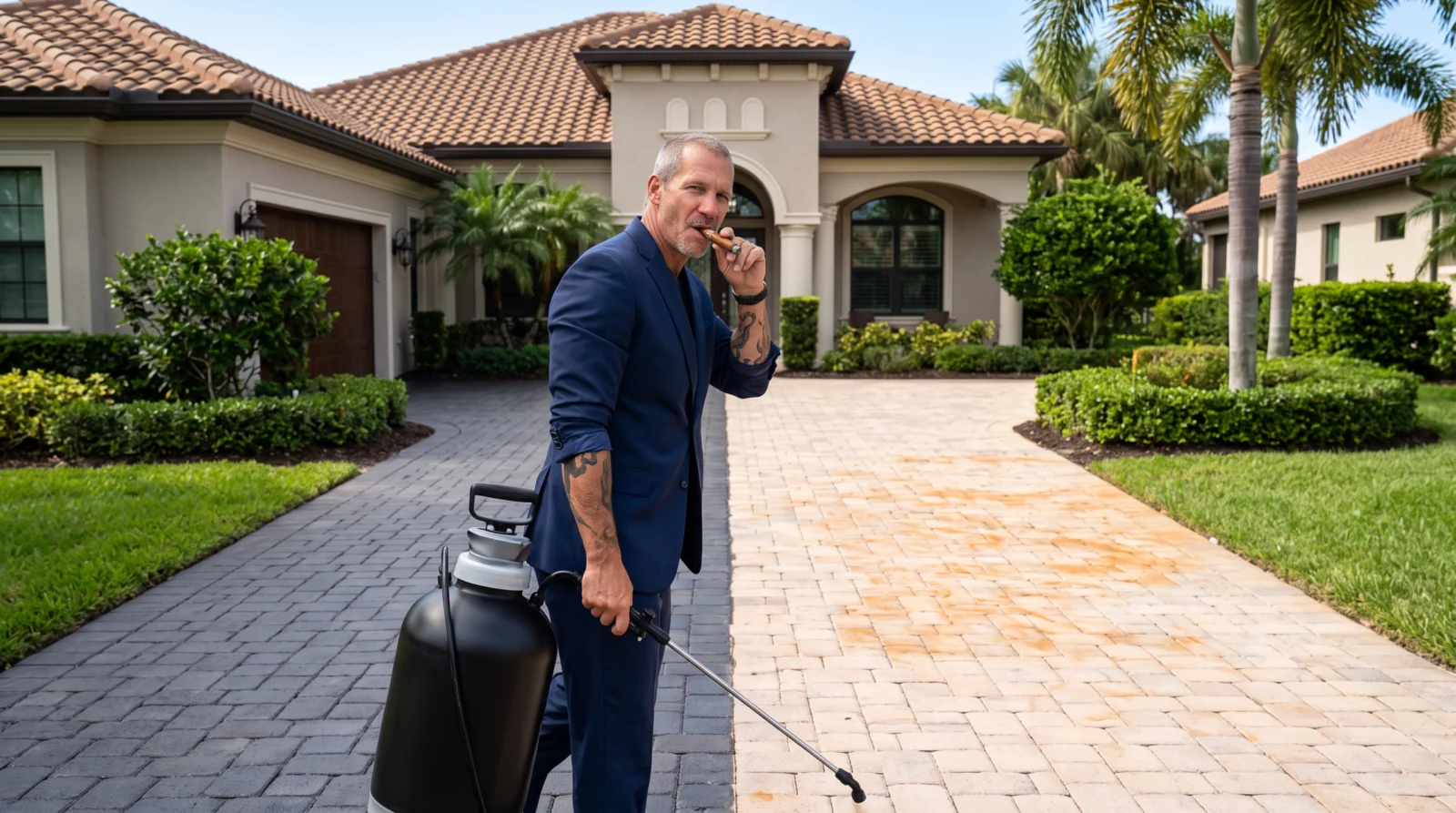
Bonita National’s light-colored paver drives and pool decks look great until reclaimed irrigation water marks them orange. We remove the iron staining, re-sand every joint and seal the surface so stains have nothing to soak into.
Starting Price
Protection
Sealer
Why Light Pavers Need Sealing Here
Bonita National Golf & Country Club is a Lennar community that opened for sales around 2014, set around a Gordon Lewis golf course just off Bonita Beach Road near I-75. Most of its homes went up in the second half of the 2010s, so nearly every driveway and pool deck here was laid within a few years of the others. That shared age means many owners are reaching the same point at the same time: the first set of joint sand is worn and the pavers have never been sealed.
Reclaimed irrigation water is used across the course landscaping, and it carries iron. Each time a sprinkler hits a paver, a little iron soaks in and turns orange in the sun. On the light finishes common at Bonita National, those lines are obvious.
The orange marks follow a pattern. They fan out from each sprinkler head in an arc, darkest at the edge of the spray where water pools and dries. On a corner lot or a home with a side-entry garage, two or three heads can overlap and leave a solid band along the drive. Looking at where the arcs fall tells us which heads to note for you and which areas need the most treatment.
Pressure washing does not remove iron, and it pulls sand out of the joints. Repeated washing without re-sanding leaves gaps, then weeds, ants and shifting pavers.
Rust treatment comes before anything else, and it takes care. The products made for iron on pavers are acid-based, and they can lighten some colors if they sit too long. We test a small spot first, work in sections, and rinse thoroughly so no residue is left in the joints. The pavers then need to dry completely before new sand goes in.
The fix is to remove the rust with chemistry made for it, refill the joints with polymeric sand, and seal. A sealer closes the pores so the next sprinkler hit sits on top and rinses off.
Getting the sand right is what keeps the drive flat. Manufacturers of polymeric sand call for a completely dry surface, a fill that ends about an eighth of an inch below the top edge, and plate compaction before watering. Where old sand has washed out, it should be removed at least an inch and a half deep, not topped off with a thin new layer.
Lake humidity also grows algae in shaded joints and along drive edges. Sealing slows that too, so the next routine cleaning takes far less effort.
Humidity near the lakes affects the work schedule as well as the algae. Polymeric sand makers note that installing on damp pavers or in very humid air can leave a white haze on the surface. That is one reason we clean, let the pavers dry for a full day, and only then sand, rather than doing it all in one rushed visit.
Rain timing is the next concern. Some newer polymeric sands are rated rain-safe within 15 minutes to an hour after activation, but the general guidance is a full day without rain. In summer we finish sanding and sealing in the morning, before the usual afternoon storms, and reschedule if a soaking day is forecast.
Wait times before sealing vary by brand. One widely used solvent-based wet-look sealer asks for at least 24 hours after cleaning and sand activation. A popular water-based wet-look product asks for 30 days after polymeric sand. We follow the label for the product on your job and set the seal date before we leave, so you know when we will be back.
Sealers also have temperature limits. One common product should not go onto a surface hotter than 120°F, and light pavers in July sun can still get close by early afternoon. We seal in the cooler part of the day. Most sealers are dry to the touch in about an hour and fully cured in about a week, so we ask you to leave the sprinklers off for the first day.
There are two broad types of sealer. Film-forming sealers, often called wet look, sit on the surface, deepen the color and help hold joint sand in place. Penetrating sealers soak in, keep the natural look and let moisture out. Some joint-stabilizing sealers are also made to discourage weed seeds and ants. On light pavers, many owners here choose a natural finish so the color stays true.
Pool decks deserve their own note. On smooth, low-porosity pavers, a second film-forming coat can be slippery when wet, so we use a slip-resistant product around the pool and avoid heavy build-up. Sunscreen and pool chemicals also wear a sealer faster on a deck than on a drive, so decks often need attention a bit sooner.
Pricing comes from our published list. A coach-home or condo pad up to 400 square feet cleaned, sanded and sealed starts at $399. A standard single-family driveway starts at $599. Wide, circular or estate drives start at $799. Sealing a pool deck with a non-slip product begins at $499. Cleaning and re-sanding without sealer starts at $349.
Terrace and veranda condo buildings usually have hardscape that belongs to the association rather than to one owner. For those areas we work through the manager and quote the board directly. Single-family and coach-home owners can usually book their own drive, though the HOA may want to see the product sheet if the finish changes the look of the home.
Our crew is already on the Bonita National gate list. For the visit itself, we need cars out of the garage and off the drive, an outdoor spigot, and irrigation paused for at least a day after sealing. You do not need to be home. A written record with photos, products used and cure times follows each visit.
Sealing over iron stains locks them in for years. We remove existing staining first, every time.
Bonita Springs, FL 34135
Lee County
Clean, Sand and Seal at Bonita National
Rust Treatment
Iron staining treated with dedicated rust chemistry and rinsed.
Surface Clean
Algae and dirt removed evenly with a surface cleaner, then a full drying day.
Polymeric Sand
Joints are filled with polymeric sand on a fully dry surface, compacted with a plate, topped up to just below the paver chamfer and misted in sections until set.
Seal
Once the sand has cured for the time its maker specifies, drives get a natural or color-enhancing sealer and pool decks a slip-resistant one.
Turning heads away from hardscape helps a lot. We point out the heads causing the worst stains on your service record.
Paver Sealing & Sanding Pricing in Bonita National
| Service | Typical Price | Notes |
|---|---|---|
| Clean + sand + seal, up to 400 sq ft | From $399 | Coach-home and condo pads |
| Standard driveway clean + sand + seal | From $599 | Most single-family drives |
| Large driveway | From $799 | Wide or circular drives |
| Pool deck sealing | From $499 | Slip-resistant |
| Clean + re-sand | From $349 | Joints without sealing |
Final pricing depends on size, access and condition. Call 239-544-1165 for a free written quote.
Black streaks GONE in 1 visit — and they stay gone for 2-3 years.
Soft wash chemistry kills Gloeocapsa Magma at the root, not just on the surface. No high pressure, no tile damage, no voided warranty.
Get Your Free Quote
Tell me what needs cleaning and where — I'll send a firm, no-obligation price by text or email, usually the same day.
Get My Quote →Lock in the best day for your schedule
Reserve the best time and date for your schedule and I'll follow up with your numbers. No payment to hold a spot and no obligation to keep the booking — reserve now, decide once you have the price.
Frequently Asked Questions
Will sealing keep my pavers from re-staining?
How long does the seal last?
Can you remove old orange stains completely?
Do I need HOA approval?
How soon can I drive on it?
Can you also clean the lanai?
More Bonita National Services
See every exterior cleaning service we offer in Bonita National on the Bonita National service page.
