
Roof Cleaning
Estuary at Grey Oaks
Roofs in the Estuary are among the largest in Naples: broad tile roofs over Tuscan estates with many hips and valleys, and newer roofs on modern and transitional rebuilds. Lakes and fairways keep them damp, and their size makes careful planning essential. Here is how we soft wash an Estuary roof and protect everything beneath it.
From
Properties
Preserve Setting
Big Roofs, Many Valleys, Water on All Sides
The Estuary at Grey Oaks holds 179 properties on about 350 acres within a gated preserve, across Airport Road from the main Grey Oaks club. Homes were first completed here in 2001, and a handful are still under construction. Almost all of them face a lake, a golf course or both, which means roofs sit in some of the most humid air in central Naples.
Early Estuary homes were largely Old World Tuscan and Mediterranean designs. Their roofs are expansive tile, often barrel or S-tile, broken into many planes with hips, valleys, turrets and deep overhangs. Each valley collects leaves and holds water after storms, and each north- or shade-facing plane is a place for algae to start. On a roof this complex, growth rarely looks even; some planes go dark while others stay light. Deep overhangs keep the lower courses shaded, so streaks often start just above the gutters.
Newer and renovated homes have moved toward modern, transitional and traditional looks, and some carry flat tile, standing-seam metal or low-slope sections with membranes. We confirm each roof’s materials before choosing chemistry. Metal and membrane sections need different handling from tile, and a single home can have all three.
The common black staining on Naples roofs is Gloeocapsa magma, an algae that spreads by airborne spores and thrives on damp, shaded surfaces. Lichen and moss may follow in valleys and on shaded overhangs. Beyond appearance, the growth holds moisture against the roof and darkens it so it absorbs more heat, which matters on a roof covering thousands of square feet of living space.
Our cleaning method is a soft wash at low pressure. A dilute solution is applied gently, left long enough to work on the growth and rinsed at about garden-hose pressure. High pressure erodes tile, cracks barrel pieces and can force water under laps; we never use it on a roof. Ridge and hip caps get their own treatment, since growth settles in their mortar joints first.
Size changes logistics. Large Estuary roofs often take a full day, and we plan the sequence so runoff never lands on stone or glass that has already been rinsed. We start high and work down, section by section, rinsing walls, windows and hardscape below each section before moving on. On the biggest roofs, we may split the job into two visits for safety and quality. On a roof this size, waiting too long turns a routine soft wash into a much longer job.
Gutters and downspouts on estate homes are often copper or custom aluminum, and they carry a large volume of water from these roofs. We flush gutters and valleys of leaves and seed pods, clean gutter faces by hand where streaks have formed, and avoid harsh products on copper that would strip its natural patina. Downspouts discharging toward a lake are diverted so rinse water soaks into lawn first.
What lies beneath an Estuary roof is as valuable as the roof itself: natural stone terraces, cobblestone or paver motor courts, cast-stone trim, large glass walls and manicured beds. We pre-wet and rinse plantings, cover delicate beds, protect stone with mats where equipment rests, and rinse glass with clean water at the end so there are no spots. Many Estuary homes have been renovated, so original tile may now sit beside new stone, new glass and new finishes.
Nature is part of the Estuary’s setting, and we work with it. Wading birds, ospreys and songbirds use the lakes and preserve, and some nest in palms, chimneys or roof valleys near the house. We check for active nests before treatment and leave a buffer around them. We keep the solution on the roof rather than letting it drift toward open water.
Safety on tall, steep roofs with turrets and multiple heights comes from rigging, not speed. We use harnesses and anchor points where pitches require them, place ladders on padded feet over stone, and step only on supported areas of tile. Barrel tile is never walked on wet. Areas that can be treated from a ladder or lift are done that way.
While on the roof we document conditions: cracked or slipped tiles, missing mortar at ridges, worn flashing around chimneys and skylights, and clogged valleys. You or your house manager receive those photos with the service record. On homes of this age, catching small items early helps avoid leaks during summer storms.
Many Estuary owners work through a house manager or estate service. We agree on a written scope ahead of time, coordinate the visit around other trades, and send the same crew back each time. Gate entry is arranged in advance, and trucks are parked so they don’t block neighbors on the cobblestone streets.
On lake and golf lots here there is no set interval; ARMA notes discoloration may recur, and we come back when it does. Shaded planes and valleys may show light growth first. Many owners schedule the roof with a house wash and window cleaning, roof first, so the whole exterior is finished together. If you are preparing for a sale, plan the roof a couple of weeks before aerial photography.
We found no published Estuary rule on roof cleaning frequency, but Grey Oaks associations maintain appearance standards. If you plan to coat, paint or seal tile after cleaning, check with the architectural committee first. Pricing for most Estuary roofs falls in our large estate tier, with ridge cap treatment included on tile.
On very large roofs, we clean and rinse one section at a time, rinsing stone and glass below before moving on.
Naples, FL 34105
Collier County
An Estuary Roof, Step by Step
Survey Materials and Planes
Tile, metal and membrane sections are identified, valleys checked and the cleaning sequence planned.
Rig and Protect
Harness points set, ladders padded over stone, plantings soaked and delicate beds covered.
Soft Wash in Sections
Dilute solution applied at low pressure from the top down, with ridge caps treated separately.
Rinse, Glass and Report
Each section rinsed with stone and glass below, then photos and a condition report go to you or your manager.
Every visit includes photos of cracked tile, loose caps and worn flashing for your roofer or house manager.
Roof Cleaning Pricing in Estuary at Grey Oaks
| Service | Typical Price | Notes |
|---|---|---|
| Large estate / complex roof | From $499 | Most Estuary homes |
| Tile roof + ridge cap treatment | From $349 | Smaller tile roofs |
| Two-story roof | From $399 | Simpler two-story rooflines |
| Roof + house wash combo | From $599 | Roof, stucco and trim |
Final pricing depends on size, access and condition. Call 239-544-1165 for a free written quote.
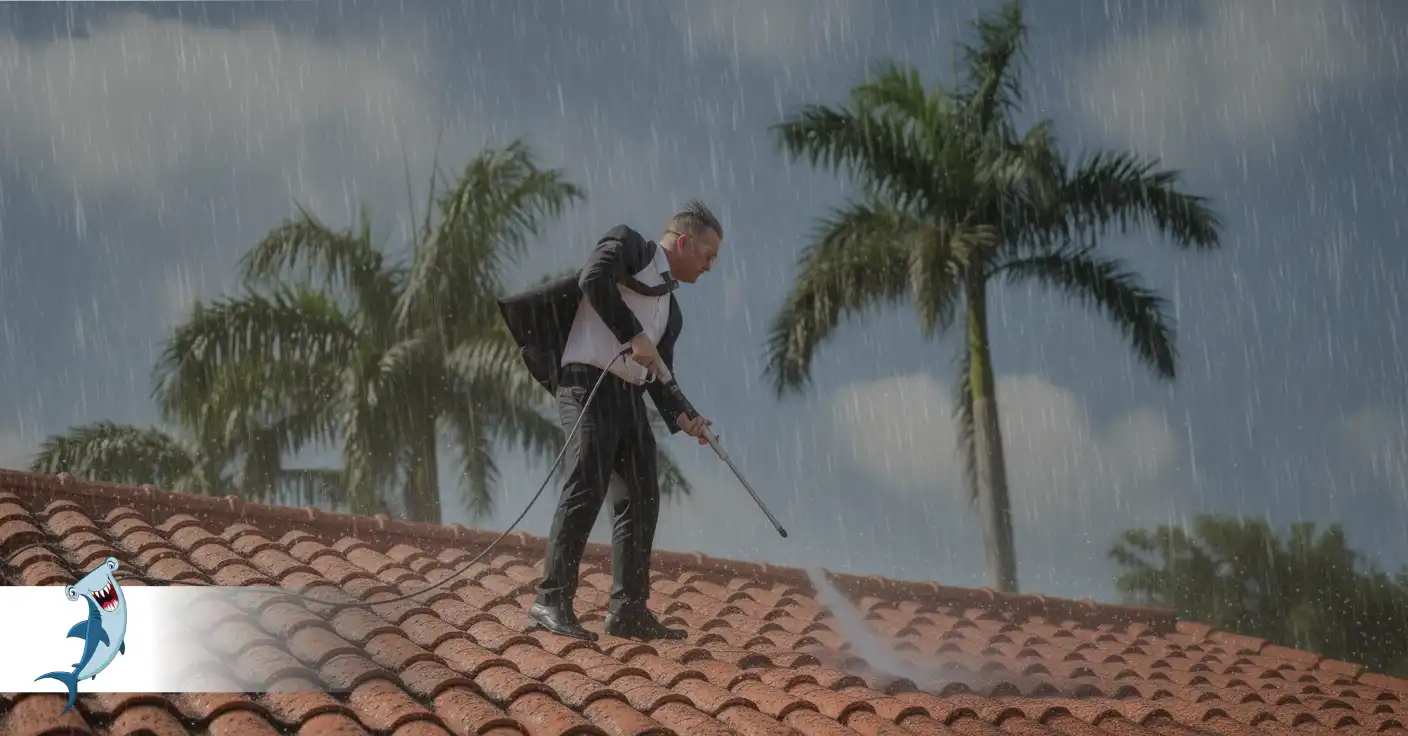
Black streaks GONE in 1 visit — and they stay gone for 2-3 years.
Soft wash chemistry kills Gloeocapsa Magma at the root, not just on the surface. No high pressure, no tile damage, no voided warranty.
Get Your Free Quote
Tell me what needs cleaning and where — I'll send a firm, no-obligation price by text or email, usually the same day.
Get My Quote →Lock in the best day for your schedule
Reserve the best time and date for your schedule and I'll follow up with your numbers. No payment to hold a spot and no obligation to keep the booking — reserve now, decide once you have the price.
Frequently Asked Questions
How long does an Estuary roof take?
Will cleaning damage barrel tile?
My home has metal and flat sections too. Can you clean them?
Can you coordinate with my house manager?
Can you clean the pool cage the same day?
More Estuary at Grey Oaks Services
See every exterior cleaning service we offer in Estuary at Grey Oaks on the Estuary at Grey Oaks service page.
