Paver Sealing & Sanding
Pelican Marsh
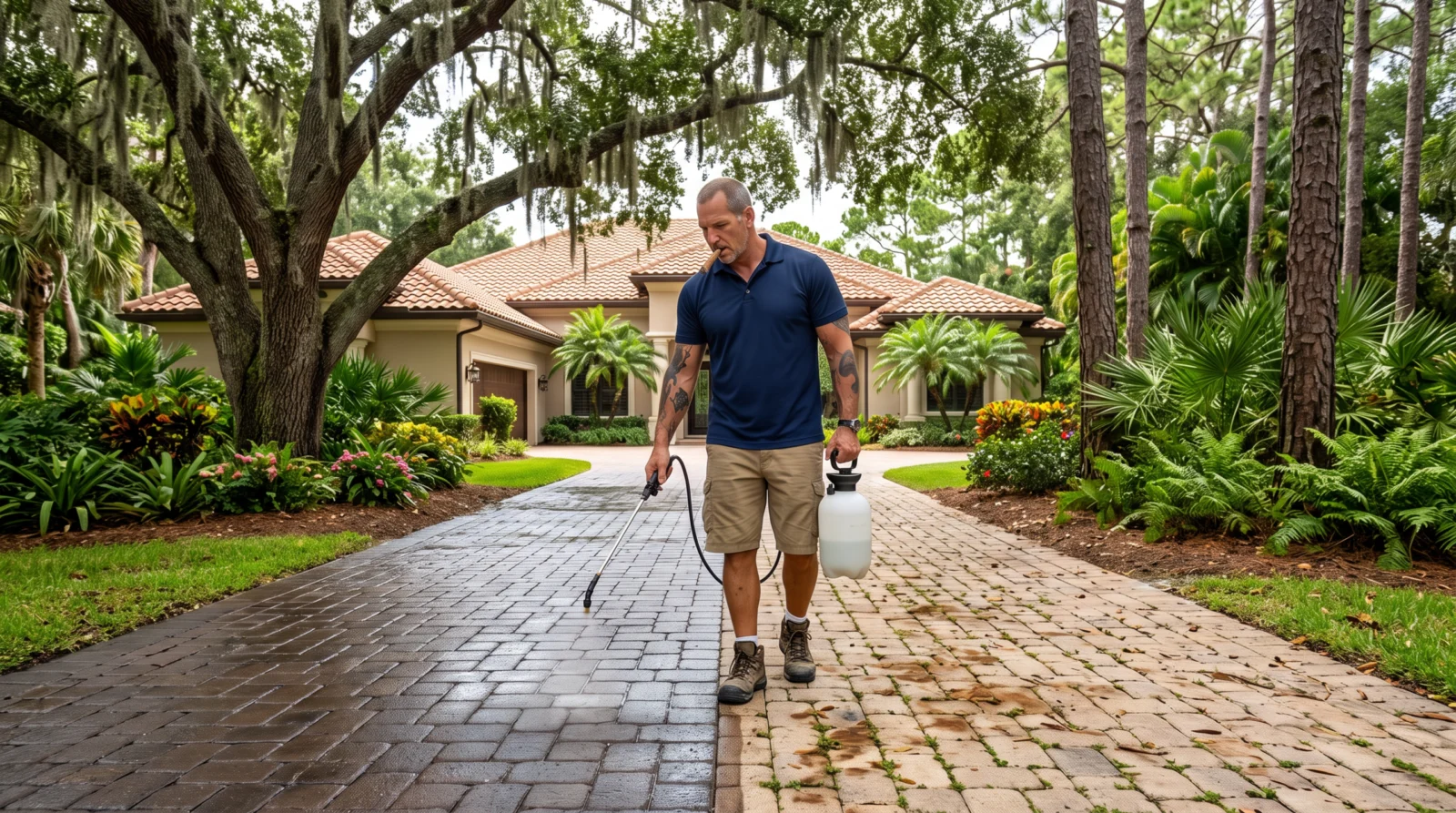
Pelican Marsh driveways and walks sit under the same canopy as the roofs, so they collect leaf tannins, pine sap and green algae that never quite dry out. We clean them, re-sand the joints and seal them so they stay cleaner longer under the trees.
Starting Price
Protection
Specialists
Oak Canopy, 26 Subdivisions and Shaded Drives off Goodlette-Frank
Wet oak leaves leave brown tannin prints on pavers, and pine debris adds sticky residue. Both soak into unsealed pavers, and after a few summers the drive looks blotchy even after a rinse.
Shade keeps joints damp, so algae and moss grow along them and weeds root where sand has washed out. On walkways, that makes a slippery surface right where people step.
Irrigation can add iron staining where sprinklers hit hardscape. It is a mineral stain and needs dedicated rust chemistry.
Sealing changes the equation: stains sit on top of the surface, joints stay locked with polymeric sand, and a quick rinse clears what the canopy drops between cleanings.
More than 1,000 acres in North Naples. Pelican Marsh sits off Goodlette-Frank Road between Immokalee Road and Vanderbilt Beach Road, covering more than 1,000 acres. Over 133 acres are natural and protected preserve, and freshwater lakes run through the community. Sidewalks and paths for walking, jogging and cycling wind past many homes. All of that green space is why the oak and pine canopy is so heavy, and why so many paver drives here stay shaded for much of the day.
Twenty-six subdivisions, plus condos. There are 26 single-family subdivisions, including Augusta, Muirfield, Portofino, Watercrest and Troon Lakes, plus condominium communities such as Arielle, Egrets Walk, Les Chateaux, Mont Claire, Osprey Pointe, Ravenna and Seville. Each subdivision used its own paver styles and colors. A coach-home drive or courtyard often fits our up-to-400-square-foot tier, while estate homes with long drives or motor courts use the large-drive rate. For the condominiums, shared walks and pool surrounds go on a quote addressed to the board.
Two golf clubs next door. The community includes Pelican Marsh Golf Club, which hosted a 2018 U.S. Open qualifier, and The Estates at Bay Colony Golf Club. Fairway homes catch fertilizer granules, clippings and course irrigation drift. Fertilizer can leave orange or brown spots that look like rust on pavers, and those get the same paver-safe treatment as irrigation stains before any sealer goes on.
Older condos along the fairways. Clermont at Pelican Marsh, built between 1996 and 2001 along the 9th hole, is one example of how long some pavers here have been down. Drives and walks of that age have often been sealed several times. We check for older sealer that has turned white or flaked, because new sealer does not bond well over failing film and may need the old coat worn down first.
Roots and raised pavers. Big oaks spread roots under drives and walks, and over the years they can push pavers up or leave dips where the base has shifted. Fresh joint sand keeps a paver from wandering, yet it cannot lower one that a root has pushed up. We mark any lifted or sunken areas on the walkthrough so you can have them reset before we sand and seal, which avoids sealing a trip edge into place.
Lakes and preserve edges. Homes that back onto a lake or preserve often have a paver patio or pool deck sloping toward the water. Rinse water there is steered to the lawn, and sealer near the bank is rolled on rather than sprayed so none drifts onto the water or into the preserve.
Sanding joints under shade. Polymeric sand is applied only after the pavers are completely dry, and under heavy canopy that can take most of a day. It is swept to about an eighth of an inch below the paver top, compacted, swept and compacted once more, then watered with a gentle shower so every section is evenly wet. Following Alliance Gator’s guidance, any sand that has broken down is removed at least an inch and a half deep before refilling.
Haze on damp mornings. Sand installed on damp pavers or in high humidity can leave a white haze on the surface. Alliance Gator notes that it can be removed with an efflorescence cleaner or hot-water washing. Under Pelican Marsh’s trees, avoiding it starts with patience: we would rather start sanding later in the day than work on pavers that are still holding the morning’s moisture.
Choosing a sealer for shade. A penetrating, breathable sealer lets moisture escape from shaded pavers and leaves no film to cloud, which suits most canopy-covered drives here. A joint-stabilizing acrylic sealer helps hold sand and deepens color on drives with more sun. Manufacturers set different waits after sanding, from about 24 hours to as long as 30 days, so sand cure before sealing follows the label of the product on your job.
Rain windows. Rain-safe times for polymeric sand range from about 15 minutes for some newer formulas on a well-drained base to a full day for others. In summer we book morning starts and watch the radar, and if a storm threatens before the sand has set, we reschedule rather than risk washout.
Club days and gate access. The community center has eight lighted Har-Tru tennis courts, four pickleball courts, a fitness center and a spa, and many owners are there or on the course while we work. You do not need to be home. Move vehicles, turn sprinklers off the evening before, and stay off the finished surface for about 24 hours, per the product label.
Mature trees can lift pavers. We flag raised or sunken areas before sealing so you can have them reset first.
Naples, FL 34109
Collier County
Pelican Marsh Paver Process
Treat Stains
Tannin, sap, fertilizer and iron stains pre-treated with the right chemistry for each.
Surface Clean
A rotary surface cleaner lifts algae and grime evenly without blasting out joints.
Re-Sand
Once dry, polymeric sand is swept in, compacted and misted.
Seal
Natural or wet-look sealer applied; drive usable after about 24 hours, per the product label.
Shaded pavers dry slowly. We allow extra time before sealing so the finish cures clear.
Paver Sealing & Sanding Pricing in Pelican Marsh
| Service | Typical Price | Notes |
|---|---|---|
| Re-sanding only, up to 400 sq ft | From $199 | Walks and entries |
| Clean + re-sand | From $349 | Joint restoration |
| Clean + sand + seal, up to 400 sq ft | From $399 | Coach-home drives and courtyards |
| Standard driveway clean + sand + seal | From $599 | Most single-family drives |
| Large driveway or motor court | From $799 | Estate homes |
| Pool deck sealing | From $499 | Slip-resistant sealer |
Final pricing depends on size, access and condition. Call 239-544-1165 for a free written quote.
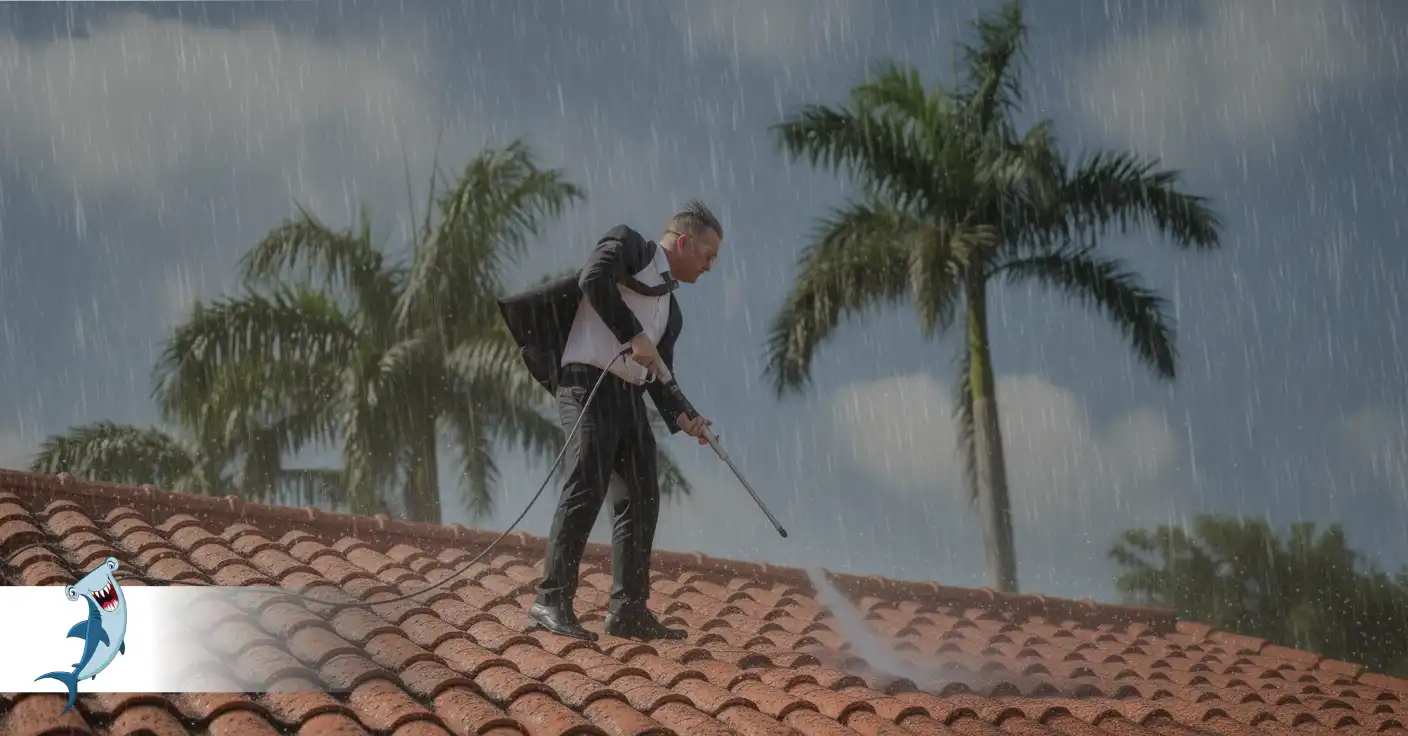
Black streaks GONE in 1 visit — and they stay gone for 2-3 years.
Soft wash chemistry kills Gloeocapsa Magma at the root, not just on the surface. No high pressure, no tile damage, no voided warranty.
Get Your Free Quote
Tell me what needs cleaning and where — I'll send a firm, no-obligation price by text or email, usually the same day.
Get My Quote →Lock in the best day for your schedule
Reserve the best time and date for your schedule and I'll follow up with your numbers. No payment to hold a spot and no obligation to keep the booking — reserve now, decide once you have the price.
Frequently Asked Questions
Can you remove brown leaf stains?
How long will sealing last under heavy canopy?
Do you remove orange irrigation stains?
Will sealing stop weeds in the joints?
Can you seal pool decks?
Can you access Pelican Marsh without me?
More Pelican Marsh Services
See every exterior cleaning service we offer in Pelican Marsh on the Pelican Marsh service page.
