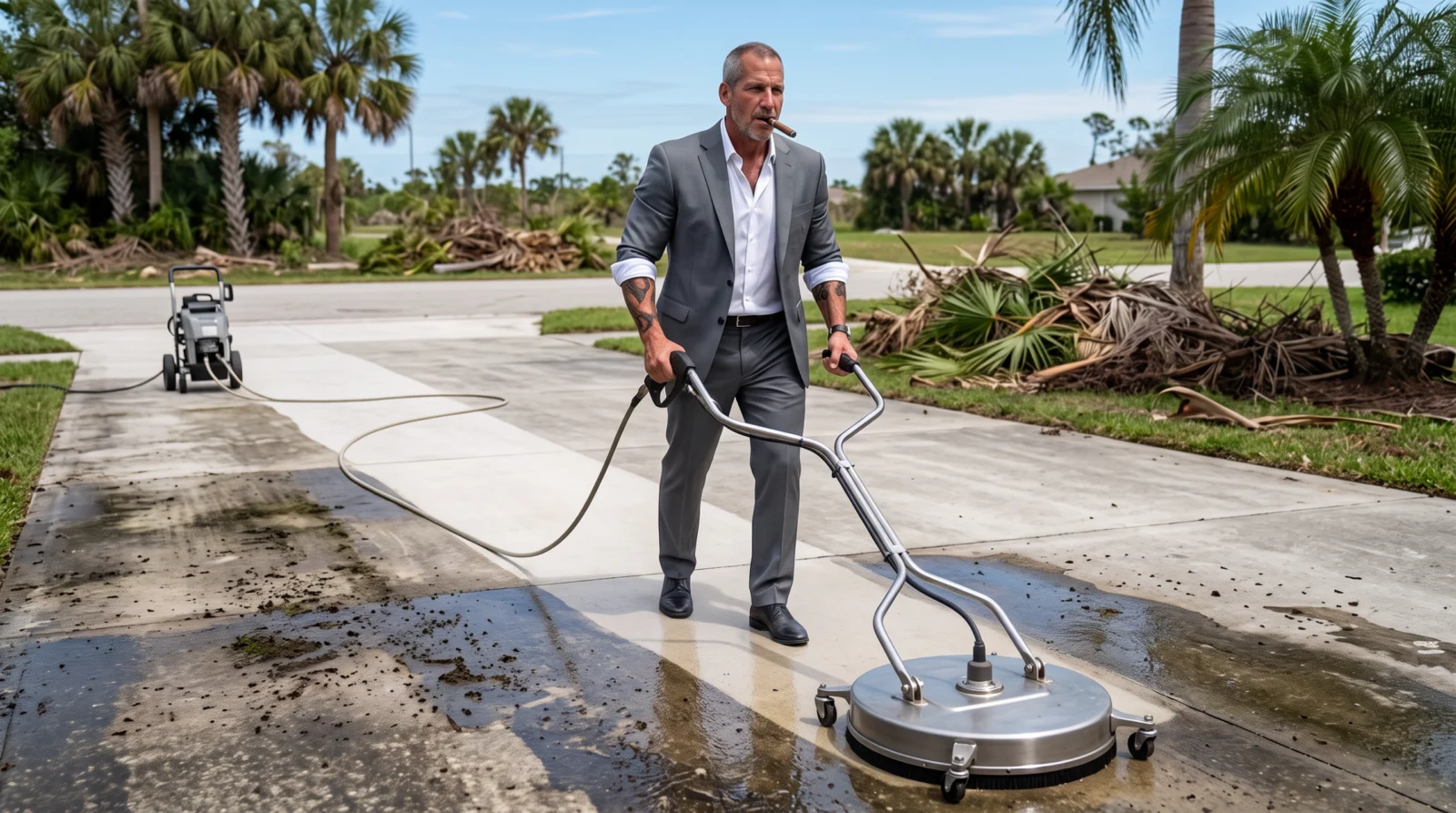
Flood & Storm Surge Cleanup Naples FL —
Exterior Mud & Silt Wash-Down
When surge or floodwater goes down, it leaves a brown line on the walls, silt on every flat surface and salt in every crack. We wash and sanitize the outside of the property and leave interior water damage to licensed restoration companies.
📞 Call for a Free Quote — 239-544-1165Part of our Post-Storm Cleanup service →
Only
Insurance
Competition
in Florida
Storm surge in coastal Naples and floodwater from heavy rain both carry a mix of sand, silt, organic muck, salt and whatever they picked up on the way. That can include fuel, lawn chemicals and sewage. When the water drops, it leaves all of it behind on your house, driveway, lanai and pool cage.
The most visible mark is the waterline. A brown or gray band shows how high the water reached on stucco, garage doors and fences. Below it the surface is coated in a fine film that dries hard in the sun. Flat areas like driveways, walkways and pool decks are covered with a layer of silt that turns to mud with every rain.
Salt is the part people cannot see. Saltwater soaks into stucco, pavers and concrete. As it dries, salt crystals form on the surface as white fuzz and keep drawing moisture. It also sits on aluminum pool cage frames, screen splines and light fixtures, where it speeds up corrosion.
Getting the outside cleaned early helps in three ways. It removes contaminated residue from areas your family walks through. It shows damage that the mud was hiding, like cracks, lifted pavers and broken screens. And it gives you clear, clean photos for your insurance claim.
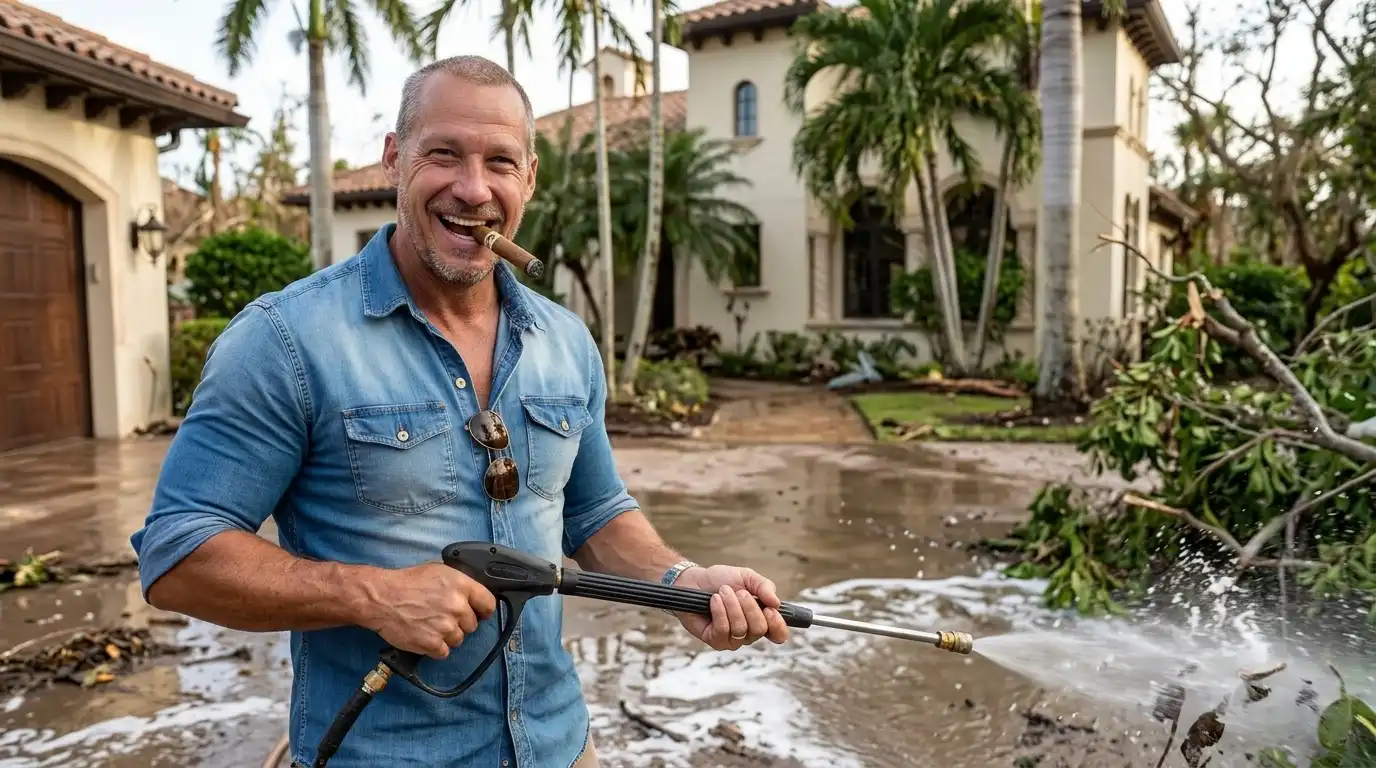
Do not have exterior washing done until power to the home has been checked and any downed lines are cleared. If water got inside, a restoration company should handle the interior. We stay outside.
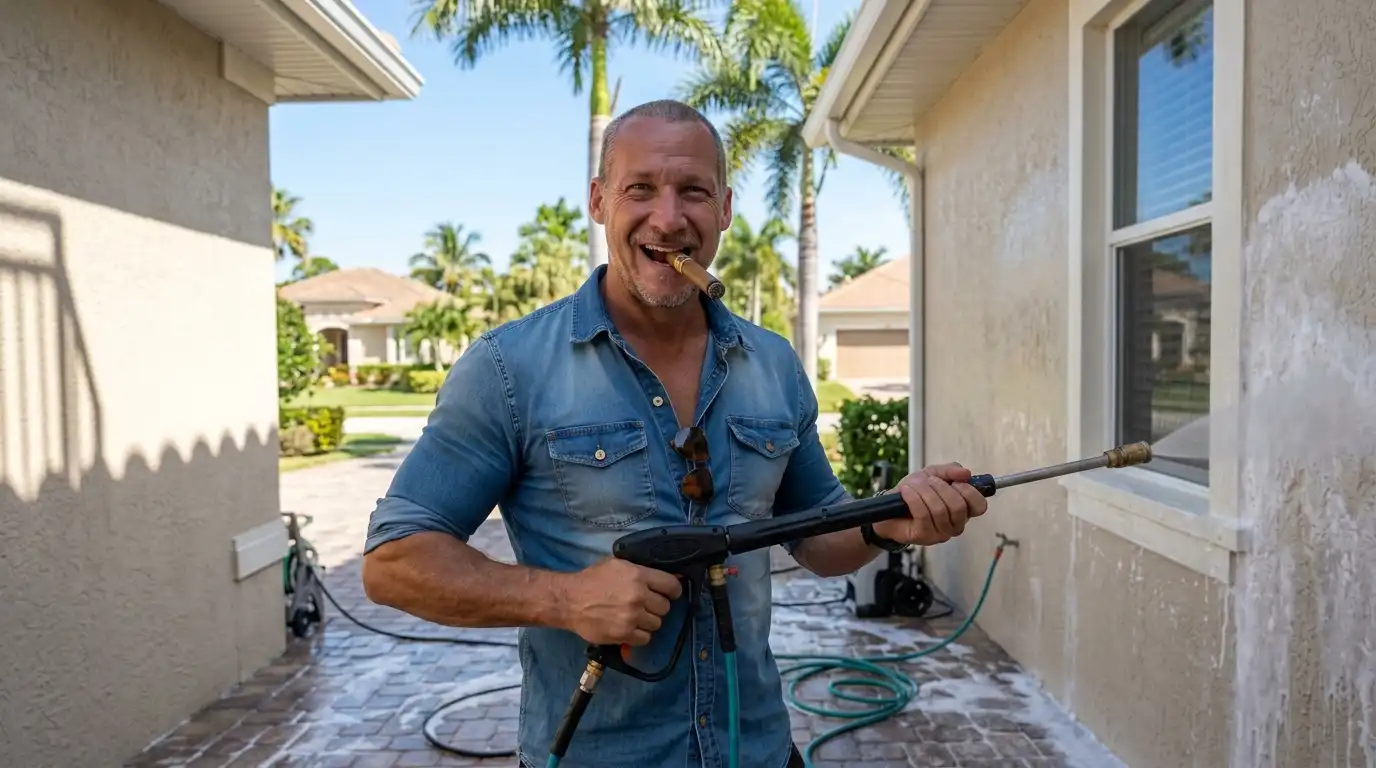
Bulk silt comes off first. Heavy sand and mud are shoveled and squeegeed off driveways, walks and lanai floors before any water goes on. Spraying thick mud just moves it around and pushes it into paver joints and drains.
Next we flush. Low to moderate pressure rinses the remaining film off walls, doors, columns and screens, working from the top of the waterline down. Hot water helps cut any oily residue.
Then we sanitize. Surfaces that sat under surge or floodwater get a diluted sodium hypochlorite solution, the same family of cleaner used in our soft wash, given time to dwell and rinsed off. On stucco this also removes the mold and mildew that grow fast on wet walls in the weeks after a storm.
Last, we rinse for salt. Pavers, concrete, aluminum frames and fixtures get a thorough freshwater rinse to carry dissolved salt away. Very salty pavers may need more than one rinse over a few days as salt keeps working to the surface.
| Surface | What Floodwater Leaves | Our Approach |
|---|---|---|
| Stucco walls | Waterline band, silt film, mildew | Rinse, sanitize, soft wash |
| Driveways and walks | Silt layer, debris stains | Bulk removal, then hot water surface cleaner |
| Pavers | Silt in joints, salt bloom | Bulk removal, flush, repeat freshwater rinse |
| Pool cage and screens | Mud spatter, salt on frame | Low-pressure rinse, sanitize, freshwater flush |
| Garage doors and fences | Waterline, film | Mild cleaner and low-pressure rinse |
Exterior wash-down
Walls, driveways, walks, lanais, pool cages, fences, garage door exteriors and outdoor fixtures.
Sanitizing outside surfaces
Hard outdoor surfaces that sat under surge or floodwater get a sanitizing wash and rinse.
Interior water damage
Drywall, flooring, insulation and drying inside the home are work for a licensed restoration company.
Structural or electrical
Damaged pool cages, roofs, AC units and wiring need the right licensed trade. We can point out what we see.
After a flood the amount of silt and damage varies from one home to the next, so cleanup is quoted after we see the property. Our regular published prices apply to standard services once heavy silt is cleared.
Take your own photos before we start. After the job we provide a written service record with the date, surfaces cleaned, method and our Florida license number, which you can add to your insurance file.
Safety check
We confirm power is safe, note hazards and agree on what is in our scope and what goes to other trades.
Photos
You or your adjuster photograph the damage. We do not wash anything that still needs to be documented.
Bulk removal
Heavy sand, silt and mud are shoveled and squeegeed off flat surfaces.
Flush and wash
Walls, screens and hard surfaces are rinsed from the waterline down.
Sanitize
Surfaces touched by surge or floodwater get a sanitizing solution and a full rinse.
Salt rinse and record
A final freshwater flush for salt, then a written service record for your files.
We provide flood and storm surge cleanup in Naples FL and throughout Southwest Florida:
The CDC’s page on cleaning and sanitizing with bleach after a disaster sets out an order that suits flood work outside the house as well as in it. Step one is washing surfaces with soap and clean water to remove dirt and debris. Step two is sanitizing with a bleach solution. For non-food hard surfaces that may have touched floodwater, such as floors and tools, the CDC’s mix is 1 cup of regular, unscented household bleach (5% to 9% sodium hypochlorite) to 5 gallons of water, followed by air drying. For mold on hard surfaces it calls for a stronger 1 cup per gallon, scrubbed into rough surfaces with a stiff brush and rinsed.
Our wash-down follows the same sequence and never starts with the sanitizer. Silt and film come off with water and scrubbing first, and only then does the sanitizing solution go on, so it is applied to a clean surface rather than to a layer of mud.
The CDC also says to wear rubber or other non-porous boots, gloves and eye protection, to avoid breathing product fumes, and never to mix bleach with ammonia or any other cleaner. If you have already sprayed a household cleaner on a muddy wall or slab before we arrive, tell us what it was, so we know what is on the surface before our solution goes on. If you plan to do part of the outside yourself, those same precautions apply to you.
Flood cleanup outside produces two kinds of waste at once: what we wash off, and what you pull out of the garage and lanai. After Hurricane Ian, Collier County’s debris instructions asked residents to put storm debris curbside in separate piles for yard waste, construction and demolition material such as furniture and carpet, household hazardous waste, electronics and appliances, and not to mix the piles. Yard waste was to be bundled loosely, not bagged. Piles were to stay off the road, driveways, sidewalks, mailboxes, fire hydrants and storm drains, and away from trees, poles, utility boxes, water meters and backflow devices.
Those placement rules affect our day as much as yours. A pile on the driveway apron or across the sidewalk blocks the surfaces we came to wash. If you can, build the curbside piles before we arrive and keep them clear of the driveway, the walks and the area in front of the garage door.
Each storm brings its own county instructions, so check the current ones before you build a pile. If debris pickup has not happened yet when we arrive, we work around what is there and point out anything in the piles, such as paint cans or pool chemicals, that belongs in the hazardous waste pile instead.
Get a firm price for Flood & Surge Cleanup, usually the same day.
Tell us what needs cleaning and where. We review your photos, send a written price by text or email, and handle gate and building access.
Get Your Free Quote
Tell me what needs cleaning and where — I'll send a firm, no-obligation price by text or email, usually the same day.
Get My Quote →About the Author

Owner Blane Perun started this company with a simple premise: Naples homeowners deserve a professional exterior cleaning option that doesn’t come with the inflated pricing of franchise operations and large corporate companies.