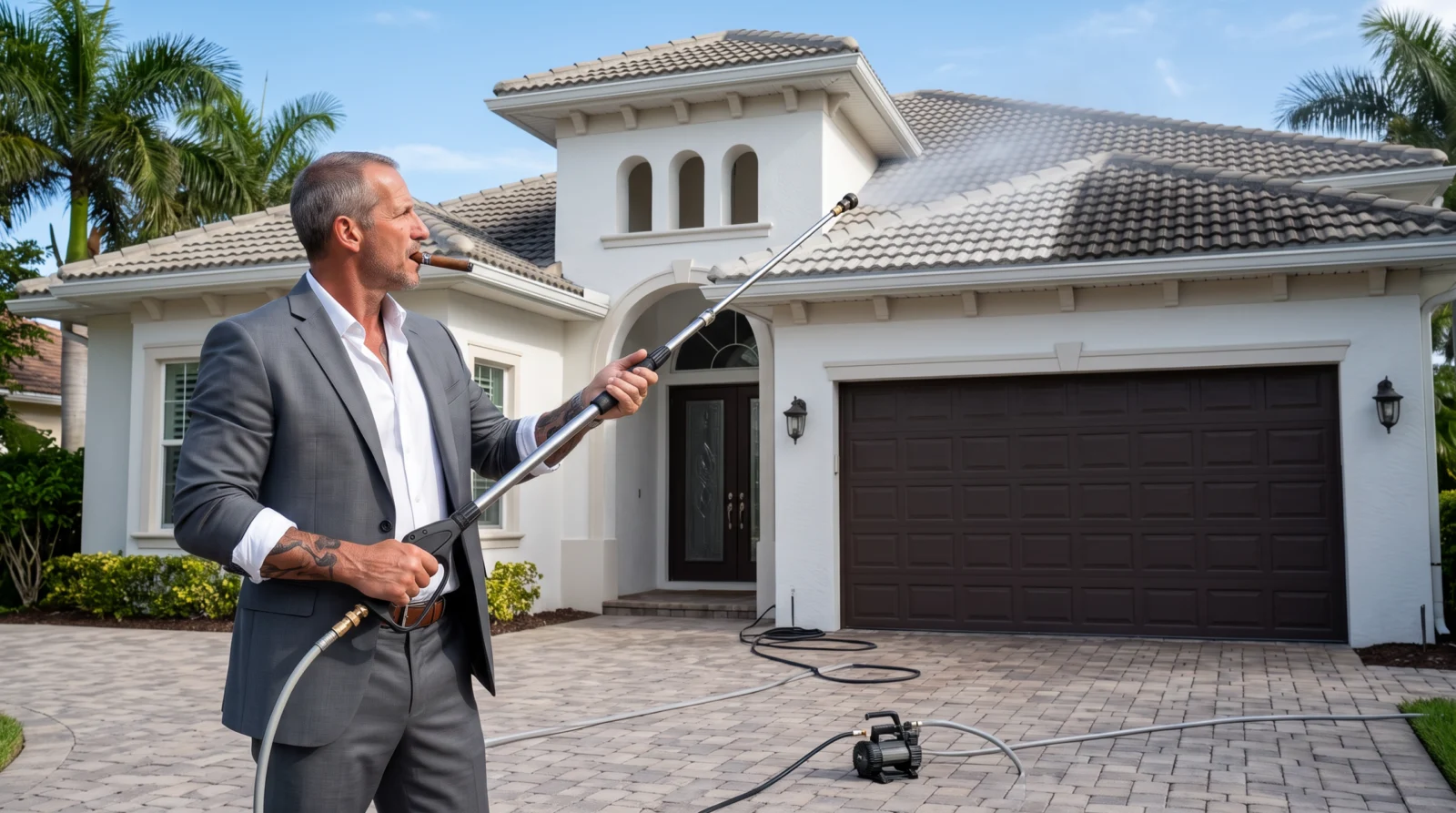
Roof Soft Wash Results
The first day, the first month, and the years after
A roof soft wash is not finished when the crew drives away. Dead growth keeps releasing with the rain, and how long the roof stays clean depends on shade, slope and what is around it. Here is a realistic picture of what to expect.
📞 Free Quote — 239-544-1165gone
growth release
roof
What does the roof look like right after a soft wash?
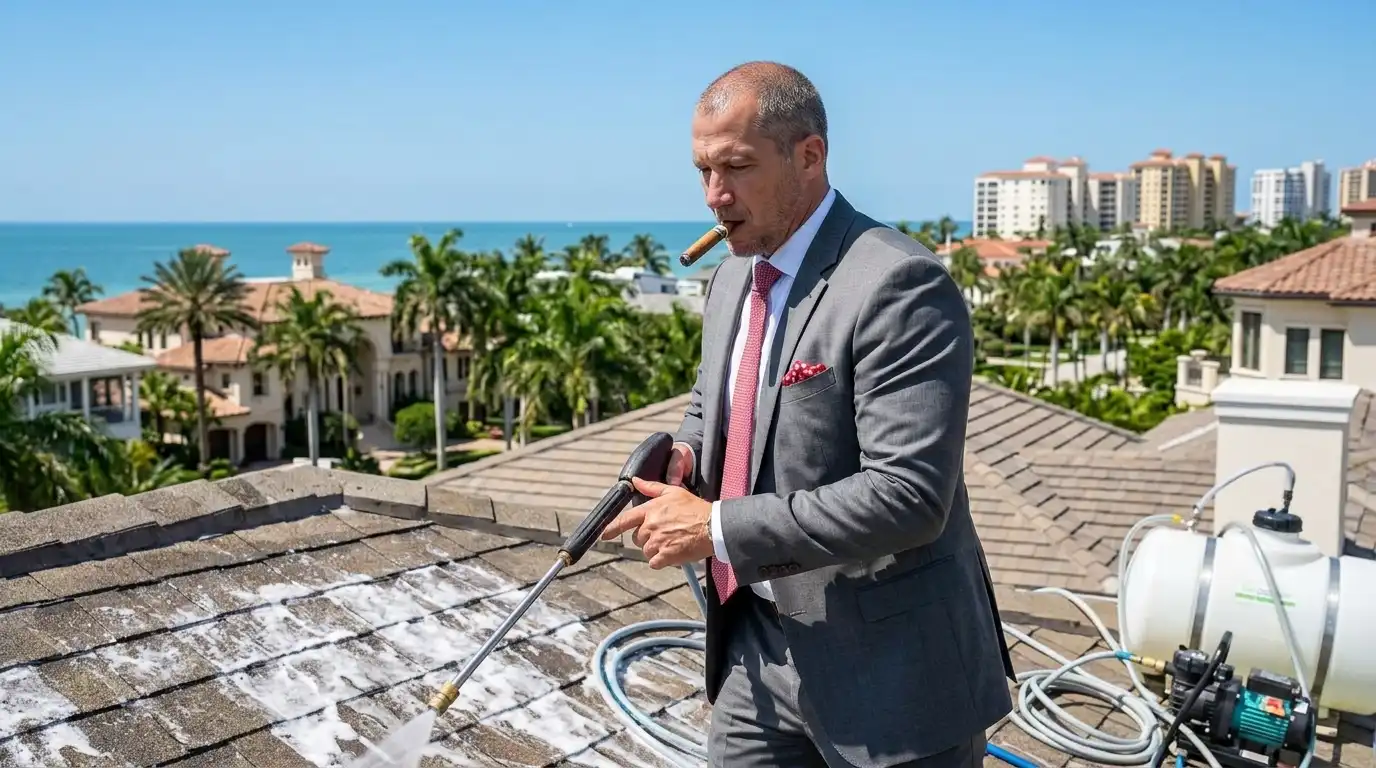
On the day of the wash, most of the black algae streaking fades within minutes of the solution going on, and the rinse clears what has loosened. For a lightly stained roof, that is close to the final result. Standing in the street, you will usually see an immediate and obvious change.
Heavily grown roofs are different. Concrete tile is porous, and algae and lichen root into it. After treatment, the growth is dead, but some of it is still physically attached. You may see faint gray shadows where the worst streaks were, pale patches where lichen colonies sat, or light speckling in the shaded valleys. None of this means the treatment failed. It means the remains have not been washed away yet. The term “soft wash” refers to the pressure level — not a compromise in cleaning effectiveness. Soft washing kills biological growth more effectively and more permanently than any pressure washing method because it targets the organism itself rather than mechanically removing surface staining.
We point these areas out at the end of the visit so you know what you are looking at, and we tell you which parts of the roof we expect to keep improving.
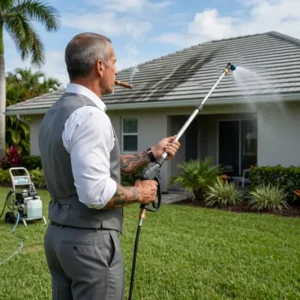
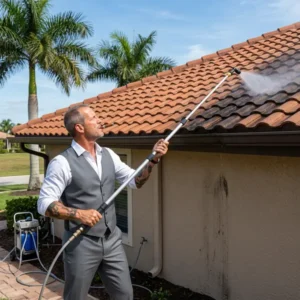
What happens over the next few weeks?
Rain is the final rinse. Each shower carries away more of the loosened material. On most roofs, the remaining shadows fade noticeably over the following few weeks of normal weather. In the Naples rainy season that can happen quickly; in the dry winter months it can take longer because rain is less frequent.
Lichen is the slowest. A treated lichen colony turns from green-gray to pale, then dries and lifts away in flakes. Because lichen grips the surface so tightly, pulling or scrubbing it off by hand risks damaging tile or shingle granules. The right approach is patience. If a lichen patch is still clearly attached after several weeks of normal rain, call us and we will take a look and re-treat it if needed.
Avoid pressure washing those last spots yourself. It is tempting to “finish the job” with a garden pressure washer, but that is how tile surfaces get eroded and shingles lose granules.
How long does a clean roof stay clean in Naples?
There is no single answer, because regrowth depends on the conditions around your roof more than on the cleaning. These factors matter most. The primary organism causing roof staining in Naples is Gloeocapsa magma, a cyanobacteria that bonds to roof surfaces and feeds on the limestone filler in tiles and shingles.
- Shade: slopes under oaks, palms or a neighbor’s tall house stay damp longer and regrow first. The north side of a roof is usually the first to show streaks again.
- Pitch: low-slope roofs drain more slowly and hold moisture and debris longer than steep ones.
- Nearby water and preserves: homes backing onto lakes, canals, golf course ponds and preserves sit in more humid air with more airborne spores.
- Debris: leaves, palm fronds and seed pods that collect in valleys and behind chimneys hold moisture against the roof and feed new growth.
- Roof material: porous concrete tile tends to regrow sooner than glazed clay or metal.
A sunny, steep roof with no overhanging trees can stay clean for several years. A low, shaded tile roof next to a preserve may start to show light streaking again sooner. When we quote, we will tell you which of these apply to your roof and what kind of interval is realistic.
Can you slow the regrowth?
You cannot stop algae spores from landing on a roof in Southwest Florida, but you can make the roof a less welcoming place for them.
- Trim overhanging branches. More sun and airflow means a roof dries faster after rain. Even modest trimming over the most shaded slope helps.
- Keep valleys and gutters clear. Debris holds moisture. Clearing leaves after storms and at the end of the rainy season removes a food source for new growth.
- Check irrigation spray. Sprinklers that hit the lower edge of a roof or the walls under the eaves keep those areas wet daily.
- Watch the first signs. Light streaking caught early is faster and gentler to remove than a roof left until it is black.
Some contractors sell zinc or copper strips installed near the ridge, which release metal ions with the rain that discourage growth below them. They can help on some roofs, but coverage below the strips is uneven and installing them involves fastening into the roof. Talk to a roofer before adding anything that penetrates the roof covering.
What is a maintenance wash, and when does it make sense?
A maintenance wash is a lighter soft wash done before the roof is heavily stained. Because the growth is thin, the solution can often be milder and the visit shorter, and the roof never reaches the stage where lichen is deeply rooted.
For homeowners who care about the look of the roof, or who live in a community with strict appearance standards, a maintenance wash at the first sign of streaks is usually easier on the roof than waiting several years for a heavy cleaning. For others, cleaning only when the roof looks noticeably dark is perfectly reasonable. We will not push a schedule you do not need.
Keeping a simple record of your roof
A short record of each cleaning makes the next decision easier. Note the date of the wash, which slopes were the worst, and when you first notice light streaks returning. Over two or three cycles you will know how long your particular roof stays clean, which slopes need attention first, and whether trimming a tree or fixing a gutter made a difference.
The written record we leave after each visit is a good starting point. Keep it with your home’s maintenance papers. It is also useful if you sell, because buyers and their inspectors often ask when the roof was last cleaned and whether any damage was noted at the time.
What should you watch for after the wash?
Most roofs need nothing after a soft wash except time and rain. A few situations are worth reporting.
- Plant stress near downspouts. If leaves on a shrub directly below a downspout look scorched within a day or two, rinse the bed again with plenty of water and let us know. Before treatment we pre-rinse downspouts and gutters to dilute any solution runoff.
- Persistent spots after several weeks. Some heavy lichen or algae may need a second application.
- Rust-colored stains. These are not algae and will not fade with rain. They need a rust treatment.
- Damage noted in the written record. If the crew noted cracked tiles or failing mortar, arrange a roofer before the next heavy rain.
Why do neighboring roofs regrow at different rates?
It is common for two houses on the same street, cleaned in the same week, to look different a year later. That is rarely about the cleaning. It is about the conditions each roof lives in.
One house may have a large live oak shading its rear slope, while the neighbor’s yard was cleared to the property line. One roof may face north across a lake while the other faces south toward the street. One may have gutters that overflow in every storm, keeping the lower courses of tile wet. A low-slope addition on one home may hold water longer than the steep main roof next door. Even the tile itself varies: a newer roof with an intact surface coating sheds spores more easily than an older one whose coating has weathered away.
When we quote a roof, we look at these conditions and tell you honestly whether yours is likely to stay clean for a long time or show streaks sooner.
How do the rainy and dry seasons change what you see?
Roofs washed at the start of the rainy season, roughly June, tend to finish brightening quickly, because frequent afternoon storms rinse away the dead growth within a few weeks. The tradeoff is that the same warm, wet months are when algae grows fastest, so the first faint regrowth on shaded slopes may also appear sooner.
Roofs washed in the dry season, from late fall through spring, can take longer to lose the last shadows of dead growth because rain is less frequent. On the other hand, the dry months are calmer for scheduling, and regrowth is slower until the rains return.
Neither season is wrong. If the look of the roof by a specific date matters, for example before guests arrive for the winter or before listing in the spring, tell us the date and we will suggest when to book.
How can other work undo a clean roof?
A freshly cleaned roof can be marked up by other trades. Roofers repairing tiles walk the roof and can leave scuffs and debris. Painters may drip on tile near the eaves. Landscapers using blowers can push mulch and clippings up onto low roof edges, and tree trimmers drop leaves and branches into valleys.
None of this is a reason to avoid other work. It is a reason to sequence it. If you are planning roof repairs, painting or major tree work, do those first and wash the roof afterward. If a repair is needed after the wash, ask the roofer to clear any debris they leave in valleys and gutters.
How the results differ by roof type
Concrete tile shows the most dramatic change but also the most gradual finish, because its pores hold dead growth longest. Weathered tile may also look patchy once the dark film is gone, since cleaning cannot restore color that the sun has already removed.
Clay tile usually cleans faster and more evenly, and glazed clay sheds dead growth quickly. Asphalt shingles clean up evenly when the mix is right; any granule loss that existed before the wash will be more visible afterward. Metal roofs usually show the least growth to begin with and look finished on the day.
What does a roof soft wash cost?
Every roof is quoted after we see it. For roof types and the full cleaning method, see our roof cleaning page and our page on the soft wash roof cleaning method.
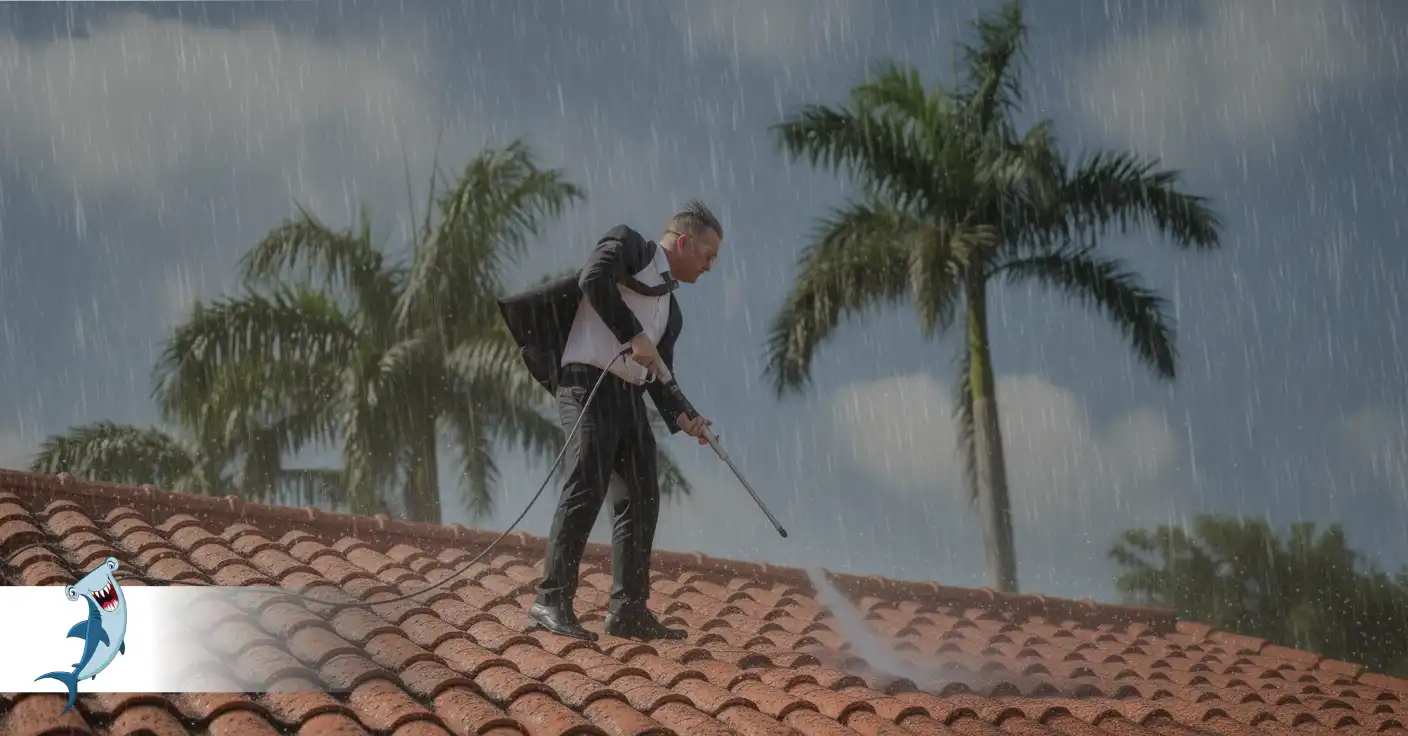
Black streaks GONE in 1 visit — and they stay gone for 2-3 years.
Soft wash chemistry kills Gloeocapsa Magma at the root, not just on the surface. No high pressure, no tile damage, no voided warranty.
Get Your Free Quote
Tell me what needs cleaning and where — I'll send a firm, no-obligation price by text or email, usually the same day.
Get My Quote →Lock in the best day for your schedule
Reserve the best time and date for your schedule and I'll follow up with your numbers. No payment to hold a spot and no obligation to keep the booking — reserve now, decide once you have the price.
Frequently Asked Questions
Why does my roof still have faint streaks the day after cleaning?
Should I scrub off the lichen that is left?
How long will my roof stay clean?
Do zinc or copper strips prevent regrowth?
What if a spot is still there after a month?
Is a maintenance wash cheaper than a full roof cleaning?
About the Author

Owner Blane Perun started this company with a simple premise: Naples homeowners deserve a professional exterior cleaning option that doesn’t come with the inflated pricing of franchise operations and large corporate companies.