Roof Debris Removal Naples FL —
Leaves, Palm Fronds & Storm Litter
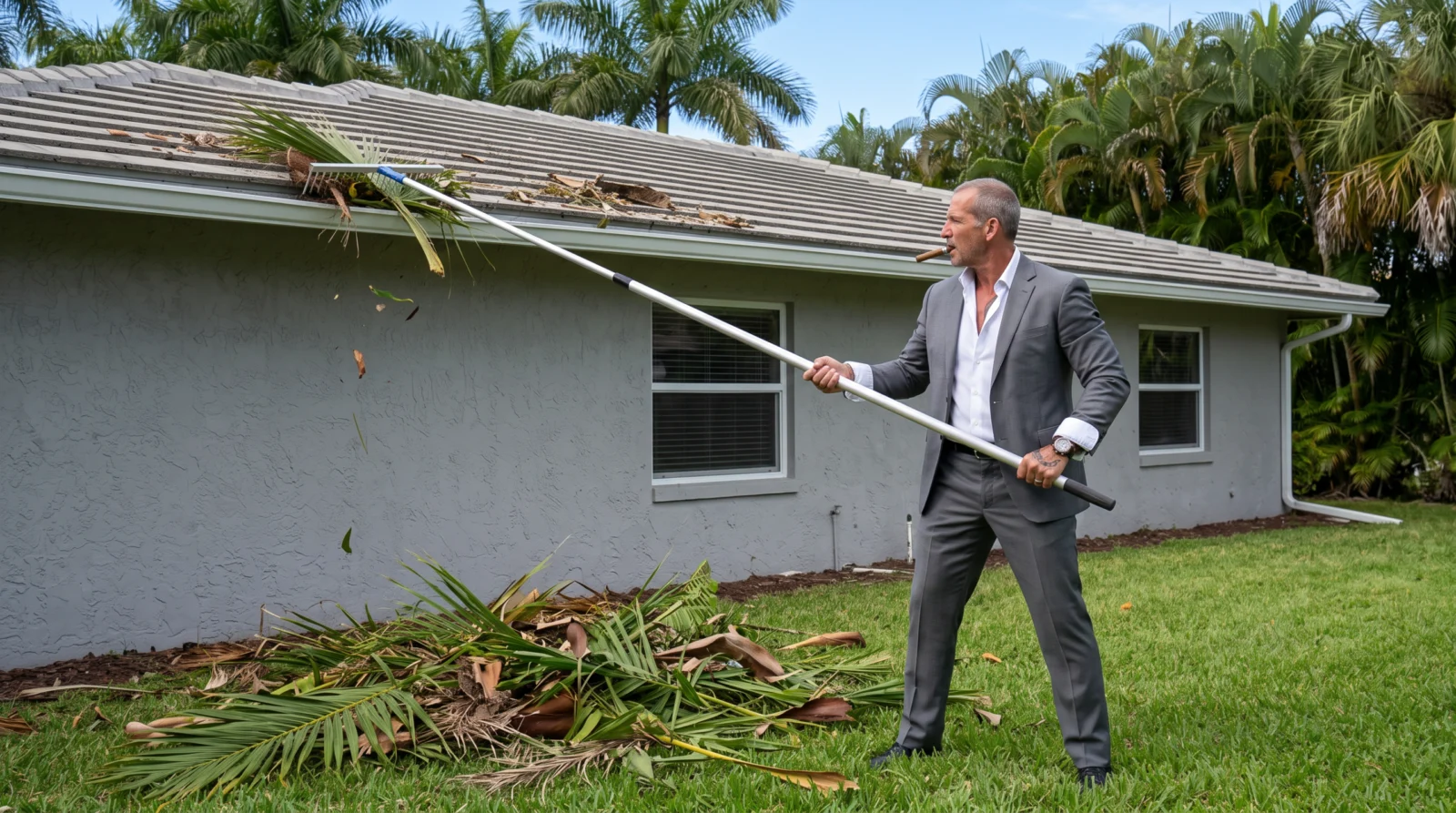
Leaves and fronds piled in roof valleys hold water against the roof and feed the gutters below. We clear debris from valleys, flat sections and around skylights and vents, using ladders, poles and trained foot placement on tile roofs, and quote each roof online.
📞 Call for a Free Quote — 239-544-1165Part of our Gutter Cleaning service →
Handling
Crickets
Available
Competition
Gutters catch only what reaches the roof edge. Much of what falls on a Naples roof never gets there. Oak leaves slide into valleys where two roof planes meet and stop. Palm fronds land across tile and wedge between rows. Seed pods and flower stalks pile up behind chimneys, against parapet walls and on the uphill side of skylights and vents.
Debris that sits on a roof holds moisture. In our heat and humidity, a wet pile of leaves becomes a bed for algae and mildew within a season, which spreads into black streaks on the tile around it. On flat and low-slope roofs, debris can block scuppers and drains so water ponds after every storm.
Valleys are the most important spot to keep clear. They carry more water than any other part of the roof, and a dam of leaves can push water sideways under tile or shingles during a heavy downpour. Debris washing down a valley is also what plugs the gutter and downspout at the bottom.
After a tropical storm or hurricane, the problem becomes larger: whole fronds, branches and neighbors’ debris spread across the roof. Clearing it quickly helps you see damage and file accurate insurance claims.

After every job we provide a written service record with the date, areas cleared and method used, along with our Florida license number. Keep it with your policy papers in case your agent or carrier asks.
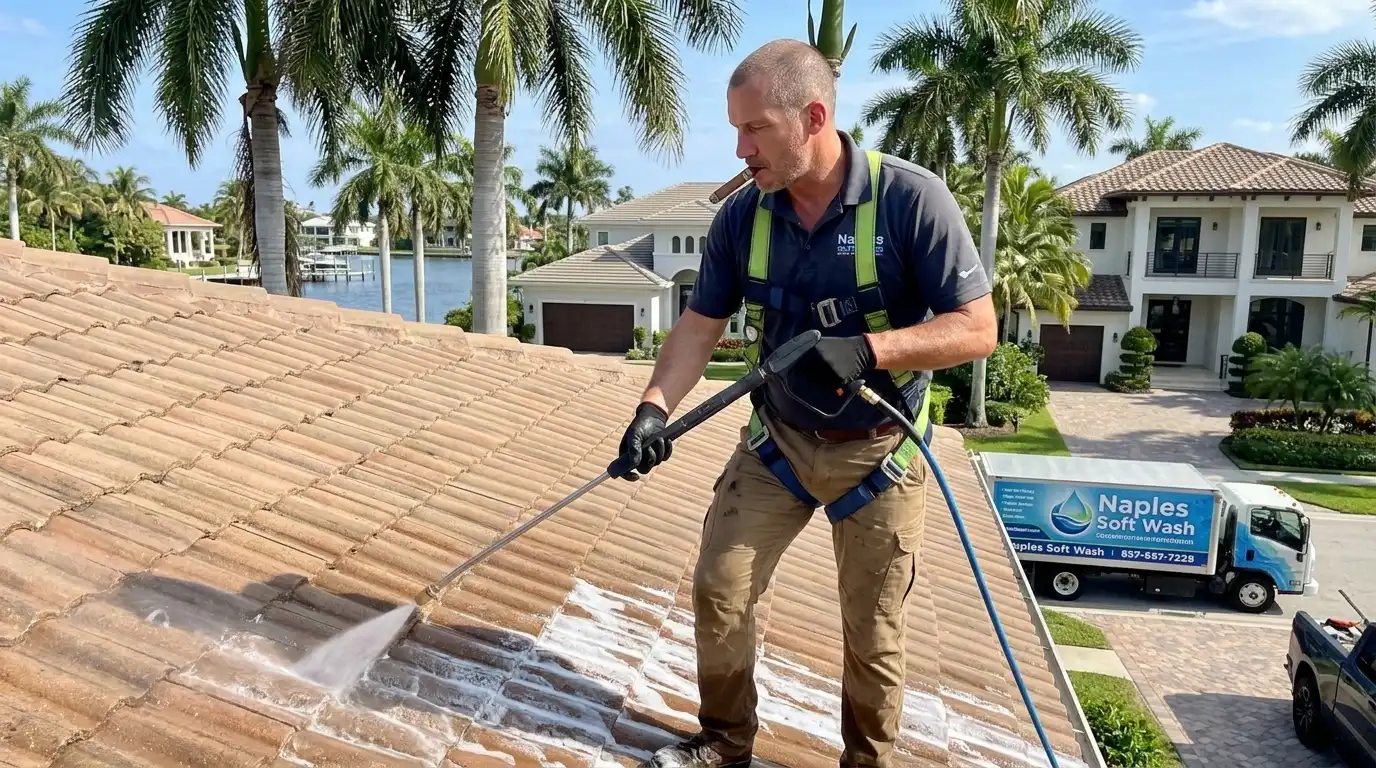
The roof type decides the method. Concrete and clay tile crack under careless foot traffic, so our crews use trained foot placement on tile. On tile roofs we work from ladders at the eaves and use extension poles, rakes with soft heads and low-power blowers to move debris down and off the roof.
On flat roofs, metal and shingle roofs that can be safely walked, we hand-pick fronds and branches, blow out valleys and clear scuppers and drains. Nothing is scraped or pried from the roofing.
Debris that comes off the roof is collected from beds, walkways and the pool deck, and the gutters below are cleaned out so the material we moved does not stay in them. Large branches or anything resting on power lines is left to a tree service or the utility.
While clearing, we look for broken or slipped tiles, lifted flashing and damage around vents. We note what we see from our access points on your service record so a roofer can follow up.
| Roof Area | What Collects There | Why It Matters |
|---|---|---|
| Valleys | Oak leaves, fronds, seed pods | Dams water during heavy rain and clogs gutters |
| Behind chimneys & walls | Leaves and flower stalks | Holds moisture against flashing |
| Around skylights & vents | Mixed litter on the uphill side | Blocks drainage around the seal |
| Flat roofs & scuppers | Leaves, sand and silt | Causes ponding and algae growth |
| Tile surface | Palm fronds wedged between rows | Holds water and grows black streaks |
Spring Oak Drop
Oaks shed old leaves in spring, filling valleys and gutters all at once.
Fronds & Seed Stalks
Royal, queen and coconut palms that hang over the roof drop heavy material all year.
After Tropical Weather
Branches, fronds and neighbors’ debris spread across the roof and lanai.
Ahead of a Roof Wash
Clearing debris first lets a soft wash reach the whole roof surface.
Debris removal depends on roof type, height and how much material is up there, so each roof is quoted online. Most owners pair it with gutter cleaning or a roof soft wash so the whole system is clean at once.
We are pre-registered with most major Naples gated communities and handle gate coordination directly, which matters after storms when access lists get busy.
Review Your Photos
We check roof type, height and where debris has built up from your photos, then quote the job online.
Protect Below
Beds, the pool area and walkways are cleared so falling debris is easy to collect.
Clear the Roof
Poles and blowers from ladders on tile; hand-picking on walkable roofs.
Open Drainage
Valleys, scuppers and areas around skylights and vents are cleared so water can flow.
Clean the Gutters
Material pushed off the roof is removed from the gutters and downspouts are tested.
Haul and Record
Debris is bagged or piled for pickup and your service record notes anything a roofer should see.
We provide roof debris removal in Naples FL and throughout Southwest Florida:
Eagle Roofing, a concrete tile maker, published guidance in March 2025 on how to walk a tile roof properly. It tells professionals to step at the bottom three inches of the installed tile, to spread their weight evenly and walk as softly as possible, and, on high barrel profiles, to place heel and toe on the high points of adjacent tiles. It also advises staying off hips and valleys, because the cut tiles there can be hard to replace, and it suggests homeowners consider not walking on the roof themselves at all.
That last point about valleys is the awkward one for debris work, because valleys are exactly where oak leaves and fronds pile up. It is the main reason our tile method relies on reach rather than footsteps. A pole and a soft-headed rake can pull a valley clear from the eave or from the field tile beside it, so the cut tiles along the valley line never take a person’s weight. When a step onto a tile roof is unavoidable, it goes on the lower edge of the tile, following the maker’s advice, and never on the cut pieces that line a hip or valley.
If you have spare tiles from the original install, tell us where they are stored. They are useful to a roofer if a cracked piece turns up while we work, and any cracked tile we spot is noted on your service record.
Once the roof is clear, the material has to go somewhere, and Collier County’s curbside rules decide how it is packed. The county collects yard waste on your recycling day, not in the trash cart. Bundles must weigh less than 50 pounds, be tied with twine and be no longer than 4 feet, and branches may not be over 4 inches in diameter. Leaves and trimmings go in paper yard waste bags or paper grocery bags, because plastic bags are not accepted, and the county takes up to 10 bundles, bags or containers per collection.
Those rules shape how we finish. Palm fronds are cut to length and tied so they meet the 4-foot limit, and the leaves and seed pods swept out of valleys and gutters go into paper bags rather than plastic. If a roof produces more than one pickup’s worth, we tell you, so the rest can wait for the next recycling day or be hauled another way. Anything larger than the county limits, such as a limb that came down in a storm, is left for a tree service.
In a gated community, the HOA may have its own rules on when debris can sit at the curb, so check with your manager before a large clear-out. After a major storm, follow any separate debris instructions the county announces; we pack to whichever rules apply that week.
Get a firm price for Roof Debris, usually the same day.
Tell us what needs cleaning and where. We review your photos, send a written price by text or email, and handle gate and building access.
Get Your Free Quote
Tell me what needs cleaning and where — I'll send a firm, no-obligation price by text or email, usually the same day.
Get My Quote →Lock in the best day for your schedule
Reserve the best time and date for your schedule and I'll follow up with your numbers. No payment to hold a spot and no obligation to keep the booking — reserve now, decide once you have the price.
About the Author

Owner Blane Perun started this company with a simple premise: Naples homeowners deserve a professional exterior cleaning option that doesn’t come with the inflated pricing of franchise operations and large corporate companies.