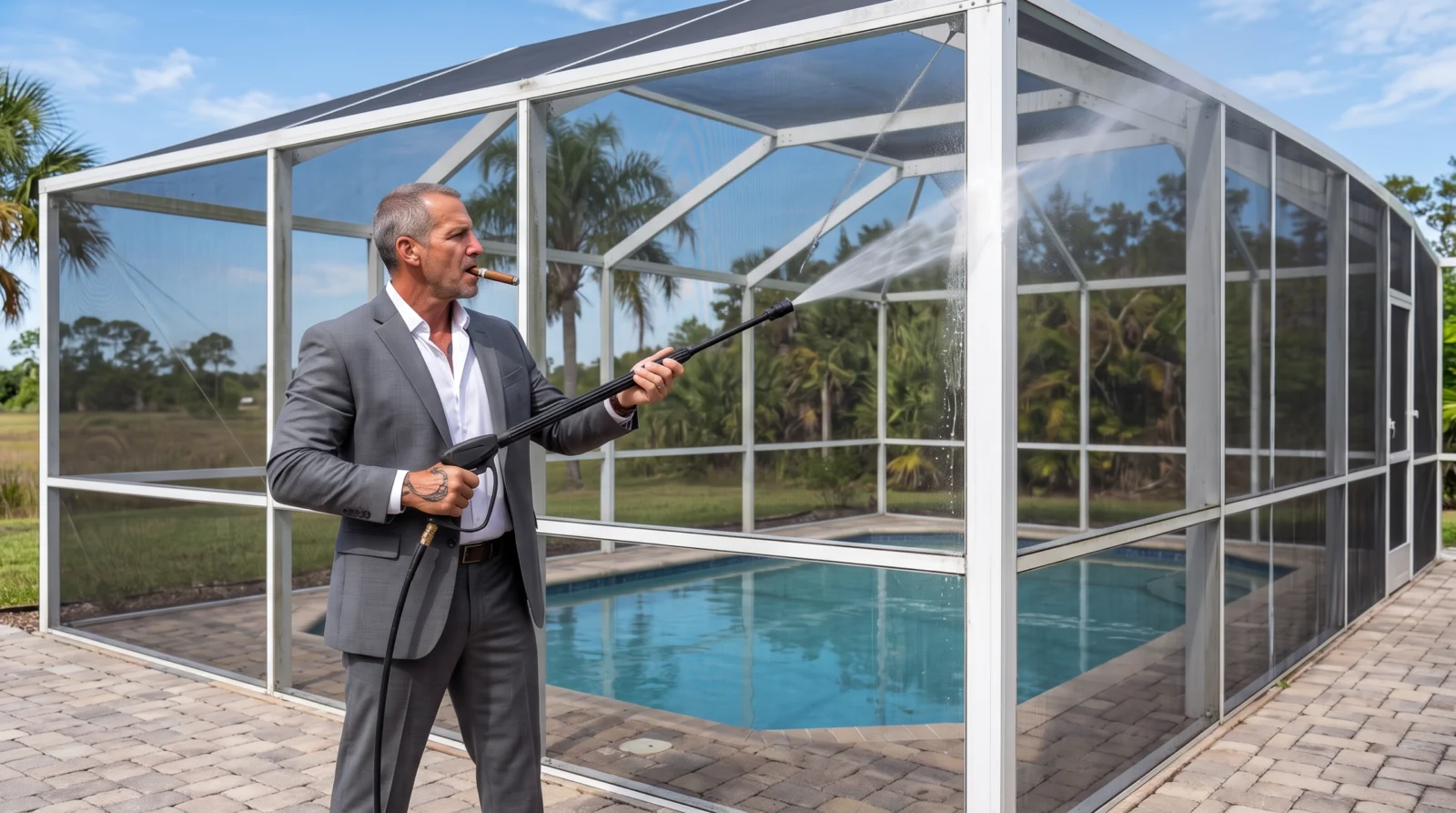
Pool Cage Oxidation Removal Naples FL —
Chalky, Faded Aluminum Frames
We remove the chalky white film that builds up on bronze and white pool cage frames in Naples, by hand, beam by beam. Oxidation work is quoted after we inspect the frame, and a standard pool cage cleaning starts from $299.
📞 Call for a Free Quote — 239-544-1165Part of our Pool Cage Cleaning service →
Beam Treatment
Cleaning
Inspection
Competition
Most Naples pool cages are aluminum with a factory baked-on coating, usually bronze or white. Years of Florida sun break down that coating at the surface. The result is a dull, chalky layer. Bronze frames start to look faded or gray, and white frames turn flat and dusty. Run your hand along a beam and it comes away with white powder.
Salt air speeds this up near the Gulf and the bay. Pool chemicals off-gassing inside the cage, sprinkler water and the constant wet-dry cycle of summer rain all add to it. The south and west sides of a cage, which take the most afternoon sun, usually chalk first.
A standard pool cage cleaning removes dirt, mildew, algae and spider droppings. It does not remove oxidation. Chalking is the coating itself breaking down, so it needs a dedicated aluminum treatment and hand work on every beam.
Removing the oxidation brings back much of the original color and stops the powder from washing onto your pool deck, furniture and screens every time it rains. It also lets you see the true condition of the frame.

If the coating has worn through to bare aluminum, or the metal is pitted, cleaning cannot put the finish back. In that case the frame needs repainting or recoating, and we will tell you before you pay for removal.

We start with a normal low-pressure wash of the cage to remove dirt and mildew. That way the oxidation treatment works on the frame, not on surface grime.
Then each beam gets an aluminum oxidation remover applied by hand with non-scratch pads. We work in short sections so the product does not dry on the frame, and we rinse each section before moving on. Screens, the pool and plants are kept wet and shielded during the work.
It is slow work, done beam by beam, which is why it is priced separately from a standard cleaning.
| Frame condition | What you see | What we recommend |
|---|---|---|
| Light chalking | Slight dullness, little powder | Standard cleaning, watch for change |
| Moderate chalking | Faded color, powder on your hand | Oxidation removal treatment |
| Heavy chalking | Thick powder, streaks on deck after rain | Oxidation removal, possibly two passes |
| Coating worn through | Bare silver metal showing | Repaint or recoat, not cleaning |
| Pitted or corroded metal | Rough white crust, pinholes | Enclosure contractor inspection |
White Powder on Your Hand
Wipe a beam with your palm. If it comes away white, the coating is chalking.
Bronze Turning Gray
Dark bronze frames that look washed out or uneven from side to side.
Milky Streaks After Rain
Chalk washes down the frame and leaves light streaks on pavers and screens.
Still Dull After a Wash
The cage was just cleaned and still looks flat and faded.
Oxidation removal depends on cage size, frame height and how far the chalking has gone. We inspect the frame first, then give you a written quote. Standard cage cleaning prices below are for reference.
Oxidation removal is always done with a full cage cleaning first, so the treatment works on the coating and your enclosure is clean top to bottom.
Frame inspection
We check how deep the chalking goes and look for bare or pitted metal.
Honest recommendation
You hear whether removal will help or whether recoating makes more sense.
Protect pool, screens and plants
Everything around the frame is wetted and shielded.
Clean the cage
A low-pressure wash removes dirt, mildew and webs first.
Hand-treat each beam
Oxidation remover and non-scratch pads, one short section at a time.
Rinse and record
Each section is rinsed, and you receive a written service record.
We provide pool cage oxidation removal in Naples FL and throughout Southwest Florida:
Oxidation treatment on a screened enclosure is a full-day job on most single-story cages, so it helps to think about how you use the lanai that day. Patio furniture, cushions, grills and potted plants inside the cage should be moved toward the house or brought indoors. Chalk residue and rinse water run down every upright, and anything sitting at the base of a beam will get wet.
If your pool has an automatic cover, a robotic cleaner or a floating chlorinator, let us know when you book. We prefer the pump running during the rinse so the water keeps moving, and we keep our rinse water off the pool surface as much as the layout allows. Owners who have a pool service usually schedule that visit for the day after we finish, not the day before.
Irrigation is the other thing to plan. Many Naples cages sit right behind a planting bed, and sprinkler heads aimed at the bed often hit the lower frame rails. Turning that zone off for the day keeps freshly treated aluminum from being sprayed with irrigation water before it has been fully rinsed and dried.
The first difference most owners notice is touch. A treated beam no longer leaves a white smear on your palm, and the frame feels smooth instead of dusty. On bronze cages the color usually deepens again, although a frame that has faded unevenly may still show a slight difference between the sunny side and the shaded side near the house.
Upper purlins and the roof section of a tall cage are reached from ladders and the deck, and they get the same hand treatment as the lower rails. Corners where the screen spline meets the frame are the hardest places to reach without disturbing the screen, so we work those with smaller pads and a lighter touch rather than forcing a large pad into the channel.
Treatment also uncovers what the chalk was hiding. Once the powder is gone, small scratches, older touch-up paint, loose screws and worn spline become easy to see. We point those out on the written service record so you can decide whether an enclosure contractor should look at them.
Sun exposure does not stop after a treatment, so the goal of aftercare is to slow the return of chalking and keep salt and grime from sitting on the coating. A gentle rinse of the frame with a garden hose every few weeks, especially after a windy stretch near the water, removes deposits before they build up.
Avoid scrubbing the frame with abrasive kitchen pads, household cleaners with strong solvents, or a pressure washer held close to the metal. Each of those can scuff the remaining coating. A soft brush and plain water, or a mild soap rinsed off right away, is enough between professional visits.
Pairing the frame treatment with a regular cage cleaning schedule keeps mildew, pollen and spider droppings from collecting in the same spots the chalk used to. When the time comes that the coating is too thin for treatment to help, that is the point where recoating makes more sense, and if your community has an architectural review process for enclosure colors, check your association documents before choosing a new finish.
Get a firm price for Pool Cage Oxidation, usually the same day.
Tell us what needs cleaning and where. We review your photos, send a written price by text or email, and handle gate and building access.
Get Your Free Quote
Tell me what needs cleaning and where — I'll send a firm, no-obligation price by text or email, usually the same day.
Get My Quote →Lock in the best day for your schedule
Reserve the best time and date for your schedule and I'll follow up with your numbers. No payment to hold a spot and no obligation to keep the booking — reserve now, decide once you have the price.
About the Author

Owner Blane Perun started this company with a simple premise: Naples homeowners deserve a professional exterior cleaning option that doesn’t come with the inflated pricing of franchise operations and large corporate companies.