
Lanai & Pool Cage Cleaning
Naples Heritage
Naples Heritage pool cages have had 25-plus years of sun and sprinklers. We clean screens at screen-safe pressure, brighten chalky frames and treat overspray staining on kick plates and decks. Here is what that looks like across the condos, villas and single-family homes, plus how we handle each type and what it costs.
Starting Price
Treatment
Screens
Older Cages on Reclaimed Water
Naples Heritage Golf & Country Club sits off Davis Boulevard, east of Santa Barbara Boulevard, on about 500 acres. More than 250 of those acres are protected landscape. US Home built the community, which was finished in 1999 with 799 residences: condominiums, villas and single-family homes around an 18-hole Gordon Lewis course. Many homes date from 1997 and 1998, so their screens and frames are now well past twenty-five years old.
Every recent Naples Heritage listing we reviewed used reclaimed water. Where sprinklers reach a cage, communities on reclaimed irrigation commonly see orange marks on the lower screen panels, kick plates and lanai floors.
A two-story building in Veranda at Southern Links shows the pattern well. One unit there, built in 1997, has two tiled screened lanais, one facing the gardens at the front and one looking over the golf course at the back. Its listing names reclaimed water as the irrigation source. Front and rear lanais face different sun and spray, so they rarely age the same way.
Frames from the late 1990s typically show chalky oxidation. It doesn’t rinse off; an aluminum brightener removes it and keeps it from advancing to the point of recoating.
Single-family homes with private pool cages carry the most surface: tall screen walls, a roof panel, gutters along the cage edge and a pool deck under it all. Villas and condos more often have a smaller screened lanai with a tile floor and no pool. We price both from the same published list, so a two-story condo lanai and a full pool enclosure are each quoted fairly.
Cages facing preserve or the course also collect pollen and grow algae on shaded frames, which annual cleaning keeps under control.
The course itself shapes the work. The golf holes were graded and built in the mid-1990s on a site where about 1.5 million cubic yards of sand and rock were dug out, and much of that became lakes and fairways. Lanais facing those lakes and fairways catch mowing debris, pollen and wind-carried spray, and their lower screen panels usually need the most attention.
Kick plates tell you a lot about a cage. When the bottom panels show orange or brown streaks, irrigation spray is usually reaching them. When they are green or black, shade and moisture are doing the damage. When they are white and powdery, the aluminum itself is oxidizing. Each needs a different treatment, so we look at them closely before any cleaning starts.
Second-floor units bring a small extra step. Their lanais sit above a neighbor’s, so rinse water has to be controlled carefully. We keep pressure low, use towels at the floor edge and work from the top of the screen down so water drains toward the lanai floor instead of over the rail. Downstairs owners are told before we start, in case anything below needs moving.
Many owners here are seasonal, and lanais often sit closed for months over the summer. That is when mildew grows fastest, on ceilings, in corners and under outdoor furniture cushions. A cleaning scheduled for the fall, before owners return, means the lanai is ready on arrival. We can work with a house watcher or property manager when the owner is away, and send photos afterward.
Grounds maintenance and irrigation are covered by association fees in at least some neighborhoods here. That helps when overspray is the cause of staining: a homeowner can ask the association’s landscape crew to adjust a sprinkler head instead of living with recurring stains. We note in our service record which panels were stained and where, so the owner has something concrete to pass along.
Gutters along the top edge of a cage are easy to forget. They fill with leaves, oak tassels and grit, hold water, and spill dark streaks down the screen below when they overflow in a summer storm. We clear and rinse them as part of every cage cleaning, check that downspouts drain away from the pool deck, and point out any loose seams or brackets so the owner can have them repaired.
Tile lanai floors respond well to a surface cleaner, which spins two nozzles under a hood and lifts dirt evenly without the stripes a wand can leave. Grout lines often hold mildew and need a short pre-treatment first. Pool decks under a cage are cleaned the same way, with extra care around drains, skimmers and coping so dirty water does not run into the pool.
For most enclosures in Naples Heritage, a cleaning once a year keeps screens, frames and floors under control. Cages facing the course or a lake, or sitting where sprinklers reach the screens, may do better with a visit every six to nine months. Frames already showing chalky oxidation benefit from a brightener treatment now, before it reaches the point where recoating is the only fix.
Orange-stained kick plates are treated with rust chemistry, which pressure alone can’t do.
Naples, FL 34112
Collier County
Our Naples Heritage Lanai Steps
Protect the Lanai
We move or cover outdoor furniture, grills, TVs and pool equipment, then mark any stained kick plates and floor edges that need treatment.
Clean the Structure
Frames, cage gutters, fans and corners get a low-pressure wash working from the roof panel downward, so dirty runoff never lands on clean screen.
Rinse the Screens
Each screen panel gets a wide-fan rinse from inside the enclosure, never above 300 PSI, so the mesh stays tight in its spline.
Finish the Floor
Floors and the pool deck are surface-cleaned and stains spot-treated, and the whole enclosure gets a last fresh-water rinse before we leave.
Ordinary pressure washers can split screen mesh. Our limit on screens is 300 PSI, applied from inside the cage.
Lanai & Pool Cage Cleaning Pricing in Naples Heritage
| Service | Typical Price | Notes |
|---|---|---|
| Small lanai under 800 sq ft | From $249 | Villa and condo lanais |
| Standard pool cage | From $299 | Most pool homes here |
| Large cage 1,500–2,500 sq ft | From $399 | Larger enclosures |
| Heavy oxidation treatment | Add $75–$150 | Chalky 25-year-old frames |
| Pool cage + deck package | From $399 | Cage plus deck floor |
Final pricing depends on size, access and condition. Call 239-544-1165 for a free written quote.
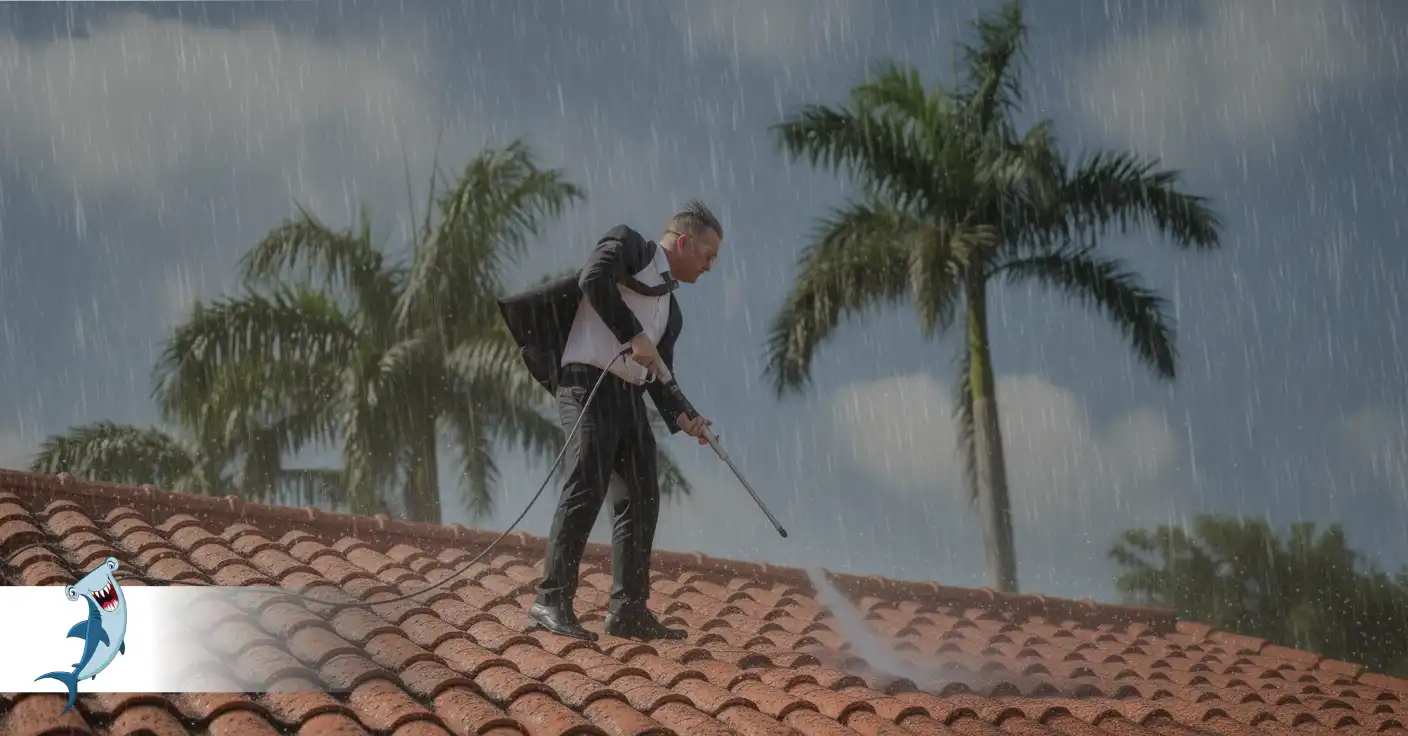
Black streaks GONE in 1 visit — and they stay gone for 2-3 years.
Soft wash chemistry kills Gloeocapsa Magma at the root, not just on the surface. No high pressure, no tile damage, no voided warranty.
Get Your Free Quote
Tell me what needs cleaning and where — I'll send a firm, no-obligation price by text or email, usually the same day.
Get My Quote →Lock in the best day for your schedule
Reserve the best time and date for your schedule and I'll follow up with your numbers. No payment to hold a spot and no obligation to keep the booking — reserve now, decide once you have the price.
Frequently Asked Questions
Can you remove orange stains from my cage’s kick plates?
How do I stop the staining coming back?
Do you clean condo screened lanais?
Will you tear my screens?
Is the cleaning safe for my pool water?
What is the white chalky film on my cage frame?
More Naples Heritage Services
See every exterior cleaning service we offer in Naples Heritage on the Naples Heritage service page.
