Dumpster Pad Cleaning Naples FL —
Pads, Enclosures & Grease Areas
We clean the concrete pad, block enclosure walls and gates around commercial dumpsters at restaurants, shopping centers, condos and HOA facilities in Naples. Every site is quoted through a free online quote.
📞 Call for a Free Quote — 239-544-1165Part of our Commercial Pressure Washing service →
Degreaser
& Gates
Request
Competition
A dumpster pad is the concrete slab and enclosure where commercial containers sit. Every time a bag leaks or a container overflows, liquid lands on that slab. Food waste, grease and the dark liquid that drains out of trash, called leachate, soak into the concrete. In Naples heat that mix starts to smell within hours and draws flies, roaches and birds.
Restaurants have it worst. Kitchen grease and food scraps make the pad slick, and the stain spreads toward the back door and the drive lane every time a hauler truck rolls through. Condo towers and HOA clubhouses see the same problem on a smaller scale, often in an enclosure right next to a parking area residents walk past each day.
Summer storms add another layer. Rain washes loose waste off the pad and toward the parking lot, and standing water inside the enclosure keeps the smell going for days.
This page is about the pad and the enclosure around it. Hauler-owned containers are usually the hauler’s to clean. We focus on the slab, walls, gates, bollards and the apron in front, where the stains and the smell actually sit.
Dumpster pad rinse water should not go into a storm drain. We block inlets and plan where the water goes before we start.

Timing matters. We schedule right after pickup, when containers are empty, or coordinate with your hauler so containers can be rolled aside. Loose debris is scraped and bagged first.
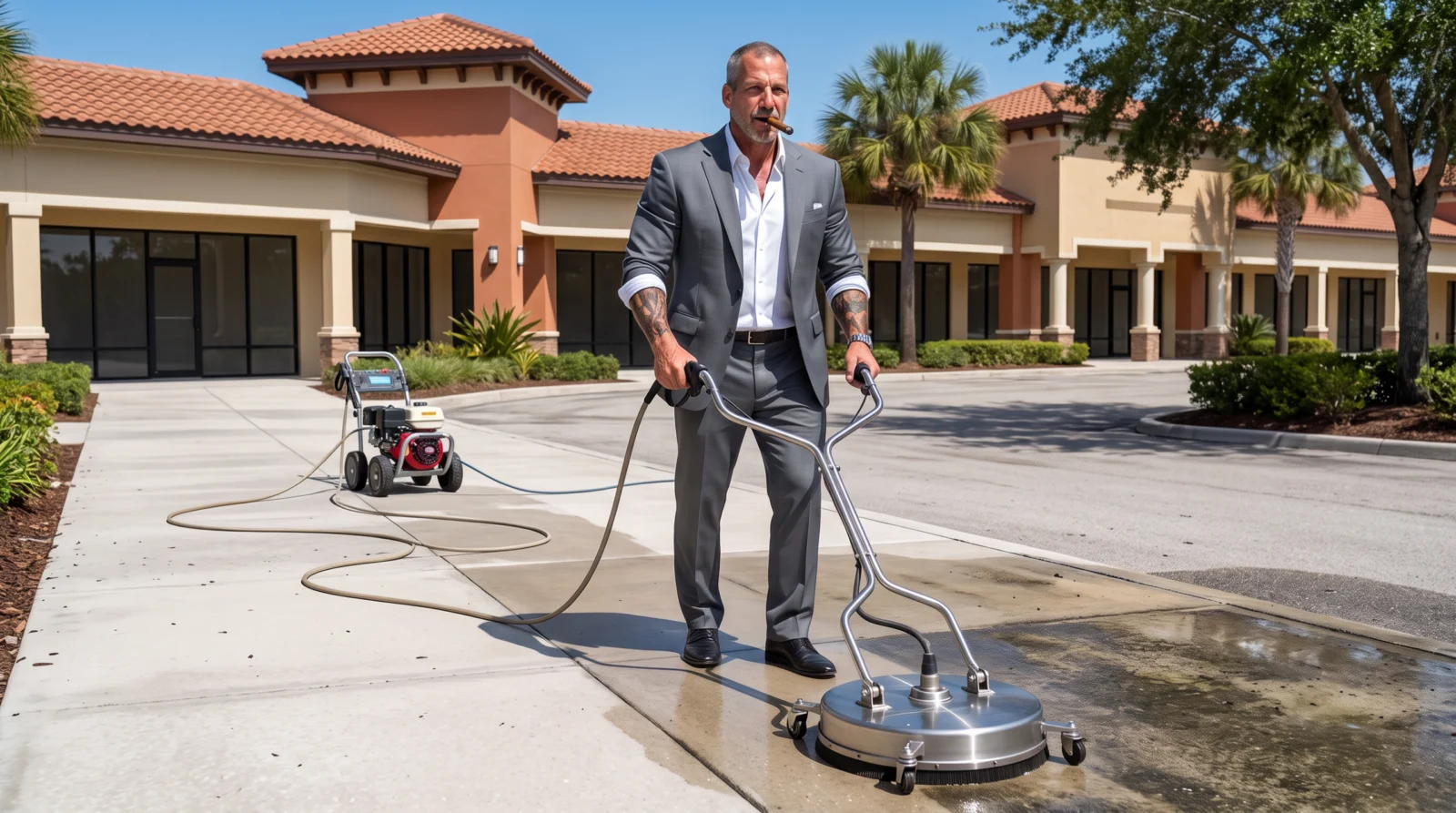
Next comes a degreaser on the slab, worked into the stains and left to dwell. Hot water breaks grease down much faster than cold, so we rinse with a hot water unit, then go over the slab with a surface cleaner. Walls and gates are washed top to bottom.
We finish with a deodorizing rinse to cut the smell at the slab, and we check that no wash water reached the parking lot drains.
| Area | Typical buildup | Treatment |
|---|---|---|
| Concrete pad | Grease, leachate, food waste | Degreaser dwell, hot water, surface cleaner |
| Enclosure walls | Splatter, mildew, rust lines | Wash top to bottom, rust spot treatment |
| Gates and bollards | Grime and handprints | Hand detail and rinse |
| Apron and drive lane | Tracked grease and tire marks | Degreaser and hot water |
| Grease bin area | Thick spilled grease | Scrape, degrease, repeat rinse |
Restaurants & Cafes
The heaviest grease and odor load, often with a used-cooking-oil bin next to the containers.
Shopping Centers
Shared enclosures serving several tenants behind a plaza.
Condo & Apartment Buildings
Trash rooms and outdoor enclosures residents pass on the way to parking.
Clubhouses & Amenity Centers
Smaller enclosures near pools, fitness centers and event spaces.
Pricing depends on pad size, number of containers, grease load and how often the pad is cleaned. Regular service costs less per visit because buildup never gets heavy.
Every visit comes with a written service record showing the date, areas cleaned and method, handy for landlords, managers and health inspection files.
Walk the site
We check pad size, drainage, grease bins and how the hauler accesses the enclosure.
Set the schedule
Visits are timed right after pickup or coordinated with your hauler.
Protect the drains
Nearby storm inlets are blocked before any water is used.
Scrape and degrease
Solids are removed and the slab gets a degreaser dwell.
Hot water wash
Slab, walls, gates and apron are washed with hot water.
Deodorize and record
A deodorizing rinse goes down and you get a written service record.
We provide dumpster pad cleaning in Naples FL and throughout Southwest Florida:
📋 Refuse Areas, Food Code Expectations and a Routine That Holds
For a restaurant, the dumpster enclosure is part of the operation that inspectors, landlords and neighbors all notice. Knowing what the rules actually say about refuse areas makes it easier to decide how often the pad needs professional cleaning and what staff can do in between.
What the Food Code says about refuse containers
Florida’s Division of Hotels and Restaurants adopts the FDA Food Code by rule, in Chapter 61C-1 of the Florida Administrative Code. The Food Code’s provision on cleaning receptacles, section 5-501.116, requires that receptacles and waste handling units for refuse be cleaned at a frequency necessary to keep them from developing a buildup of soil or becoming attractants for insects and rodents. It also requires that they be cleaned in a way that does not contaminate food, equipment, utensils or linens, and that the waste water be disposed of as the code specifies. In other words, the rule sets an outcome rather than a calendar: if the pad and containers are drawing flies or carrying a crust of spilled waste, they are due. We are not health inspectors, but a dated service record shows that cleaning is happening on a regular basis.
The used cooking oil bin needs its own attention
The ground around a used cooking oil container is usually the worst part of a restaurant pad. Drips from the transfer, a lid that doesn’t seal, and oil tracked by the collection truck’s hose leave a dark, slick patch that spreads into the drive lane. We pick up what we can with absorbent before any water is used, then degrease the slab around the bin. We do not move, pump or handle the oil itself. If we see the container leaking or a damaged lid, we photograph it and note it on the record so the manager can call the oil collection company, since no amount of washing will keep up with a bin that is still dripping.
Setting a frequency from what you see
Rather than guess, watch the pad for two weeks after a cleaning. If odor and flies are back within a few days, the site needs a shorter cycle; if the slab still looks and smells acceptable at the end of a month, a longer one will do. Many Naples restaurants are busiest in the winter season, and summer heat makes odor worse, so many owners pick a shorter interval for those months and a longer one in between. Condo and clubhouse enclosures with mostly bagged household trash can usually go much longer than a kitchen pad.
Staff habits that keep the slab cleaner
A few routines make each professional visit last longer. Double-bag wet kitchen waste and tie bags before they go out. Keep container lids closed so rain doesn’t fill them and overflow. Sweep loose debris inside the enclosure at closing rather than hosing it out, because a hose pushes waste toward the lot and the nearest inlet. Keep the enclosure gates shut so birds and animals can’t spread trash, and report a cracked container or missing drain plug to the hauler as soon as it appears.
Get a firm price for Dumpster Pads, usually the same day.
Tell us what needs cleaning and where. We review your photos, send a written price by text or email, and handle gate and building access.
Get Your Free Quote
Tell me what needs cleaning and where — I'll send a firm, no-obligation price by text or email, usually the same day.
Get My Quote →Lock in the best day for your schedule
Reserve the best time and date for your schedule and I'll follow up with your numbers. No payment to hold a spot and no obligation to keep the booking — reserve now, decide once you have the price.
About the Author

Owner Blane Perun started this company with a simple premise: Naples homeowners deserve a professional exterior cleaning option that doesn’t come with the inflated pricing of franchise operations and large corporate companies.