Siding Cleaning Naples FL —
Vinyl, Hardie Board & Lap Siding
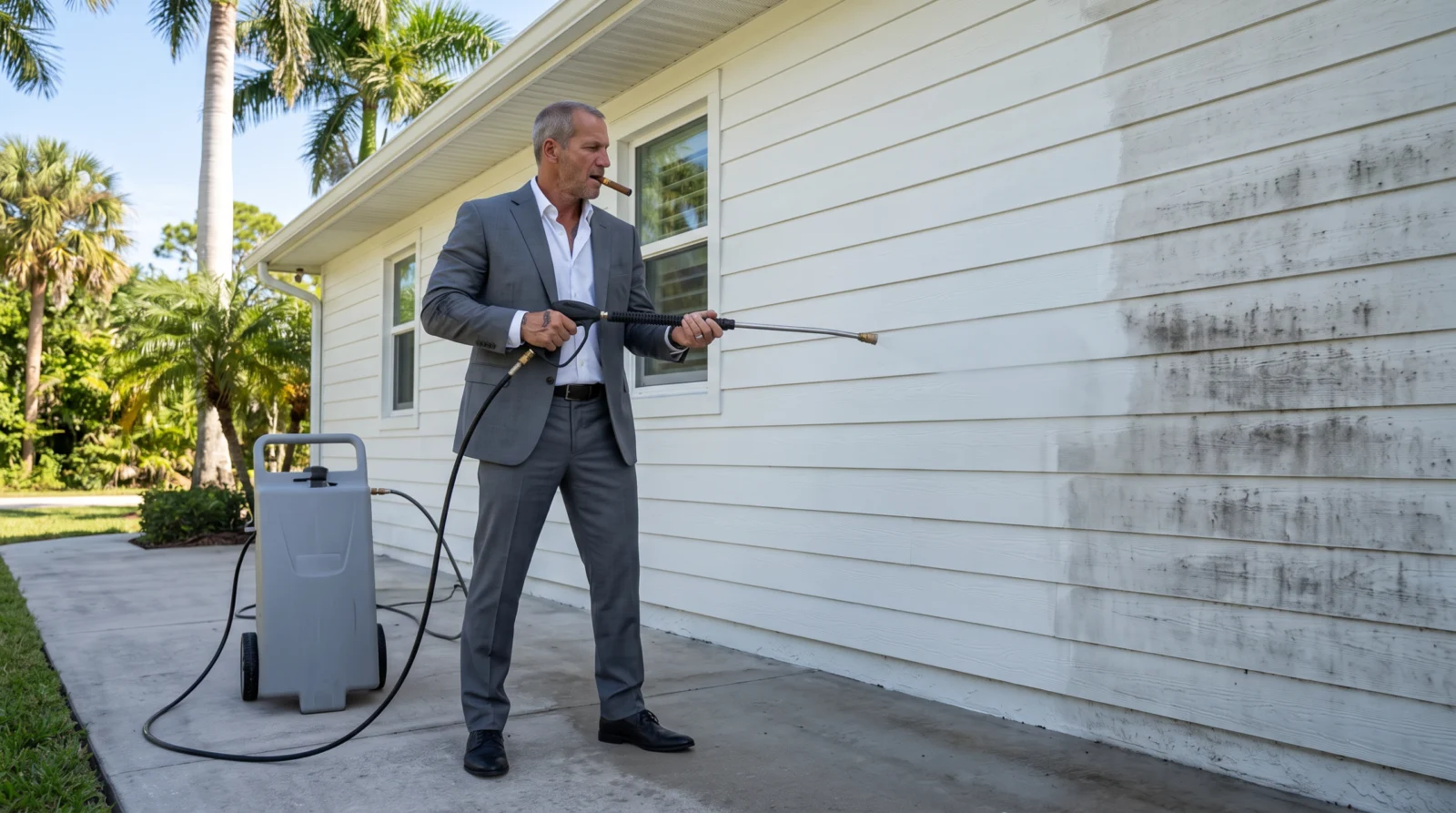
Most Naples homes are stucco over block, but plenty of garages, additions, cottages and gable ends carry vinyl or fiber cement siding that mildews fast in our humidity. We soft wash it at low pressure so water stays out of the laps, and every house wash is priced by size after a quick look.
📞 Call for a Free Quote — 239-544-1165Part of our House Washing service →
House Wash
Every Lap
Competition
in Florida
Siding is less common in Naples than in most of the country. The bulk of homes here are concrete block finished in stucco. Lap siding still turns up on older cottages, raised homes, detached garages, room additions, dormers and second-story gable ends. Fiber cement board, sold under the Hardie name, is the most common type on newer work. Vinyl appears more on older additions and outbuildings.
Each lap creates a small ledge. Pollen, dust and salt settle on that ledge, and the shaded underside stays damp after every summer storm. That is where green algae and black mildew start. On the north side of a house, or behind a hedge, the growth can return within a few months of a cleaning if nothing kills it at the root.
The problem with a pressure washer on siding is the angle. Spray aimed upward drives water behind the laps and into the wall cavity. On vinyl that water sits behind the panel. On fiber cement it can soak cut edges and nail holes that were never sealed. Neither shows damage right away, which is why the mistake is so common.
A soft wash avoids that. We apply a cleaning solution at garden-hose pressure, let it work on the growth, then rinse downward with the laps. The siding comes clean and the water runs off the way the cladding was built to shed it.
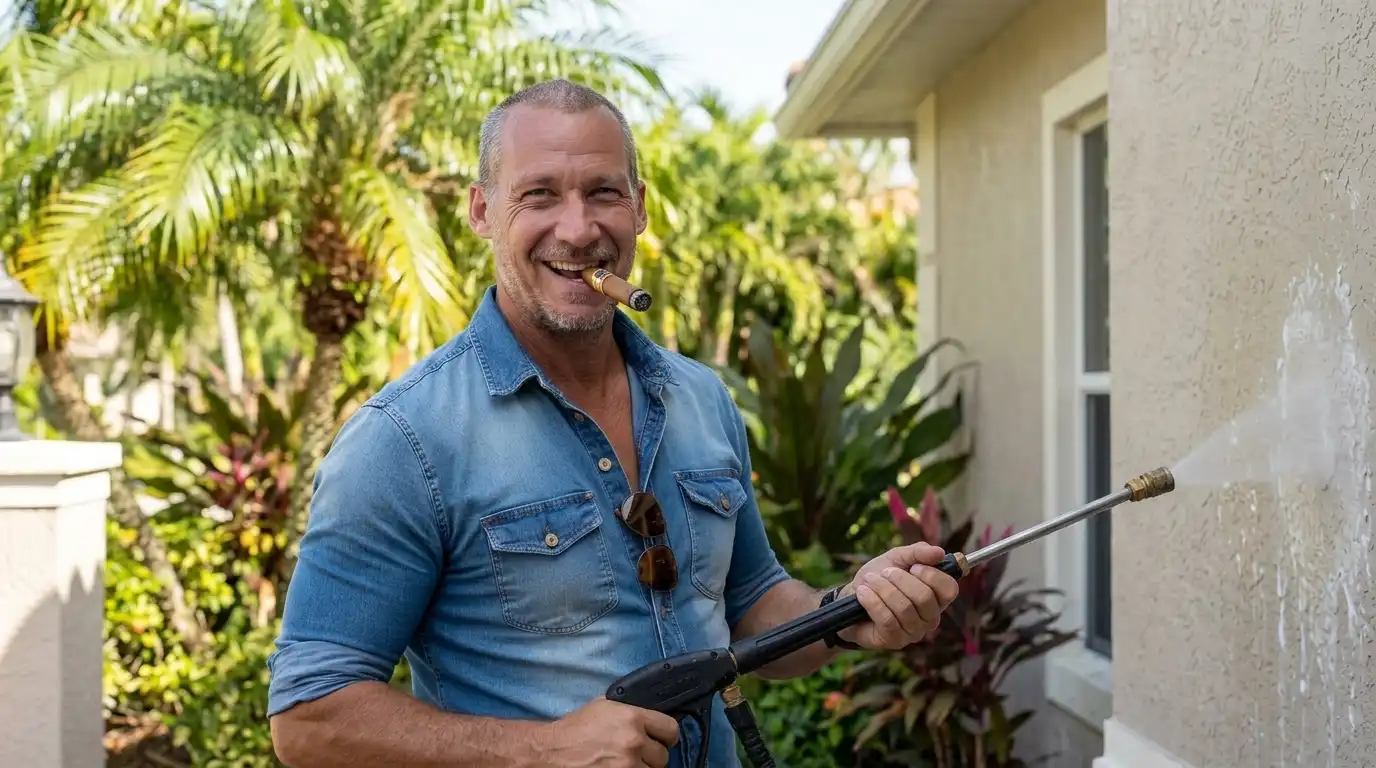
If your whole house is stucco, our stucco cleaning service is the better fit. We often clean both on one visit when a stucco home has a sided garage or addition.
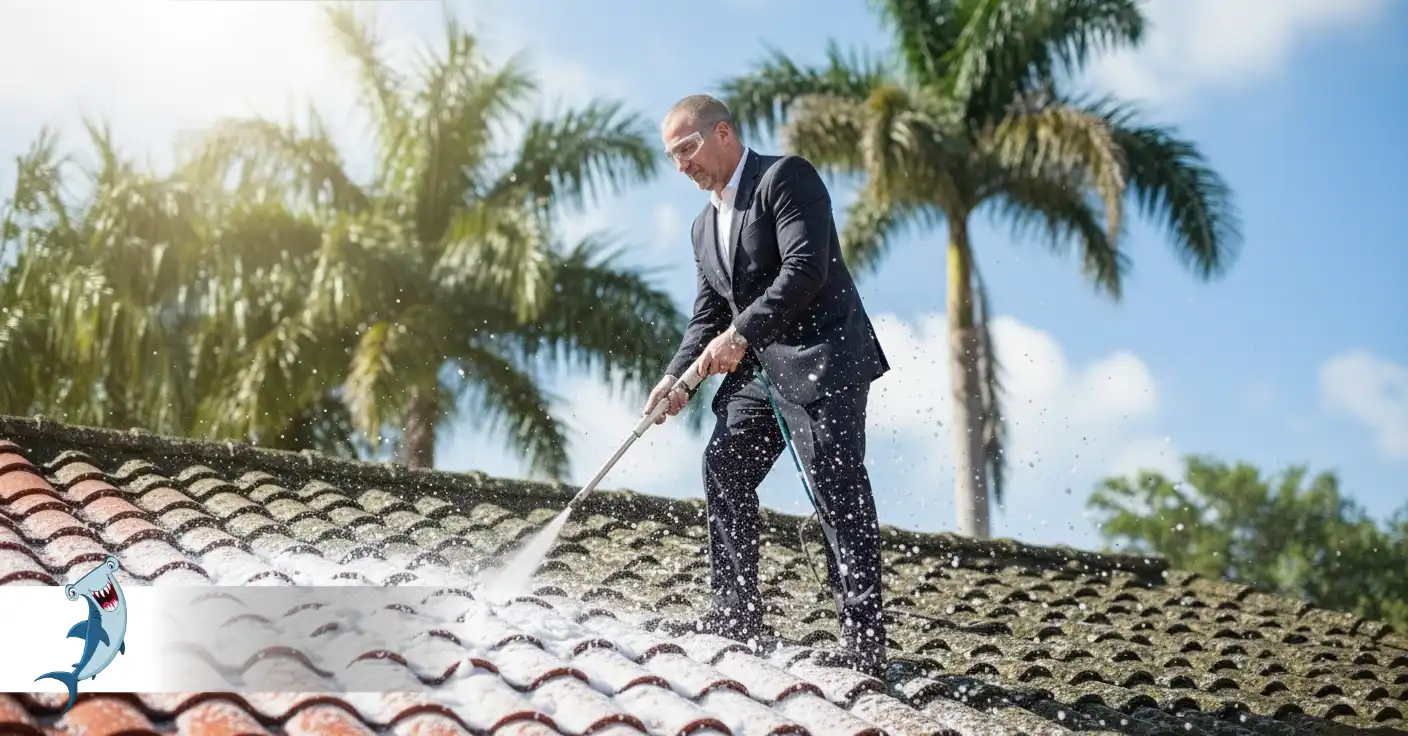
Vinyl is the most forgiving surface, but it scratches and it can loosen at the lock seams if hit with a narrow tip. We use a fan pattern from the ground and keep the wand angled down.
Fiber cement is a painted product. The paint is what you are protecting. Heavy pressure can lift paint at the board edges and expose the cement underneath. We use a milder mix and a longer dwell time so the solution does the work.
Painted wood lap siding is the most delicate. Older wood can have soft spots that a pressure washer will gouge. We test a small area first and adjust from there.
On every type we also clean the trim, window casings and corner boards, since that is where black mildew often collects first.
| Siding Type | Main Risk | Our Approach |
|---|---|---|
| Vinyl | Water behind panels, scratched finish | Fan tip, downward rinse, mild mix |
| Fiber cement (Hardie) | Paint lifting at edges | Longer dwell, no direct edge spray |
| Painted wood lap | Gouging soft or aged wood | Test patch, lowest effective pressure |
| Aluminum (older homes) | Chalky oxidized paint | Gentle wash, chalk residue rinsed off |
| Board and batten trim | Water in vertical joints | Spray across joints, never into them |
Green algae film
North walls and areas under oaks stay damp longest and turn green first. A soft wash kills the film so it does not regrow from what is left in the grooves.
Black mildew dots
Small black spots along the bottom edge of each lap are mildew colonies. They need a cleaning solution to remove, since rinsing alone smears them.
Orange rust staining
Well water with iron leaves orange bands where heads hit the wall. Rust is treated with a separate masonry-safe rust remover after the wash.
Salt and grime film
Homes close to the Gulf or a bay get a gray film that dulls paint. A routine wash removes it and lets you see true paint condition.
Siding is priced as part of a house wash. If only a garage or addition is sided, we quote that portion on its own after seeing it.
We run a local crew with no franchise fees, which keeps our pricing consistently 15–30% below the competition.
Walk the walls
We identify the siding type, look for loose panels, open seams and peeling paint, and point out anything that should not get wet.
Protect plants and fixtures
Shrubs and beds along the wall are soaked with fresh water. Outlets, light fixtures and door sweeps are checked.
Apply at low pressure
The cleaning solution goes on from the bottom up so it does not streak, at a strength set for vinyl, fiber cement or wood.
Let it dwell
The solution sits for several minutes to kill algae and mildew in the lap grooves. We keep it from drying on hot walls.
Rinse top down
Each wall is rinsed downward with the laps, then trim and windows get a final fresh-water rinse.
Report and record
You get a written service record with the date, surfaces, method and our Florida license number.
We provide siding cleaning in Naples FL and throughout Southwest Florida:
The Vinyl Siding Institute, the trade group for vinyl siding makers, has published simple cleaning tips for homeowners. It says most vinyl can be cleaned with a hose, mild soap and a long-handled soft bristle brush, and suggests working from the bottom up and rinsing before the soapy water dries to avoid marks. On pressure washers it is cautious: if one is used, the stream should stay at eye level and point straight at the siding rather than at an angle, and it notes that some manufacturers do not want pressure washers used on their products at all.
The same guidance lists cleaners to keep off vinyl, including those with organic solvents, undiluted chlorine bleach, liquid grease remover, nail polish remover and furniture polish or cleaners. That is a useful warning for anyone tempted to grab whatever is under the sink for a stubborn spot. It is also why we dilute our wash for each siding type and rinse thoroughly, and why we ask whether you know the brand of siding on the house: the manufacturer’s own care instructions come first.
From the street, vinyl and fiber cement lap siding look alike, but they handle differently and the answer changes how the wall should be washed. Knock lightly on a board. Vinyl sounds hollow and flexes a little under your knuckle, while fiber cement feels solid and stiff. Look at the bottom edge of a lap near a corner: vinyl has a thin, rolled lock edge, while fiber cement shows a thick, flat edge with paint on it. Vinyl panels usually end in plastic corner posts and J-channel around windows, and fiber cement is more often finished with painted trim boards.
If you are not sure, a photo of a corner and the bottom of a few boards is enough for us to tell. Sharing the age of the siding and whether it has been painted also helps, since repainted vinyl and older painted wood need a gentler approach than factory-finished panels.
A few spots on a sided wall stain for reasons that have nothing to do with algae. Dryer vents leave a lint-and-moisture fan on the boards around them. A grill parked against the wall can leave soot or heat marks, and heat damage on vinyl is a warp that no cleaning will reverse. Hose bibs drip down the wall and leave a vertical streak. We point these out during the walk-around so you know which marks will wash away and which come from a source worth moving or fixing.
Get a firm price for Siding Cleaning, usually the same day.
Tell us what needs cleaning and where. We review your photos, send a written price by text or email, and handle gate and building access.
Get Your Free Quote
Tell me what needs cleaning and where — I'll send a firm, no-obligation price by text or email, usually the same day.
Get My Quote →About the Author
Owner Blane Perun started this company with a simple premise: Naples homeowners deserve a professional exterior cleaning option that doesn’t come with the inflated pricing of franchise operations and large corporate companies.