Gas Station Pressure Washing Naples FL —
Fuel Islands, Canopies & Aprons
We clean fuel island concrete, canopy fascia and undersides, aprons, storefronts and dumpster pads at gas stations and convenience stores in Naples. Work is scheduled off-peak and quoted through a free online quote.
📞 Call for a Free Quote — 239-544-1165Part of our Commercial Pressure Washing service →
Pumps Open
Degreasing
& Insured
Competition
A fuel station collects more grime per square foot than almost any other retail site. Small fuel drips, motor oil and diesel land at every pump. Tires carry road film across the apron, and the concrete around the islands turns dark in a few months. In Naples heat that film gets tacky, and after a summer storm it leaves a slick sheen.
Above the islands, the canopy fascia faces the sun and salt air all day. Painted or panel fascia chalks and fades, and algae and mildew grow on the north side and along the gutter edge. The underside collects exhaust soot, bugs drawn to the lights and spider webs in every corner.
Then there is the rest of the site. Gum and spilled drinks at the store entry, ice-machine water stains, rust from irrigation on curbs and islands, and a dumpster pad that needs regular attention.
Brand standards and customer choice both depend on how the site looks from the road. Many drivers pick a station by how clean the canopy and pumps look as they pull in.
We never spray directly into dispensers, card readers or electrical equipment. Pump faces are wiped by hand, and work zones are coned off with pumps closed one island at a time.

We plan the job island by island so the station keeps selling fuel. One island closes, gets cleaned and reopens before we move on. Most work happens late at night or early morning.
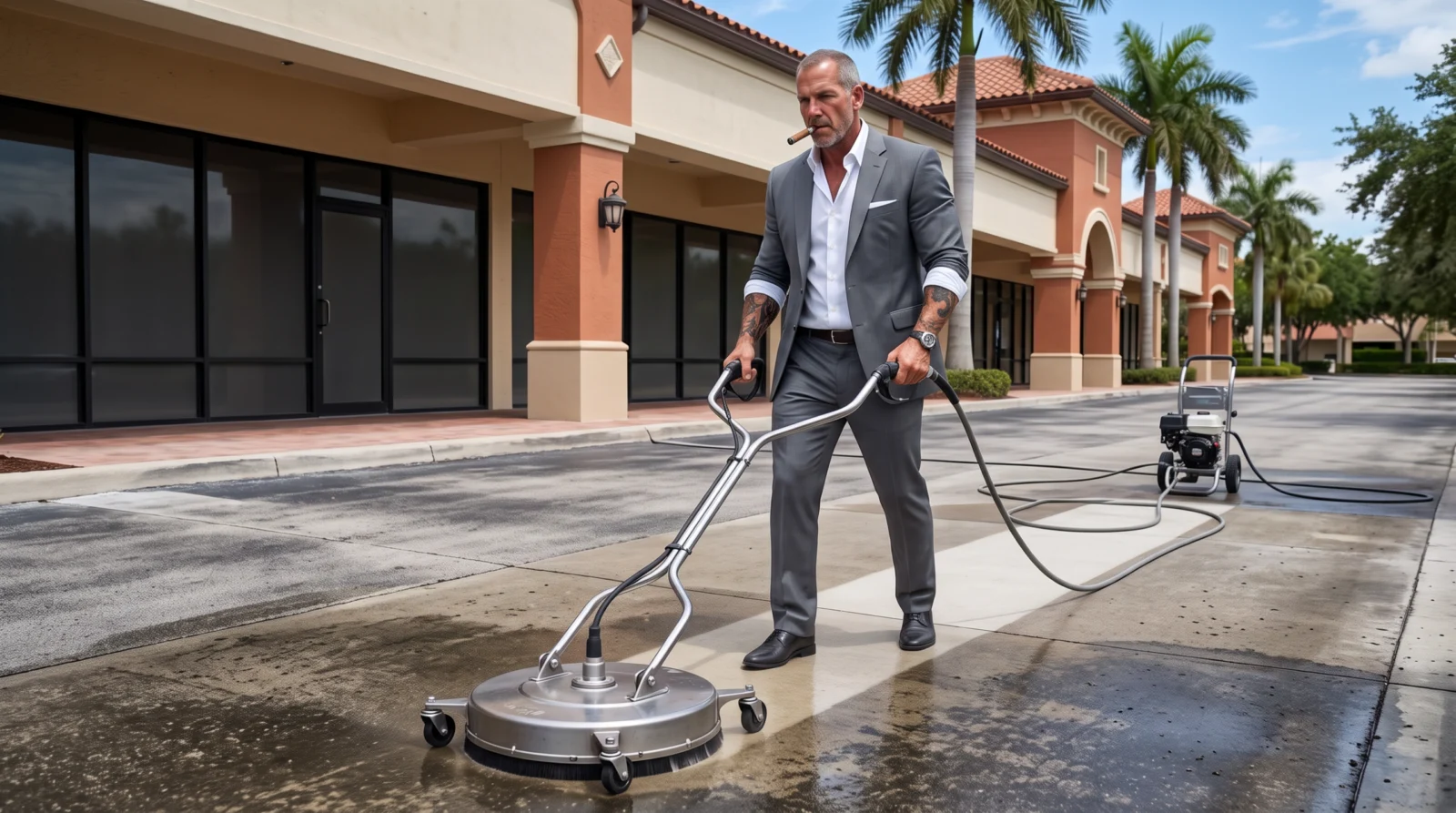
Concrete gets a degreaser pre-treatment, then hot water and a rotary surface cleaner. The canopy is cleaned from a lift with a soft wash on the fascia and a careful wash on the underside, keeping water away from light fixtures.
Wash water from fuel areas needs care. We block storm inlets and plan the water path for each site before we start. If your station has a specific wash water plan, we follow it.
| Area | Buildup | Approach |
|---|---|---|
| Fuel island concrete | Fuel drips, oil, tire film | Degreaser, hot water, surface cleaner |
| Canopy fascia | Chalking, algae, salt film | Soft wash from a lift |
| Canopy underside | Soot, webs, bug residue | Low-pressure wash, keep clear of lights |
| Pump faces | Fingerprints and grime | Hand wipe, no spraying |
| Store entry and walks | Gum, spills, foot traffic | Hot water spot work and wash |
| Curbs and islands | Rust from irrigation | Concrete rust remover |
Fuel Islands & Aprons
The concrete under and around every pump, plus the drive lanes between islands.
Canopy Fascia & Underside
Branded fascia panels, gutters and the soffit above the pumps.
Convenience Store Front
Entry walks, storefront glass frames, columns, ice and propane cage areas.
Dumpster Pad & Car Care
Dumpster enclosure, air and vacuum stations, and car wash exits.
Every station is laid out differently, so we price each one individually online. Number of islands, canopy size, lift access and how often you want service all set the number.
If you run several stations around Collier and Lee counties, we can put them on one schedule and one invoice, with a written service record for each site.
Online quote
We note islands, canopy height, drains, electrical and traffic flow.
Off-peak schedule
Work is set for the slowest hours at your station.
One island at a time
Cones go up, one island closes, the rest stay open.
Degrease and hot water wash
Concrete is pre-treated, washed and surface cleaned.
Canopy from a lift
Fascia is soft washed and the underside cleaned clear of fixtures.
Reopen and record
Islands reopen and you receive a written service record.
We provide gas station pressure washing in Naples FL and throughout Southwest Florida:
Environmental agencies that write fueling-station guidance agree on one point that surprises some owners: the everyday cleanup at the pumps should be dry. The Connecticut Department of Energy and Environmental Protection’s fueling-station practices say not to clean the fueling area with water, because spilled fuel, oil and grease end up in nearby streams, and to use dry methods such as spot cleaning with absorbents or mechanical sweepers instead. Closer to home, Alachua County’s Environmental Protection Department asks stations to maintain dispensing areas with sweeping, rags and absorbents for leaks and spills, to keep spill kits on hand, and to dispose of used absorbent properly. Its reasoning applies just as well on a Naples apron: anything that reaches a storm drain goes on to local water without treatment.
That guidance shapes how we work with a station rather than against it. The cashier with a bag of absorbent handles the drip at pump four the moment it happens. Our visit deals with what dry cleanup cannot reach: the film that builds up in the broom finish of the concrete, tire tracks across the apron, and stains on curbs and island bases. On a walkthrough we ask where the spill kit lives and whether staff have been trained to use it, because a station that catches fresh spills dry needs far less degreasing when we arrive.
The canopy is there for more than shade. The Connecticut guidance recommends covering the fueling area with a roof or canopy so rain does not wash pollutants off the pad, and adds that the cover should not drain into the fueling area. In practice, the canopy gutter and its downspouts carry rain away from the islands, often inside the columns. When those gutters fill with leaves, wasp nests and grit, water spills over the edge straight onto the pad, which is exactly what the canopy was meant to stop. A summer downpour then carries the oily film off the concrete toward the nearest inlet.
Because we are already on a lift for the fascia, we look into the canopy gutter while we are up there and note any section that is clogged, sagging or overflowing, with a photo on the service record. Clearing debris we can reach safely is part of the canopy wash. Damaged gutters, loose fascia panels or column downspouts that no longer drain are passed to the owner for the canopy contractor, since those are repairs rather than cleaning.
When the islands do get a wet clean, the water picks up everything the dry methods left behind, so it is treated as something to collect rather than rinse away. Before any water flows we mark every inlet on the lot, cover the ones in the work area, and set up recovery so the rinse from each island is captured instead of running across the apron. The order of work matters too: the canopy is washed first so anything dripping from above lands on concrete that has not been cleaned yet.
Brands and franchise groups sometimes have their own requirements for how fuel-area water is handled, and some sites have on-site treatment equipment installed when the station was built. If your station has either, tell us at the walkthrough and we will work to it. Each visit’s record lists the islands cleaned, the inlets protected and how the water was handled, which gives an owner something concrete to show a brand inspector or a county officer who asks.
Get a firm price for Gas Stations, usually the same day.
Tell us what needs cleaning and where. We review your photos, send a written price by text or email, and handle gate and building access.
Get Your Free Quote
Tell me what needs cleaning and where — I'll send a firm, no-obligation price by text or email, usually the same day.
Get My Quote →About the Author

Owner Blane Perun started this company with a simple premise: Naples homeowners deserve a professional exterior cleaning option that doesn’t come with the inflated pricing of franchise operations and large corporate companies.