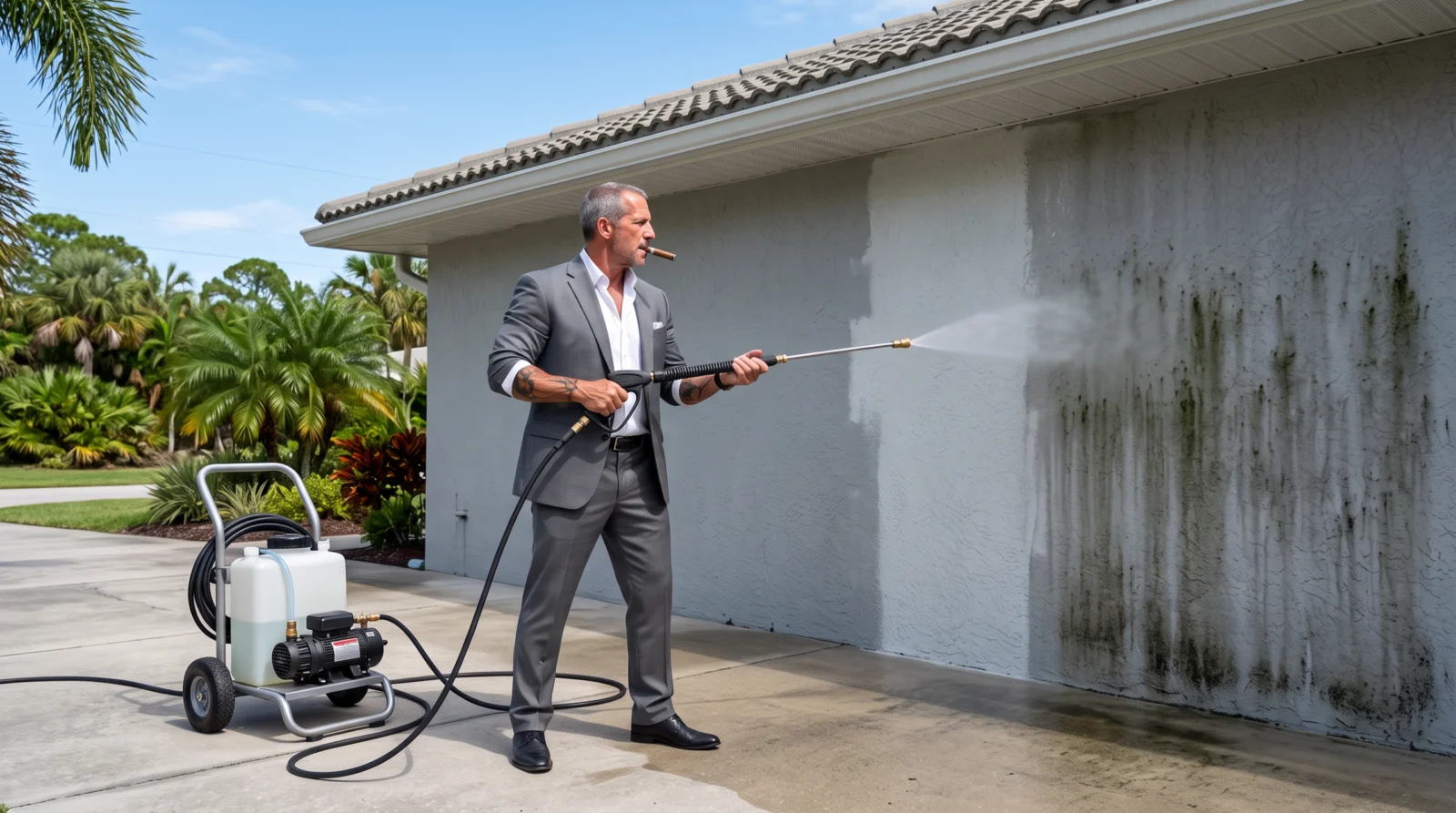
House Washing in Naples, FL
What a whole-home exterior wash includes
A house wash cleans the walls, eaves, trim and entry of your home in one visit, using a low-pressure soft wash that is safe on stucco and paint. Here is what is included, what is not, and how to tell when your home is due.
📞 Free Quote — 239-544-1165wash combo
stucco and paint
request
What does a house wash include?

A house wash covers the vertical and overhead surfaces of the home’s exterior, all the way around. On a typical Naples home that means:
- Exterior walls, whether painted stucco, painted concrete block, siding or stone veneer.
- Soffits and eaves, including the vents where mildew and spider webs collect.
- Fascia boards and the outer face of gutters, which often carry black “tiger stripes” from runoff.
- Garage doors, entry doors and shutters, cleaned gently to protect paint and finishes.
- Window frames and sills, with glass rinsed. Detailed, streak-free window cleaning is a separate service.
- Exterior light fixtures, house numbers and the front entry, where cobwebs and pollen gather.
- Lanai walls and ceilings outside the pool cage screens, where these are part of the house structure.
Flatwork such as driveways and walks, pool cages and roofs are separate services that can be added to the same visit. Many homeowners book the roof and walls together, because the roof cleaning sends runoff down the walls and the house wash rinses it away.



Why are Naples homes washed differently?
Most homes in Collier and southern Lee County are built of concrete block with a stucco finish and painted. That construction is durable, but its surface is easy to damage with the wrong method.
Stucco has texture and fine hairline cracks. High pressure cuts into the texture, leaves visible wand marks, and drives water into cracks where it can reach the block behind. Exterior paint in the Florida sun gradually breaks down into a chalky surface layer. Pressure strips that chalk unevenly and can take sound paint with it, leaving a patchy wall that may need repainting sooner. Stucco and block surfaces are porous and absorb biological growth readily in Florida humidity. Green algae, black mold, and mildew spread quickly across stucco exteriors and can cause long-term paint degradation, surface etching, and moisture infiltration if left untreated.
For those reasons, houses are cleaned with a soft wash: a diluted cleaning solution applied at low pressure, left to kill the mold and mildew, and rinsed at about garden-hose pressure. The solution does the cleaning; the water just carries it away. Our page on soft washing painted homes goes into more detail on protecting paint, caulk and window seals.
What are the stains on your walls?
Not every dark mark on a house is the same thing, and the treatment depends on the cause.
Black or gray speckling on walls and soffits is usually mildew or mold. It is worst on the north side of the house, behind shrubs and under deep eaves, where surfaces stay damp. Green film near the ground, on shaded walls and around downspouts is algae, which thrives where water splashes. Both are organic and both respond to a soft wash.
Orange or brown streaks at the base of walls are usually rust from irrigation water, especially where reclaimed water is used for sprinklers. Rust is a mineral deposit. It needs a rust remover, and the long-term fix is adjusting the sprinkler heads so they stop hitting the walls.
Dark vertical streaks under window sills and on gutter faces are often a mix of airborne dirt, oxidized metal and growth carried down by rain. Gutter streaks in particular can need a dedicated cleaner, because they are bonded to the aluminum surface.
Sorting these out at the quote means the right products go on the right stains, and you know before the crew arrives which stains will come off completely and which may only lighten.
How do we protect plants, windows and the inside of your home?
Before any solution goes on, foundation plantings are soaked with water and kept wet as the crew moves around the house. Delicate plants directly under heavily stained areas can be covered. After the rinse, beds are rinsed again.
Windows and doors are checked to make sure they are closed. Exterior outlets, light fixtures and doorbell cameras are protected from direct spray. Low pressure matters here too: a high-pressure stream aimed at a window can force water past old gaskets and into the wall or the room.
Vehicles are moved away from walls where possible, and patio furniture, grills and potted plants along the house are moved and returned. Pets stay inside until the job is done.
How often should a Naples house be washed?
In Southwest Florida’s humidity, mildew and algae return steadily, but the pace varies widely from house to house. The biggest factors are:
- Orientation: north and east walls dry slowly and grow first.
- Shade: large trees, tall hedges and neighboring homes keep walls damp.
- Irrigation: sprinkler heads that hit walls keep the lower few feet wet and bring rust if the water carries iron.
- Water nearby: homes on lakes, canals, golf course ponds and preserves sit in damper air.
- Paint condition: chalky, aging paint holds dirt and spores more readily than fresh paint.
Many Naples homeowners wash their house about once a year, often before the winter season or before family visits. Some need it more often on the shaded side and less on the sunny side. An association letter about wall staining, a listing date or simply noticing green on the north wall are all common reasons to book.
Can you wash your house yourself?
You can, on a single-story home with light mildew, if you keep the pressure off the walls. A garden pump sprayer or a hose-end sprayer with a diluted outdoor cleaner, applied from the bottom up and rinsed from the top down with a garden hose, works on light growth. Soak and rinse plants, work in the shade or early morning, and do one section at a time so nothing dries on the wall.
What we advise against is pointing a rented pressure washer at stucco or painted walls. The damage, such as etched texture, wand marks, lifted paint and water behind cracks, is common and is often visible only after the wall dries. Two-story walls, soffits and anything that requires a ladder while spraying are safer left to a crew.
What are the signs a house needs washing beyond appearance?
A house wash is mostly about appearance, but the process brings other issues to light. When the walls are clean, you can see hairline cracks in stucco, gaps in caulk around windows and doors, peeling paint on fascia and rust stains that point to a sprinkler hitting the house. Our crew notes anything like this in the written record we leave after the visit, so you can decide whether to call a painter or a stucco contractor. Beyond maintenance, a dirty home exterior sends a strong signal to neighbors, HOA inspectors, and potential buyers.
Clean walls also make it easier to judge whether the house actually needs repainting. Many homeowners who think their paint has faded discover that it was mostly dirt and mildew.
What does a house wash look like on the day?
The crew arrives, introduces itself and walks the house with you or checks the notes from your quote. They confirm which surfaces are included, find the outdoor faucet, and look for anything unexpected since the quote, such as new plantings, a cracked window or a loose shutter.
Setup takes a short while: hoses run out, plants soaked, fixtures covered, furniture moved. The washing usually starts on the shaded side of the house, where growth is heaviest and the solution will not dry too fast, and moves around the home in sections. Each section is treated, given time to work and rinsed before the crew moves on, so nothing sits on a wall in the sun.
Near the end the crew rinses the beds again, flushes downspouts, sweeps or rinses the walks where runoff landed, and returns moved items. If you are home, they walk the house with you. If not, they send photos and the written record.
House washing in gated communities
A large share of Naples homes are inside gated communities, and most have rules for contractors. Common requirements are a certificate of insurance on file with the management office, a gate pass or pre-registration for the crew, and limits on working hours, often weekday daytime only. Some communities restrict where trucks and trailers may park, or ask contractors to check in at the gatehouse.
Many communities also have appearance standards in their governing documents, and mildew on walls is one of the conditions that triggers a courtesy letter. If you received one, tell us the cure date when you book. We schedule to finish before it where we can and provide a dated record of the work that you can forward to the management office. Regular house washing helps keep your home compliant and avoids the cost and frustration of formal HOA violation notices.
We pre-register at gates where required and send our insurance certificate to the management office on request.
What does house washing cost in Naples?
House washing is priced by the size and height of the home, the amount of growth and the access around it. Two-story homes and homes with a lot of overhanging landscaping take longer. We quote each home after seeing it.
A house wash on its own is quoted after we see the home. The combined roof and house visit is the most common booking, because one visit handles both and the walls are rinsed of any roof runoff. A written quote is free; see all our exterior services.
What should you ask a house washing contractor?
- Will you use pressure on my stucco walls? The right answer is low pressure with a cleaning solution.
- How do you handle rust and gutter stripes? Both need specific products. Ask whether they are included.
- How will you protect my plants and windows? Expect a specific answer about soaking, rinsing and closing windows.
- Do you have insurance? Ask for a certificate; many communities require one before a crew may enter the gate.
- What will I get afterward? A short written record of what was done and anything noticed is useful for your files and for an association.
Detailed pages on the specific jobs we do under House Washing.
Black streaks GONE in 1 visit — and they stay gone for 2-3 years.
Soft wash chemistry kills Gloeocapsa Magma at the root, not just on the surface. No high pressure, no tile damage, no voided warranty.
Get Your Free Quote
Tell me what needs cleaning and where — I'll send a firm, no-obligation price by text or email, usually the same day.
Get My Quote →Frequently Asked Questions
Is house washing safe for painted stucco?
Will house washing remove the orange stains at the bottom of my walls?
Do you clean the windows during a house wash?
How long does a house wash take?
Will the cleaning solution harm my plants?
Do I need to be home?
Can the house be washed in the rainy season?
About the Author

Owner Blane Perun started this company with a simple premise: Naples homeowners deserve a professional exterior cleaning option that doesn’t come with the inflated pricing of franchise operations and large corporate companies.