Can You Pressure Wash a House?
Some of it. Here is which parts.
A Naples home is a mix of surfaces. The driveway and pavers can take real pressure; the stucco, screens, windows and roof cannot. This guide walks around a typical house and explains the right method for each part.
📞 Free Quote — 239-544-1165bare concrete
roofs, windows
wash combo
The short answer
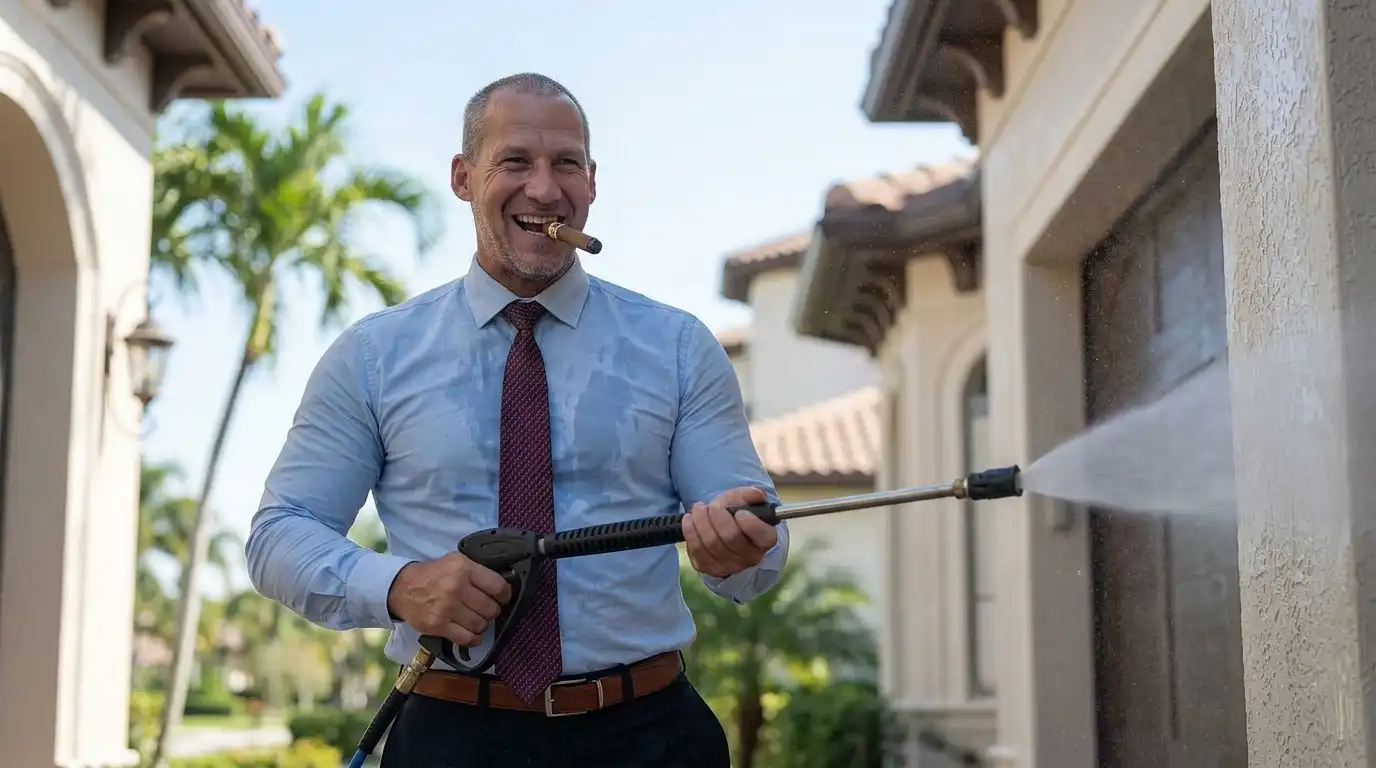
Yes, parts of a house can and should be pressure washed. Concrete driveways, paver walkways, bare concrete pool decks and block garden walls are hard enough to take high pressure, and a surface cleaner is the most efficient way to get them clean.
No, the house itself should not be pressure washed in the sense most people mean, which is standing back with a narrow tip and spraying the walls. Painted stucco, soffits, windows, screens and roofs are cleaned with low pressure and a cleaning solution, a method called soft washing. Using high pressure on them causes damage that is often expensive and sometimes invisible until later.
The rest of this page walks around a typical Southwest Florida home, from the street to the backyard, and explains what each surface needs and why. If you plan to do some of the work yourself, it should help you decide where the pressure washer belongs and where it does not.
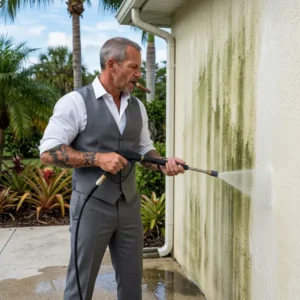
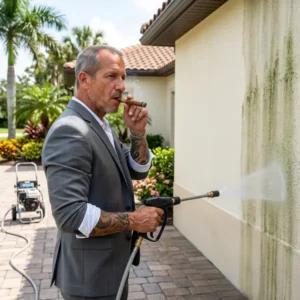
Starting at the street: driveway, apron and walkway
Poured concrete driveways and walks are the surfaces most suited to pressure washing. Broom-finished concrete is several inches thick and very hard, and the black mold that settles in its texture comes out well under pressure.
The right tool is a rotary surface cleaner rather than a wand. A surface cleaner holds the spinning nozzles at a fixed distance, which gives an even result without the striped look that comes from sweeping a narrow tip back and forth. A chlorine-based pre-treatment kills the mold first, so less pressure and fewer passes are needed. Edges, expansion joints and the area along the lawn are finished with a wand held at a sensible distance.
Two cautions. Rust from sprinklers and oil from cars will not come out with pressure alone; they need their own products. And holding a narrow tip close to concrete etches it permanently, so the zebra stripes and squiggles you sometimes see on driveways are pressure damage, not dirt.
Pavers: yes, but expect to re-sand
Interlocking concrete pavers can be pressure washed, and they clean up dramatically. The catch is the sand in the joints. A surface cleaner pulls out a good portion of it along with the dirt, and a wand pulls out even more.
Joint sand is what keeps pavers locked together and stops weeds and ants. After cleaning, the joints need to be refilled, usually with polymeric sand that hardens when it is wetted. If the pavers were sealed before, the old sealer may come off unevenly during washing, which is another reason paver cleaning is often part of a clean, sand and seal job. Our paver cleaning page explains the process in detail.
The front of the house: stucco walls
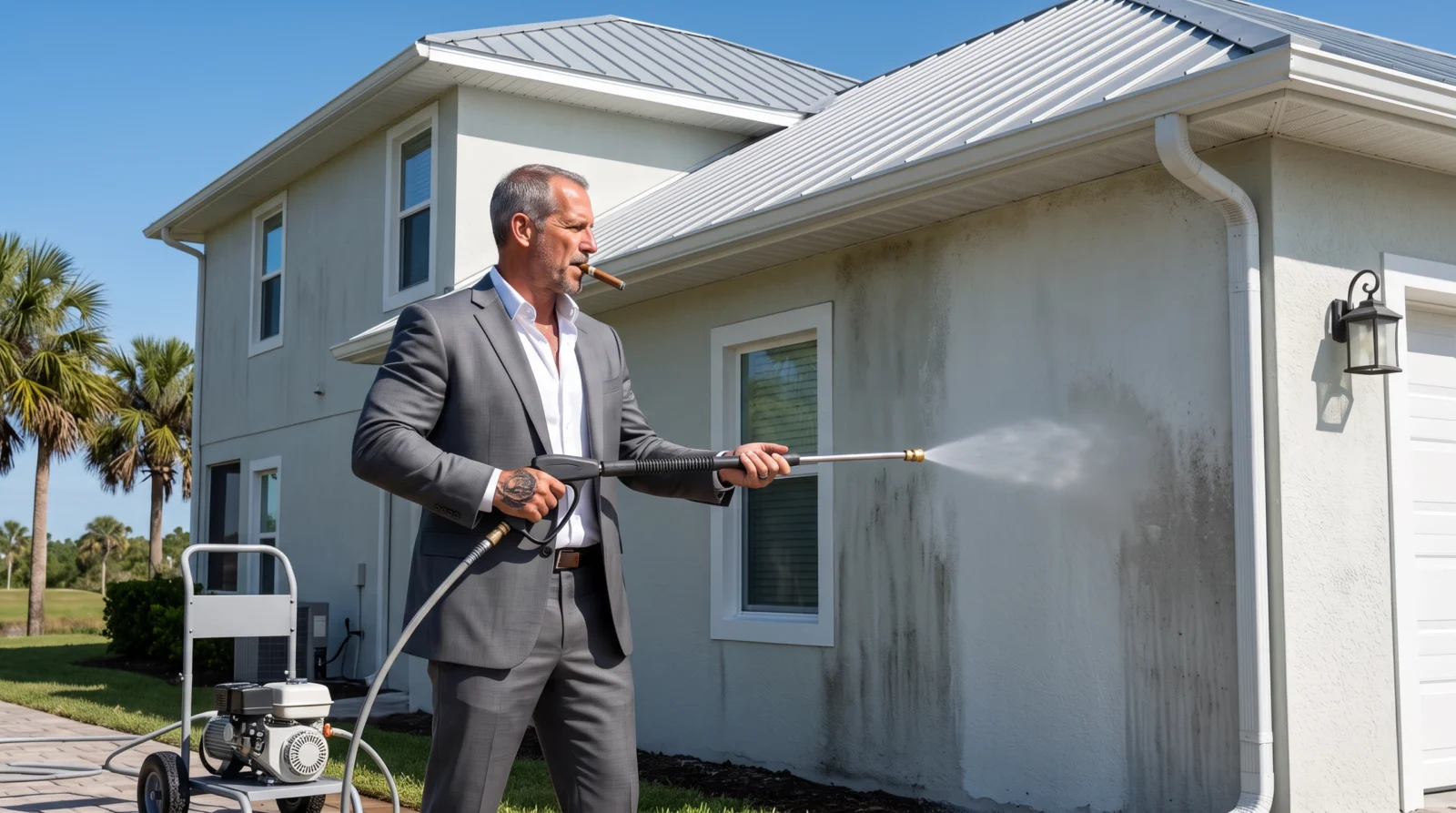
This is where most damage happens. Painted stucco over concrete block is the standard exterior in Naples, and it does not hold up to high pressure. Naples stucco is a porous multi-layer finish applied over CBS block.
A pressure tip cuts into stucco texture and leaves visible lines. It strips chalking paint unevenly, making the wall look blotchy when it dries. It drives water into the hairline cracks that every stucco wall develops, where it can reach the block and the inside of the wall. Around windows and doors, it can lift aging caulk. High pressure washing on stucco chips the paint layer, forces water behind the finish coat, etches the stucco surface, and can cause moisture infiltration that leads to mold growth inside the wall assembly.
Stucco walls are cleaned with a soft wash: a diluted cleaning solution at low pressure, a few minutes to work, and a gentle rinse. The mildew dies and rinses away; the paint and stucco are left alone. For a full explanation of what a whole-home wash includes, see our house washing page.
Overhead: soffits, fascia and gutters
Soffits on Naples homes are usually vented vinyl or aluminum panels, sometimes painted wood. They are thin and they hide mildew and spider webs in their vents. High pressure cracks vinyl, bends aluminum, blows water up through the vents into the attic and soaks insulation. A low-pressure wash removes spider webs, mold and staining from the underside of roof overhangs and from the fascia boards across the full roofline.
Fascia and the outside face of gutters are often marked with dark vertical streaks. These are bonded to the aluminum finish and do not come off with pressure; they need a cleaner made for oxidized gutter faces, applied and wiped or rinsed at low pressure. All of these overhead surfaces are part of a soft wash.
Windows, sliding doors and entry doors
Windows and sliding glass doors have seals and weep holes designed to drain rain that falls from above. A high-pressure stream from below forces water past those seals into the wall or the room. It can also break the seal on insulated glass units, which causes the fogging between panes that many Florida homeowners know too well.
Glass and frames are rinsed at low pressure, from above, as part of a house wash. Painted entry doors and garage doors are cleaned with a mild solution and rinsed. Stained wood doors are wiped by hand. Entry columns, decorative features and shutters are cleaned with the method suited to each material, never with high pressure that could damage paint, trim or decorative finishes.
The roof
Concrete tile, clay tile, shingle and metal roofs all have a protective top layer that high pressure removes. On shingles it strips granules; on tile it erodes the surface coating and leads to cracked tiles from foot traffic on a wet roof. Roofs are cleaned with a soft wash solution and a low-pressure rinse. Our page on whether you should power wash a roof goes into the damage in more depth.
Out back: lanai, pool cage and pool deck
The back of a Naples home often contains every kind of surface in a small area. The pool deck, if it is bare concrete or pavers, can take pressure, with care to keep debris and runoff out of the pool. If the deck has a spray-texture or painted coating, pressure can peel it, so it is cleaned at lower pressure.
The screen enclosure cannot take pressure at all. Screen mesh tears and pulls out of its spline. Screens and the aluminum frame are soft washed, and chalky oxidation on the frame needs its own treatment. Lanai ceilings, often painted stucco or aluminum, are soft washed like the walls.
Outdoor kitchens and grill areas may need a degreaser. Travertine and natural stone around pools needs gentle treatment because acid and high pressure can both etch it.
Fences, walls and outdoor structures
Perimeter and garden walls of bare concrete block can take moderate pressure. Painted walls are soft washed. Vinyl fences and PVC trim scratch and crack under pressure and are cleaned with low pressure and a solution. Wood fences and pergolas fur up under pressure, raising fibers that look rough and gray when dry. Aluminum fences and railings tolerate a gentle wash but can show oxidation that needs its own product.
Outlets, AC units, pool equipment and cameras
Every home has electrical and mechanical equipment on its exterior walls, and none of it is designed for a jet of water. Exterior outlets have covers meant for rain, not a pressure stream. Doorbell cameras, motion lights and security cameras have seals that pressure can defeat. Air conditioning condensers have thin aluminum fins that fold flat under pressure, which reduces the unit’s efficiency. Pool pumps, heaters and their timers sit on equipment pads beside the house.
During a professional wash, these are covered or worked around, and the crew rinses near them at low pressure only. If you are washing anything yourself, keep the wand away from all of them, and never spray directly at the electrical meter or the service panel.
What if your house was pressure washed before?
If a previous owner or contractor pressure washed your stucco, look for faint stripes or arcs in the wall when the light is low, patchy paint color, chips at corners and around windows, and cracks that seem to have opened. Inside, check under windows on the walls that were washed for water stains or soft drywall. Foggy double-pane windows are another sign.
None of this means the house is in trouble, but it is worth a closer look. Patching and repainting fixes most surface damage. Fogged glass units can be replaced individually. Going forward, clean the walls with a low-pressure soft wash so the problem does not repeat.
Why do homeowners damage their homes with pressure washers?
The most common mistakes we see after DIY weekends are predictable:
- Using the narrowest tip because it seems to work faster. It also cuts concrete, stucco and wood.
- Getting too close. Damage rises quickly as the nozzle approaches the surface.
- Spraying upward at windows, soffits and lap joints, forcing water behind them.
- Skipping the cleaning solution and trying to remove mold by force, which damages the surface and leaves roots behind.
- Ignoring plants and drains when using bleach-based products.
- Working from a ladder with a pressure wand. The kickback from a pressure gun can throw you off balance, and falls cause serious injuries.
How much does it cost to have a house professionally washed?
A full exterior visit is usually a mix of soft washing and pressure washing. The walls, soffits, windows and roof are soft washed; the driveway, walks and pavers are pressure washed. Pricing depends on the size of the home, its height, the amount of growth and which surfaces you include.
Concrete flatwork and a house wash on its own are quoted after we see the property. A written quote is free.
What should you ask a contractor before they wash your house?
- Which surfaces will you pressure wash, and which will you soft wash? If the answer is “we pressure wash everything,” find another contractor.
- What will you do about rust and oil stains? Neither comes out with pressure alone.
- Will you need to re-sand my pavers after cleaning? Ask whether it is included.
- How do you protect windows, plants and the pool? Specific answers indicate experience.
- Can you provide a certificate of insurance? Many Naples communities require one before a crew can enter.
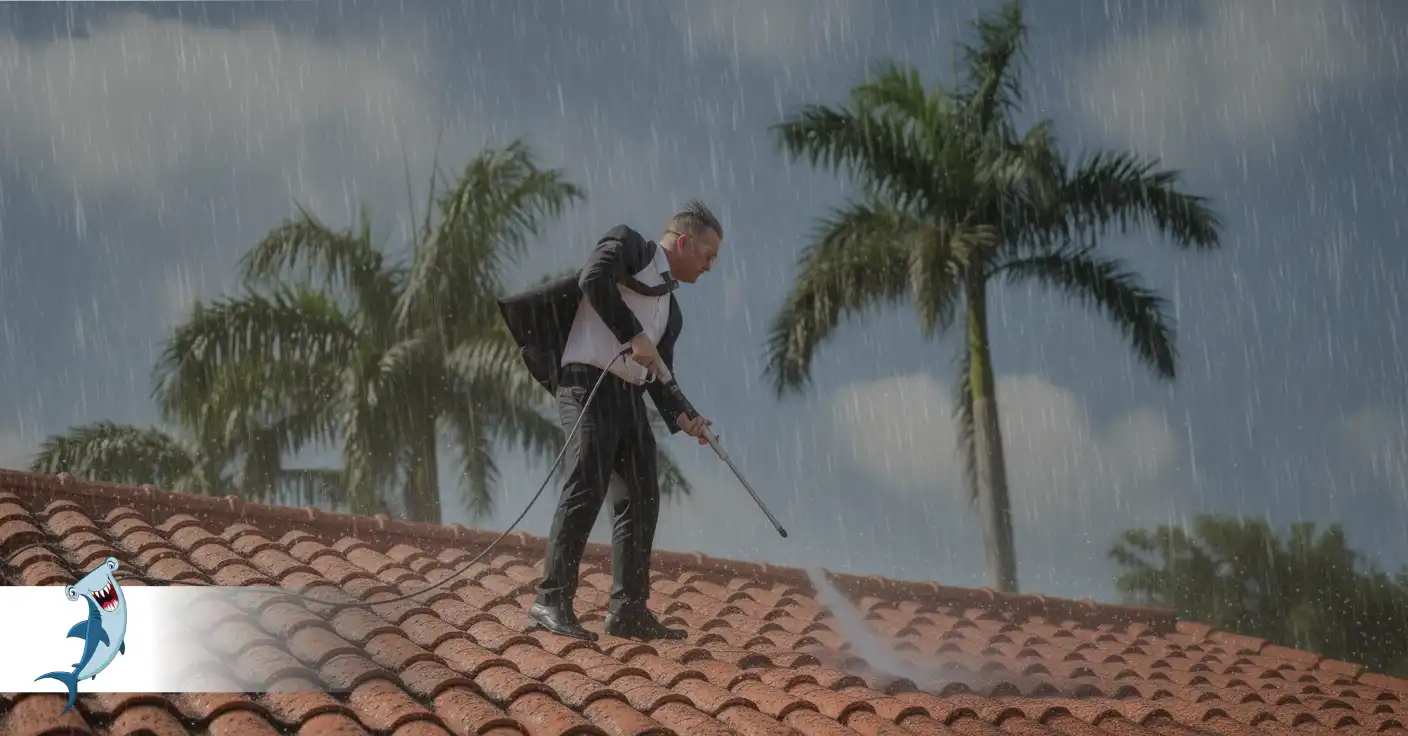
Black streaks GONE in 1 visit — and they stay gone for 2-3 years.
Soft wash chemistry kills Gloeocapsa Magma at the root, not just on the surface. No high pressure, no tile damage, no voided warranty.
Get Your Free Quote
Tell me what needs cleaning and where — I'll send a firm, no-obligation price by text or email, usually the same day.
Get My Quote →Frequently Asked Questions
Can I pressure wash my stucco house?
What parts of my house can I pressure wash?
Will pressure washing get rid of the mold on my walls?
Why are my windows foggy after I pressure washed the house?
What PSI should I use on my driveway?
Should I re-sand pavers after pressure washing?
About the Author
Owner Blane Perun started this company with a simple premise: Naples homeowners deserve a professional exterior cleaning option that doesn’t come with the inflated pricing of franchise operations and large corporate companies.