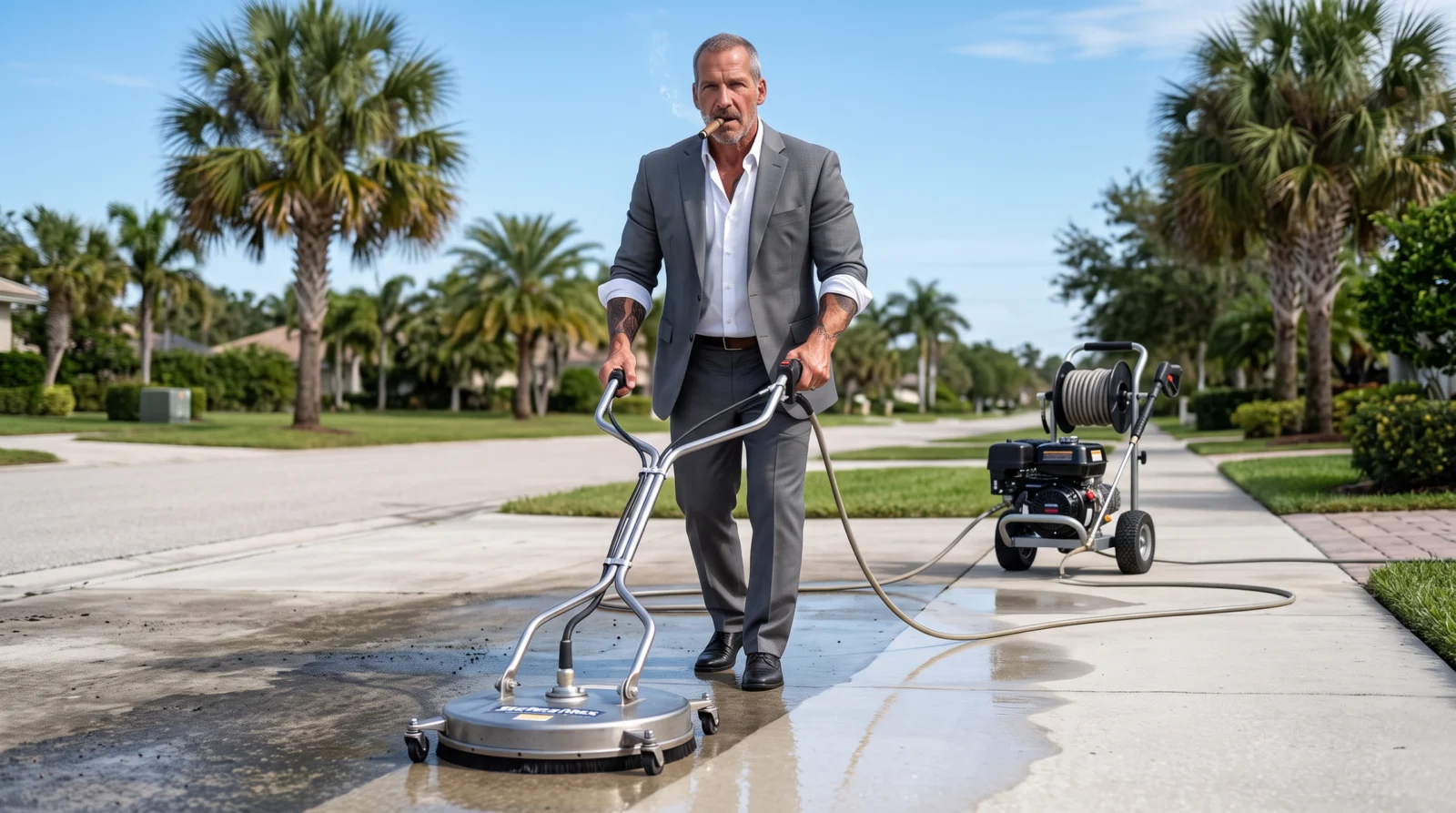
Cleaning Decorative & Coated Concrete
Stamped, colored, spray-texture and painted surfaces
Much of the concrete around Naples homes is not plain gray slab. Pool decks, lanais, entries and patios are often stamped, stained, sealed or coated, and each finish reacts differently to pressure and chemicals. This page explains how we clean them without damaging the finish.
📞 Free Quote — 239-544-1165coatings
colored concrete
quote
Why decorative concrete needs a different approach
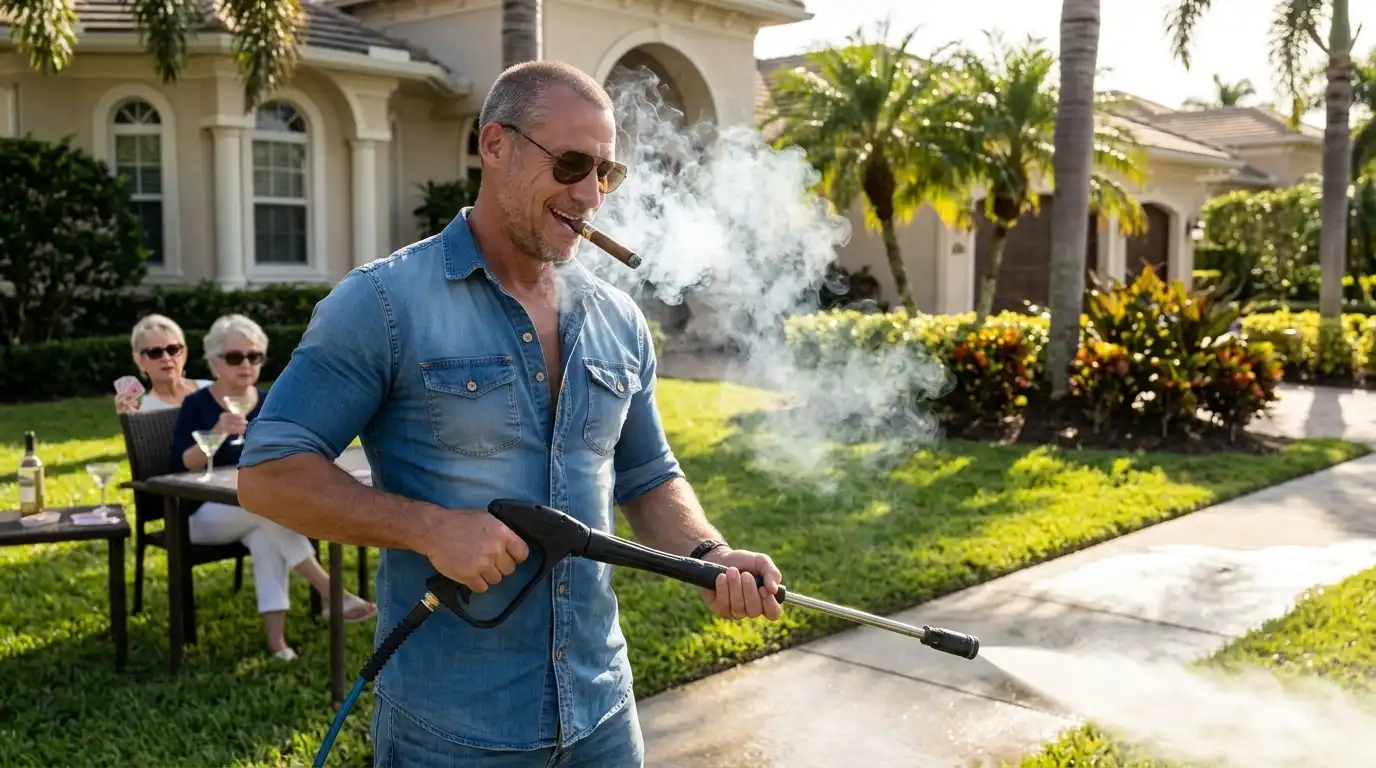
Plain broom-finished concrete is forgiving. Its surface is the concrete itself, and a surface cleaner at normal pressure cleans it without harm. Decorative concrete is different because what you see is often a thin layer on top: a colored hardener, a stain, a clear sealer, a sprayed texture coat or paint. That layer is what gives the surface its look, and it is far easier to damage than the slab underneath. A standard wand leaves visible stripe marks on concrete that look worse than the original staining.
High pressure can peel coatings, strip sealers in patches, blast color out of the high points of a stamped pattern and leave visible lines in a textured finish. Some cleaning chemicals can also affect color or soften sealers. So the method shifts: lower pressure, more reliance on the cleaning solution and dwell time, and products chosen for the finish.

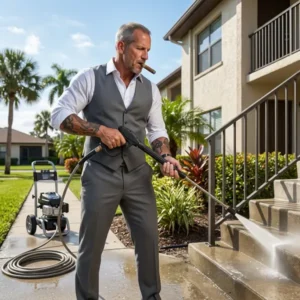
How do you tell what kind of concrete you have?
- Stamped concrete has a pressed pattern that imitates stone, slate, brick or wood, usually with a base color and a darker “release” color in the grooves, sealed with a clear coat that may be glossy.
- Colored or stained concrete is smooth or lightly textured but has color through the surface or a mottled, variegated stain.
- Spray-texture or knockdown coatings, common on Florida pool decks and lanais, are a thin acrylic-cement layer sprayed on and troweled flat to create a light, slightly bumpy, cool-to-the-touch surface, usually in light tan, white or gray.
- Painted concrete has a uniform, opaque color that may be peeling at edges or in traffic areas.
- Exposed aggregate shows small stones on the surface, sometimes sealed.
If you are not sure, a crew can identify it at the quote. It matters, because the right method for one can damage another.
Cleaning spray-texture and knockdown pool decks
Spray-texture coatings are everywhere on Southwest Florida pool decks because they stay cooler underfoot than bare concrete and give a slip-resistant finish. They also grow algae and mildew readily in the shade of a pool cage, and the pale colors show every stain.
These coatings are only a few millimeters thick. A narrow pressure tip or a surface cleaner run at full pressure can tear them, especially where the coating is old or already loose. We clean them with a diluted cleaning solution to kill growth, a short dwell, and a low-to-moderate pressure rinse, working with the surface cleaner at reduced pressure or with a wide fan tip held well back.
Loose coating is a sign of a failing bond. If the coating is already flaking, cleaning will lift more of it; the alternative is not to leave it dirty but to plan a recoat. We point out loose areas before starting, and many owners clean first and then have the deck recoated by a coating contractor.
Cleaning stamped and colored concrete
Stamped concrete is almost always sealed, because the sealer deepens the color and protects the pattern. In the Florida sun that sealer eventually turns cloudy, wears thin in traffic lanes or peels in patches. Mildew grows in the grooves of the pattern.
Cleaning starts with a solution to kill growth, followed by a moderate-pressure rinse that reaches into the grooves without stripping the sealer. If the sealer is already failing, cleaning will show it more clearly, and the honest recommendation may be to strip and reseal. For colored and stained concrete, any rust or mineral treatment is tested on a hidden spot first, because some acidic products can lighten color. Edges, corners, expansion joints and hard-to-reach areas are hand-detailed so there are no missed spots.
Hot water is used cautiously or not at all on sealed decorative concrete, because heat can soften or haze some sealers.
What about painted concrete?
Painted concrete is common on older lanai floors, porches and garage floors. Paint on concrete takes a beating from foot traffic, sun, moisture coming up through the slab, and furniture. High pressure strips it quickly.
We clean painted concrete gently, with a mild solution and low pressure, to remove dirt and mildew while leaving sound paint in place. If the paint is already peeling, cleaning will remove more of the loose material. Some owners want that, because they are about to repaint and need the loose paint gone; others want a gentle clean only. Tell us which you want, and we will set expectations at the quote.
Exposed aggregate
Exposed aggregate concrete has the cement paste on top washed away during construction so small stones show on the surface. It is durable and slip-resistant, and it was popular for driveways, walks and pool decks on many older Naples homes. Its weakness is the paste that holds each stone. High pressure aimed into the gaps between stones erodes that paste, and over time stones loosen and pop out, leaving pits.
We clean exposed aggregate with a cleaning solution to kill the growth that settles between the stones, followed by a moderate-pressure rinse with the surface cleaner, never a narrow tip held close. If the surface was sealed, the sealer deepens the stone colors, and resealing after cleaning restores that look.
Furniture marks, planter rings and rust circles
Pool and patio furniture leaves its own marks on decorative concrete. Metal chair feet rust and leave orange dots. Planters leave rings of mineral deposit and rust where water drains through them. Cushions left out in the rain can transfer dye. Grills drip grease.
Each of these is spot-treated with a product suited to the stain and the finish, tested first on colored or sealed surfaces, and rinsed thoroughly. Prevention is easy: put pads or caps under metal furniture feet, use saucers under planters, and move cushions inside before storms.
Outdoor kitchens and grill areas
Outdoor kitchens are common on Naples lanais, and they often sit on stamped, coated or tiled concrete. Grease splatter darkens the surface around the grill and becomes slippery. Grease needs a degreaser, and sometimes warm water, but the coatings around outdoor kitchens are often the same heat-sensitive finishes described above. We use a degreaser with a longer dwell time rather than high heat or high pressure, and we protect cabinet faces, appliances and gas connections from spray.
Can decorative concrete be cleaned with hot water?
Hot water helps with grease and oil, which matters on outdoor kitchen floors and around grills. On coated or sealed decorative concrete, heat can soften, haze or lift some coatings. We use hot water only where the surface tolerates it and only where there is grease to remove. Organic growth, which is the main problem on most decorative surfaces in Naples, does not need heat.
Rust and mineral stains on decorative surfaces
Irrigation rust, fertilizer spots and metal furniture marks appear on decorative concrete as often as on plain driveways. The problem is that the usual rust removers are acidic, and acids can etch the surface, lighten color or affect sealers.
On decorative surfaces we use gentler rust products, test them first in an inconspicuous spot, keep dwell times short and rinse thoroughly. Some stains come out completely; deep, old rust may only lighten. Fixing the source, usually a sprinkler head that hits the surface, prevents recurrence.
Pool water and decorative decks
Most coated concrete in Naples surrounds a pool. Runoff from the deck should not carry cleaning solution or debris into the water. We rinse in the direction that sends water away from the pool where the slope allows, keep the solution weaker near the pool edge, and skim debris before we leave. Pool equipment pads stay dry.
If the deck slopes toward the pool, or the coping and tile line are close to the cleaning area, we discuss the plan with you beforehand. Some owners schedule cleaning shortly before a routine pool service visit so the pool technician can check and balance the water afterward.
Should you reseal after cleaning?
A clean, dry surface is the best time to apply a new sealer. On stamped concrete, a fresh coat restores depth of color. On colored or stained concrete, it protects the finish from fading and staining. On spray-texture coatings, specific sealers or recoats are used; not every sealer suits every coating.
Sealing needs dry weather. In the summer rainy season, scheduling around afternoon storms is part of the plan. Cleaning and sealing on separate days, with drying time between, gives the sealer the best chance to bond. Our pool deck sealing service starts from $499 for slip-resistant sealing; other decorative surfaces are quoted per job.
How often should decorative concrete be cleaned?
Pool decks inside screen enclosures grow algae and mildew fastest because they are shaded and often wet. Many owners clean them once or twice a year. Open patios in full sun can go longer. Entry walks that stay damp from irrigation need more frequent attention.
Gentle, regular cleaning is easier on coatings and sealers than infrequent heavy cleaning, because light growth comes off with a mild solution and low pressure. A slippery deck is also a safety issue; algae on a wet pool deck can make it treacherous for children and older family members. Regular professional cleaning prevents long-term surface degradation and keeps your property looking sharp.
What does decorative concrete cleaning cost?
Decorative and coated concrete is priced by area, surface type, condition and whether sealing is included. Published starting prices for related services:
Other decorative concrete is quoted after we see it. A written quote is free; see our services overview for related work.
Questions to ask before anyone cleans your decorative concrete
- What kind of surface do you think this is? An experienced contractor will identify it.
- What pressure will you use? It should be lower than for plain concrete.
- Will your rust treatment affect the color or sealer? Ask whether they test first.
- What happens if the coating is loose? A good contractor will tell you before starting.
- How will you keep runoff out of my pool? Specifics matter.
Black streaks GONE in 1 visit — and they stay gone for 2-3 years.
Soft wash chemistry kills Gloeocapsa Magma at the root, not just on the surface. No high pressure, no tile damage, no voided warranty.
Get Your Free Quote
Tell me what needs cleaning and where — I'll send a firm, no-obligation price by text or email, usually the same day.
Get My Quote →Frequently Asked Questions
Can you pressure wash a spray-texture pool deck?
Will cleaning remove the sealer on my stamped concrete?
Can rust be removed from colored concrete?
Why is my pool deck so slippery?
Should I reseal after cleaning?
Can painted concrete be cleaned without removing the paint?
About the Author
Owner Blane Perun started this company with a simple premise: Naples homeowners deserve a professional exterior cleaning option that doesn’t come with the inflated pricing of franchise operations and large corporate companies.